
Last updated November 18, 2026
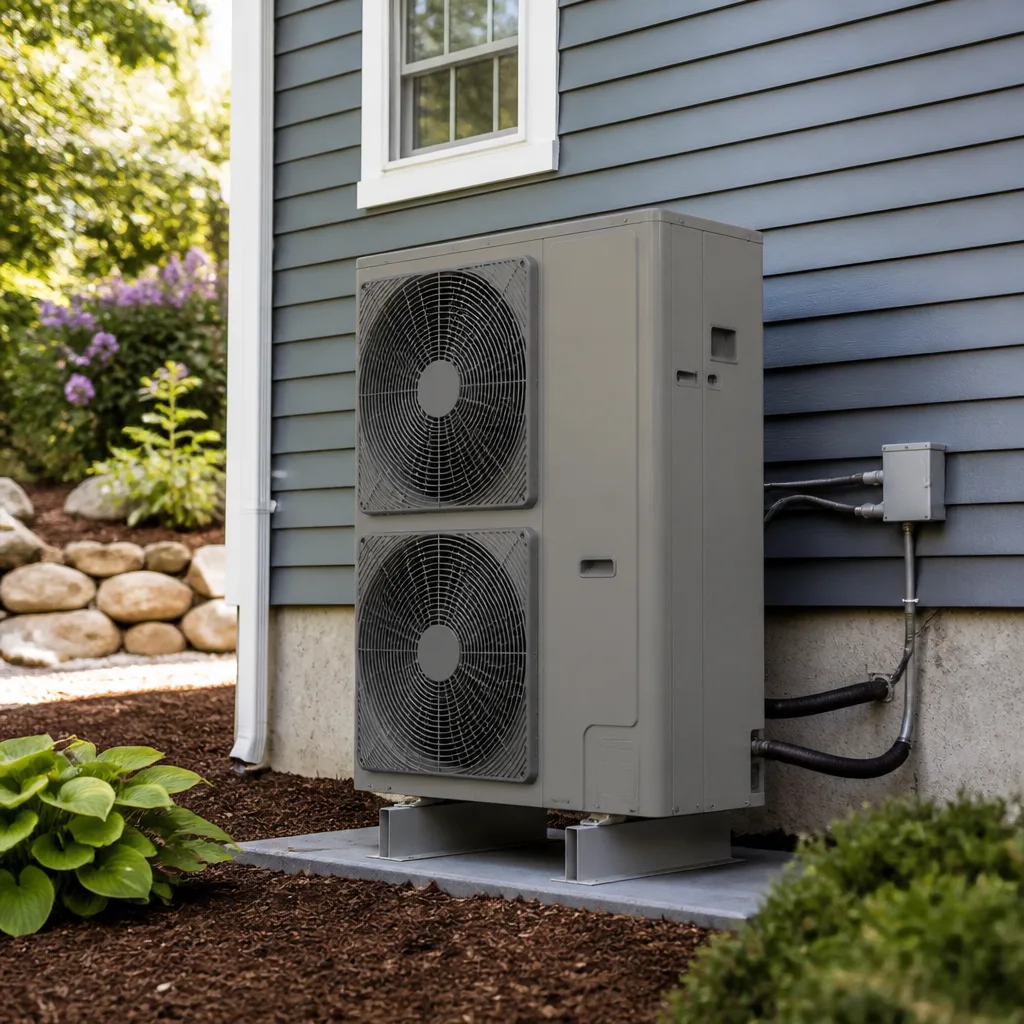 Heat pumps
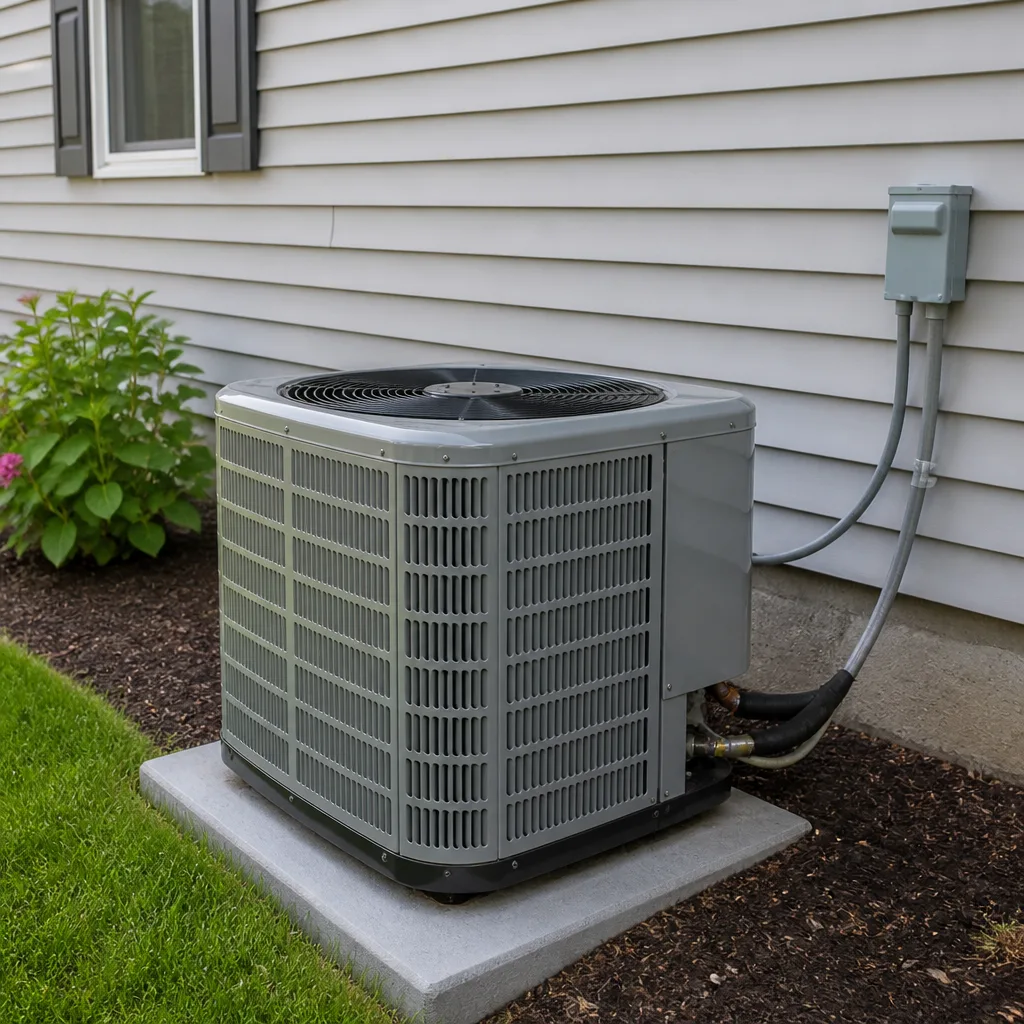 AC repair
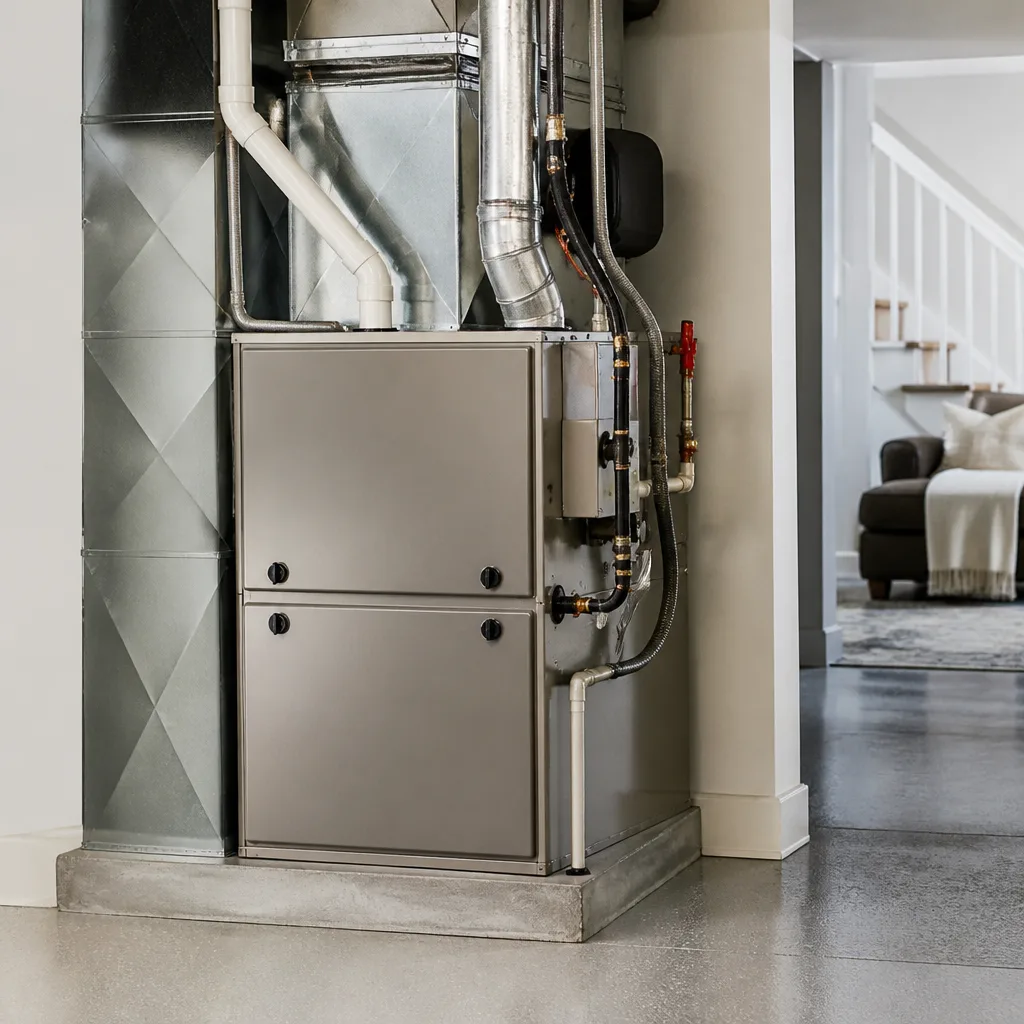 Furnace & heating
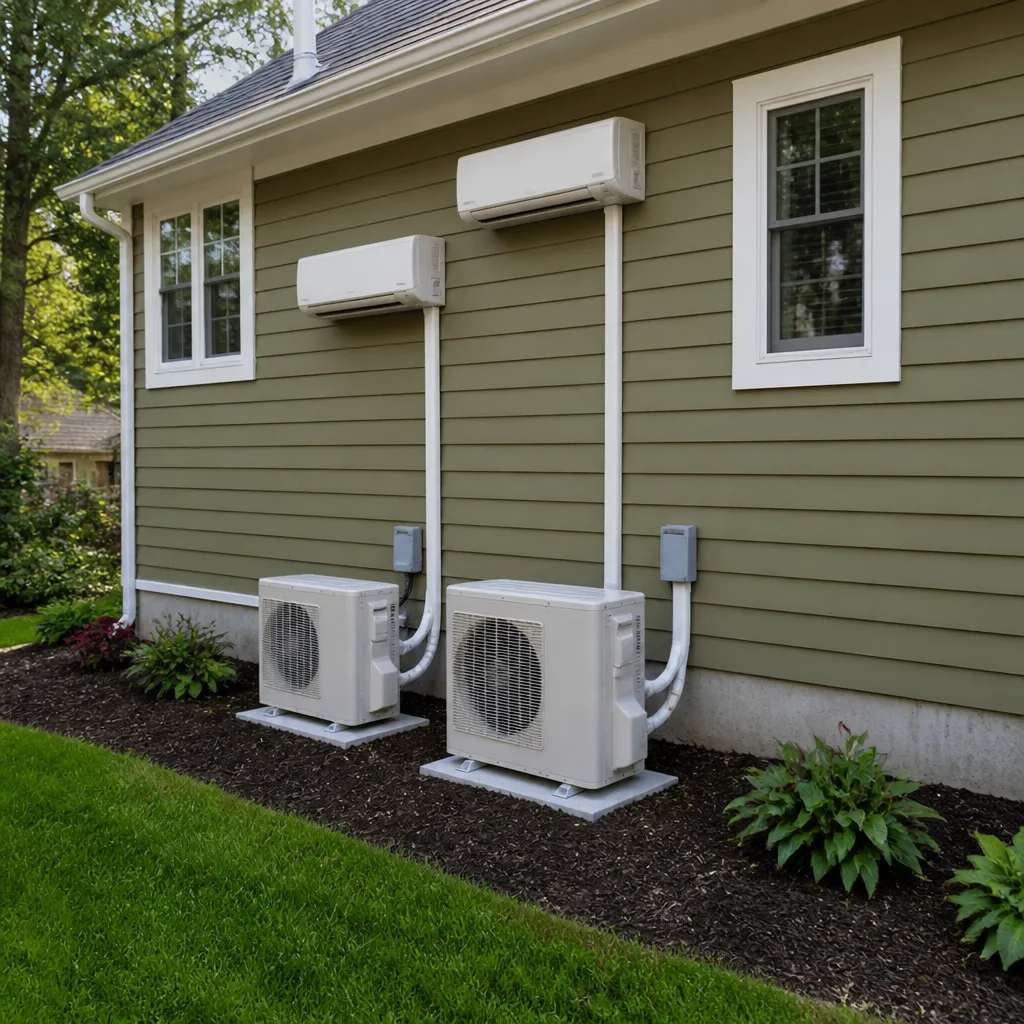 Ductless mini splits
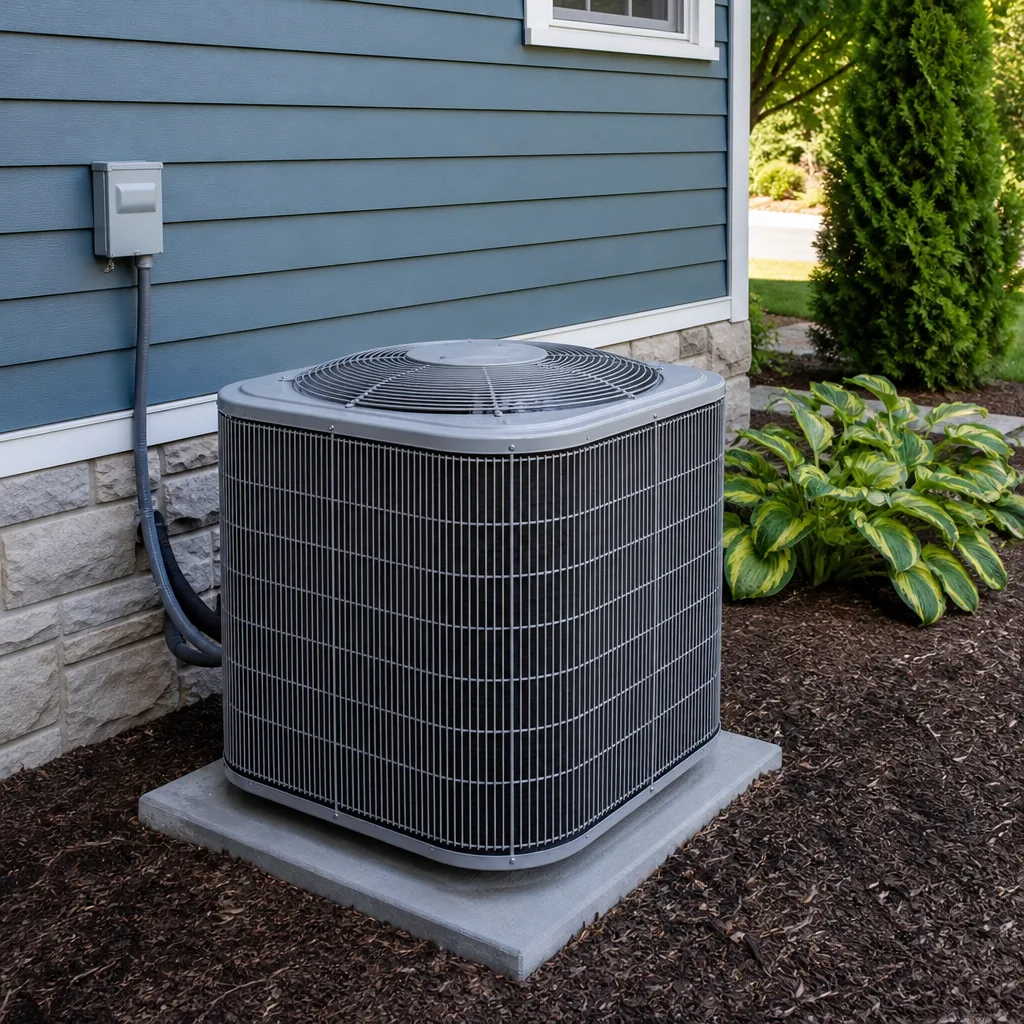 Carrier
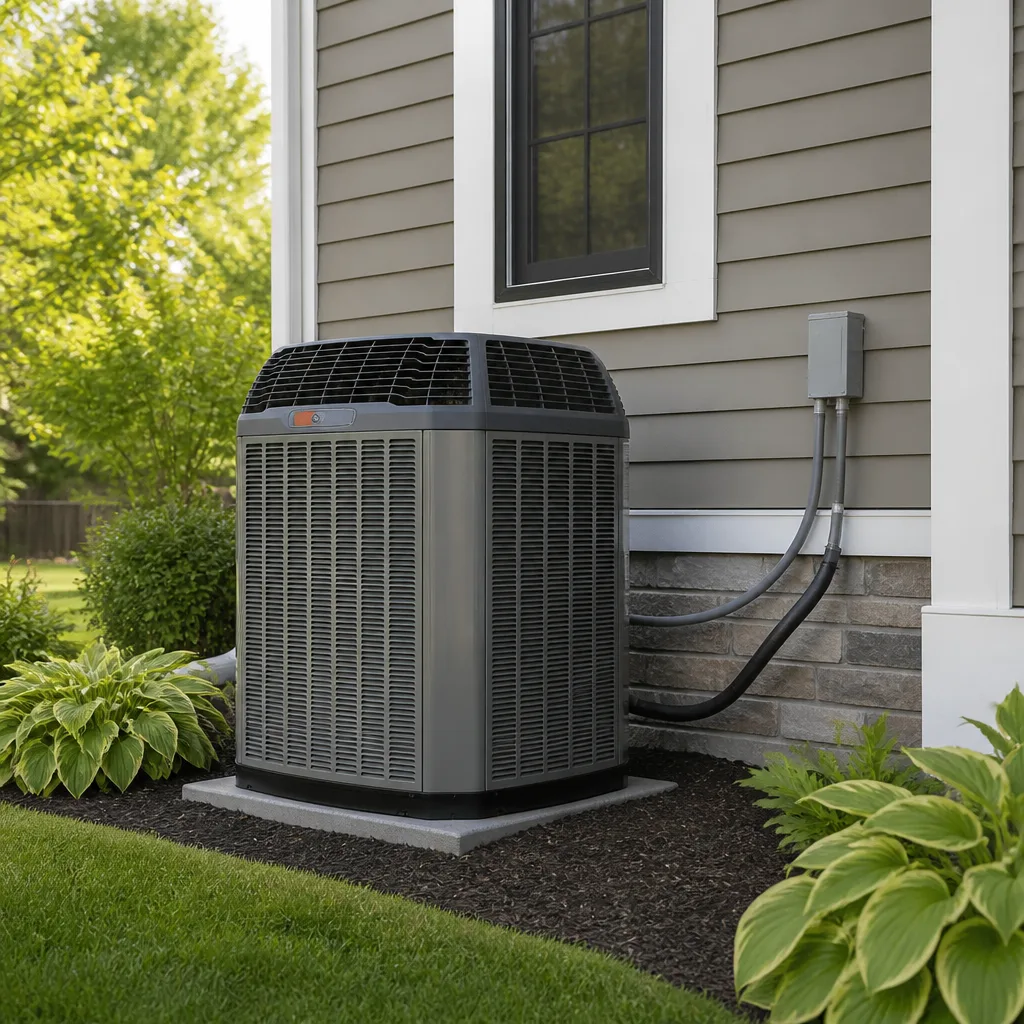 Trane
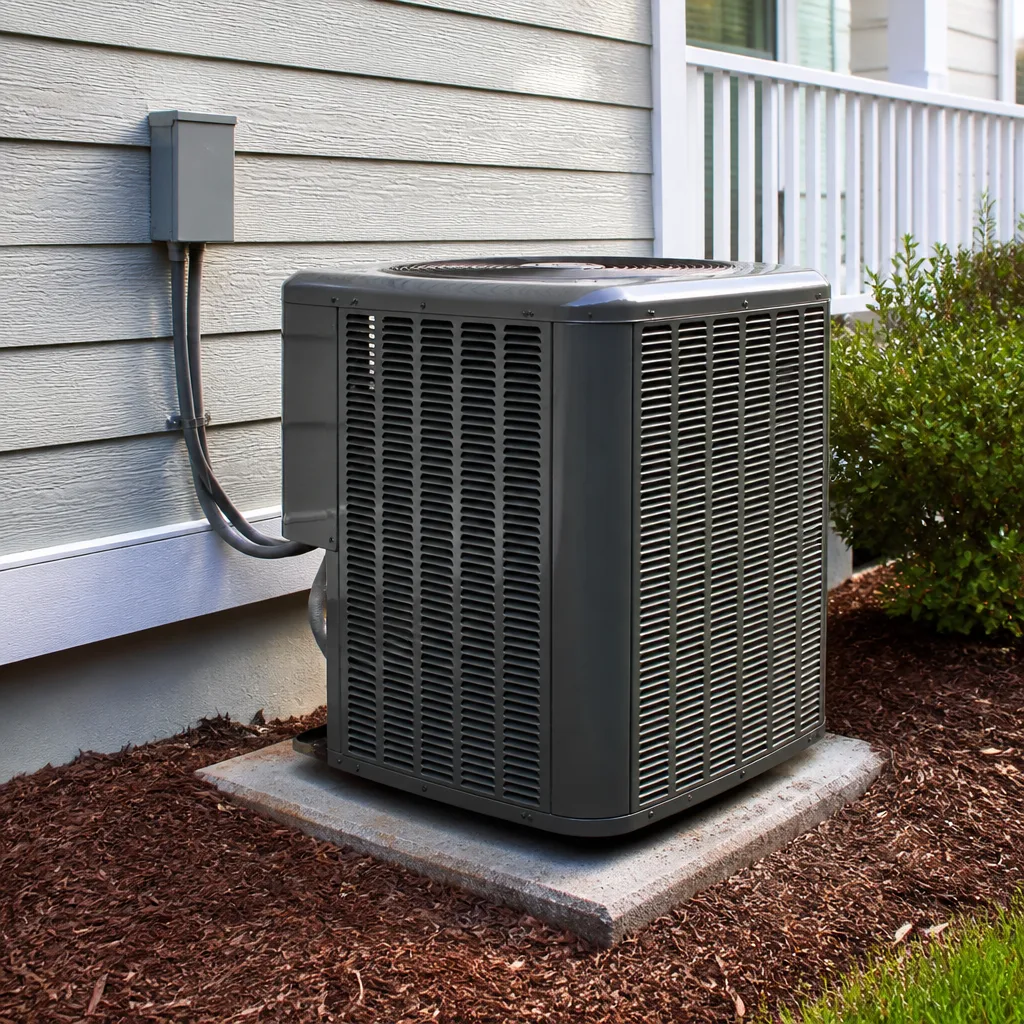 Goodman
Seasonal tune-up and full diagnostic on your Carrier, Trane, or Goodman system - readings shown to you before any repair is proposed
Diagnosis first, numbers second - you approve the repair price before a single part goes in.
Get your free estimateHeat Pump & Mini Split Maintenance Schedule: What to Do and When
Mini split manufacturers put filter cleaning on the monthly line of every maintenance chart. In Sunrise Manor, with dust storms rolling through the valley and construction crews working the east side almost year-round, Ray has pulled filters from two-month-old installs that looked like they’d been running for a full season. “Low maintenance” is relative to where you live. This guide lays out an actual month-by-month schedule calibrated to Sunrise Manor’s climate – not a generic quarterly chart copied from a box – and covers the tasks almost no homeowner does, the ones that turn up on service calls when a $60 part turns into a $400 problem.
Quick Answer
A heat pump or mini split in Sunrise Manor needs filter cleaning every 3-4 weeks during cooling season (May-September), outdoor coil rinsing every 4-6 weeks during dust and cottonwood season, and a professional inspection once per year for refrigerant pressure, electrical connections, drain line flow, and compressor readings. Homeowner tasks take 20-30 minutes per month; the annual professional visit is what catches wear before it becomes a repair.
Styles & brands we work with
- AC repair
- Furnace & heating
- Heat pumps
- Ductless mini splits
- Carrier
- Trane
- Goodman
Table of Contents
- Month-by-Month Schedule for Sunrise Manor
- How to Clean a Mini Split Filter Without Damaging It
- Outdoor Coil Cleaning: Desert Dust vs. Cottonwood Season
- Condensate Drain Pan and Line Inspection
- Heat Pump Winter Tasks: Defrost, Snow, and Emergency Heat
- What Annual Professional Maintenance Actually Finds
- Common Mistakes to Avoid
- Frequently Asked Questions
Month-by-Month Schedule for Sunrise Manor
The generic charts that ship with most mini splits are written for a Midwest climate, where you get four distinct seasons and the dust load is nothing like what blows through the east valley. Sunrise Manor has a long cooling season (roughly April through October), a short heating season (December through February), and wind events that arrive without warning, dropping fine particulate on outdoor coils overnight. We’ve seen the difference on service calls: the same unit on two different streets can look a decade apart in age if one owner cleans the coil and the other doesn’t. Here’s the calendar we hand to homeowners:
- January: Check the outdoor unit for debris; in a wet winter, clear snow or ice from around the base so the defrost cycle can drain. Replace or clean the indoor filter. Glance at the condensate line for frozen water (uncommon but happens).
- February: Filter clean. Run the system in heating mode for 15 minutes and listen for odd sounds. If you haven’t scheduled the annual professional visit by now, do it before the spring cooling rush.
- March: Filter clean. Rinse the outdoor coil for the first time in the season. Check that the fan blade spins freely.
- April: Filter clean. Clear cottonwood seed from the outdoor coil weekly if your property borders any of the cottonwood-heavy pockets around Sunrise Manor and Nellis. This is the month most coil clogs start.
- May: Filter clean. Full outdoor coil rinse. Check the drain pan for standing water and clear the line if you see it. Test the thermostat before the first 100°F day.
- June-August: Filter every 3 weeks. Coil rinse every 4-6 weeks, more if a dust storm rolled through. Watch for ice on the indoor unit’s line set (rare but means something’s wrong).
- September: Filter clean. End-of-season coil rinse. Note any odd sounds or weak airflow for the fall inspection.
- October-November: Filter clean. Rinse coil once. Switch the system to heating mode for a test run before the first cold snap.
- December: Filter clean. Check the outdoor unit for wind-blown debris. Confirm the defrost cycle is working (visible steam off the outdoor coil during a heating cycle is normal).
That’s 20-30 minutes a month of your own time, plus the annual professional visit. If you have a ducted heat pump in Sunrise Manor, the schedule shifts slightly – see our Heat Pump & Mini Split in Sunrise Manor page for the ducted-specific details.
How to Clean a Mini Split Filter Without Damaging It
The right way takes five minutes. The wrong way – and we’ve seen plenty of wrong-way attempts – bends fins, tears filter mesh, or pushes dust deeper into the indoor coil. The mesh on most filters is fragile once it’s been in service for a few months; a bent fin won’t kill the system, but it reduces airflow, which means the coil ices up more often, which means a real repair call. Here’s what works:
- Turn the system off at the thermostat or the remote. Not a safety hazard, but it prevents the indoor fan from pulling the filter back in while you’re working.
- Lift the front panel of the indoor head. It hinges up on most models – Carrier, Trane, American Standard, and most others use the same design. Don’t force it.
- Slide the filters out slowly. Most mini splits have two filters per head. Pull straight out – don’t flex them.
- Tap dust off into a trash bag or outside. Not in the sink, not over the toilet. You’ll clog your drain.
- Rinse under lukewarm water from the back side. Never hot. Never with a hard stream. Warm tap water and light pressure – you’re rinsing, not pressure-washing. A soft-bristle toothbrush handles stubborn spots on the frame, never on the mesh.
- Let them air-dry completely. 30-60 minutes. Don’t reinstall wet.
- Check the indoor coil while the filters are out. If you can see dust matted on the fins, that’s the sign to schedule the professional visit rather than to try cleaning it yourself – those fins bend if you look at them wrong.
Don’t use a shop vac on the filter mesh. The suction warps it. And don’t use dish soap or any cleaner with surfactants unless the manufacturer’s manual explicitly says so – some filter coatings are damaged by detergent. If a filter is torn or the mesh is stretched out of shape, replace it. Filters are cheap; compressor problems aren’t.
Outdoor Coil Cleaning: Desert Dust vs. Cottonwood Season
This is the task every manufacturer recommends and almost no homeowner does. The outdoor coil on a mini split or heat pump is the condensing coil in cooling mode – all the heat it removes from your house gets dumped through those fins. When the fins clog with dust, the compressor works harder, runs hotter, and pulls more amps. In a Sunrise Manor summer, that’s the difference between a compressor that lasts 15 years and one that lasts 9.
Two seasons matter here, and they need different approaches:
- Dust season (year-round, heavy in spring): The fine caliche particulate that blows through Sunrise Manor coats the fins slowly. Rinse with a garden hose from the inside out, low pressure, no nozzle – let gravity do the work. This loosens dust without bending fins. Do it every 4-6 weeks during cooling season.
- Cottonwood season (typically late April through May): The cottonwood fluff that blows across the east valley sticks to the coil and traps dust in it. You have to physically pick the fluff off with your hands (gloves on) before you rinse. If you rinse first, the water pushes fluff deeper into the fins. Once it’s in there, it’s a professional job with a coil comb.
Never use a pressure washer on the outdoor coil. Ever. The fins are soft aluminum – a pressure washer will flatten them into a solid wall of metal in 10 seconds, and the only fix is a new coil. If your coil already looks flattened or you can’t see daylight through it, that’s a call to a professional, not a bigger hose. Our AC Repair & Installation in Sunrise Manor page covers what coil cleaning actually fixes when the unit is already running rough.
Condensate Drain Pan and Line Inspection
In cooling mode, a heat pump or mini split pulls gallons of water out of the air every day. That water runs down the back of the indoor coil into a drain pan, then out through a small plastic line to your house’s drainage system or the exterior. When that line clogs – and in Sunrise Manor, dust plus the occasional spider or bug nests in the line – water backs up, overflows the pan, and stains your ceiling or wall. We’ve seen this on second-floor mounts where the head is on an interior wall high up, and a slow overflow can go weeks before it shows.
Here’s what to check monthly during cooling season:
- Look at the drain pan. With the filters out, you can usually see the pan. It should be dry-ish with water flowing through, not sitting full. Pooled water means the line is starting to clog.
- Look at the line where it exits the wall. On a Sunrise Manor-style install where the head is high on an interior wall, the condensate line typically runs inside the wall to the exterior or to a floor drain. If you see water staining on the wall or the baseboard, that’s a clogged line and a wet-drywall problem at the same time.
- Watch for bubbling or gurgling at the indoor head. That’s a sign the line isn’t draining freely.
- Have the professional flush the line annually. A shop-vac pull at the exterior termination point (if accessible) clears most clogs, but the pro can also check the slope of the line and confirm the pan isn’t cracked.
If your install runs the condensate line to a small condensate pump near the unit, check the pump reservoir monthly – it should be mostly empty. If water is sitting in it, the pump is failing. That’s a $60-100 part and a 15-minute swap, not a service call worth putting off.
Heat Pump Winter Tasks: Defrost, Snow, and Emergency Heat
Sunrise Manor gets light winter weather compared to the mountains, but the heat pump side of the maintenance schedule still matters. Heat pumps work by reversing the refrigerant flow – in heating mode, the outdoor coil becomes the evaporator, and it gets cold enough to frost up. The unit has a defrost cycle that melts that frost by temporarily reversing the flow. If the defrost cycle is failing, ice builds on the outdoor coil and heating output drops. You’ll notice this in three ways:
- Steam or visible heat waves off the outdoor unit during a heating cycle – that’s normal defrost, don’t worry about it.
- Ice on the outdoor coil for more than an hour – that’s a failed defrost, call a professional.
- Cool air blowing from the indoor vents for 5-10 minutes during a heating cycle – that’s the defrost cycle pulling heat out of the house, which is normal, but if it lasts longer, something’s wrong.
For Sunrise Manor homeowners who use a heat pump as the primary heating source, keep the outdoor unit clear of windblown debris (leaves, tumbleweeds, the occasional plastic bag) throughout the winter. Don’t cover the unit. If you have a heat strip emergency heat backup, test it once in early December by flipping the thermostat to emergency heat for a minute – it should blow warm air. If it doesn’t, that’s a $200-400 repair that’s better done in December than in the middle of a cold snap. Our Heating & Furnace in Sunrise Manor page has more on heat pump heating for this climate.
What Annual Professional Maintenance Actually Finds
We’ll be honest about this because it matters: homeowner cleaning handles the filter, the coil, and the drain line. That’s most of the routine maintenance. It does not catch the things a trained eye catches, and I’m not going to pretend otherwise. Here’s what an annual professional visit on a Sunrise Manor heat pump or mini split actually turns up, roughly in order of frequency:
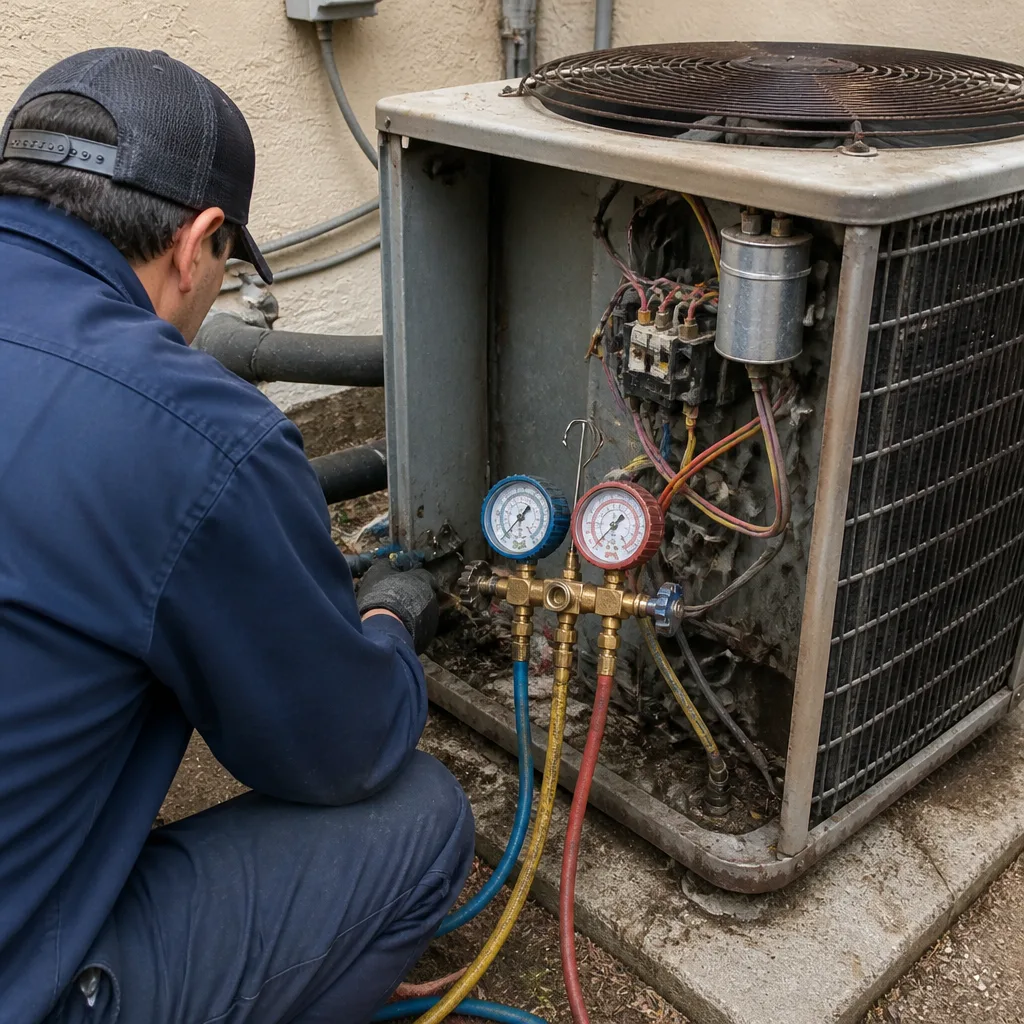
- Low refrigerant charge from a slow leak. A heat pump that’s 1-2 pounds short will still heat and cool, just less efficiently. Without gauges, you’ll never notice. With gauges, a slow leak shows up as a pressure reading that’s drifted since last year, which is the cheapest possible time to fix it.
- Loose electrical connections at the contactor or capacitor. Loose lugs pull higher amps and cook the terminal. On a 15-amp heat pump circuit in a Sunrise Manor summer, that’s a fire risk, not a hypothetical. We test the capacitor before anyone says the word compressor – the vast majority of “compressor failed” calls are capacitor or contactor problems in disguise.
- A failing capacitor. Cheap part, easy swap, but a bad capacitor will run the compressor hard until it fails. Catching it on an annual visit is the difference between a $40 part and a $2,000 compressor.
- Drain line restrictions the homeowner couldn’t see. A slow clot in a wall-run condensate line won’t show until it stains drywall. A pro can pull the line or snake it before that happens.
- Fins flattened by a previous cleaning attempt. If you’ve been pressure-washing the outdoor coil, the annual visit is where the damage gets found – usually with a coil comb and a few hours of fin-straightening labor.
That’s the whole case. The homeowner schedule saves the routine stuff. The annual visit is what catches the things that turn into a $1,500 repair if they wait a second season. If you want a second opinion on an estimate from another company, we give those free – that’s a standing offer, not a sales tactic.
Common Mistakes to Avoid
- Pressure-washing the outdoor coil. The fins are soft aluminum and a pressure washer will flatten them into a wall of metal. Never do it. Ever.
- Using dish soap or general-purpose cleaner on the indoor filter mesh. Some filter coatings are damaged by surfactants. Warm water and a soft brush is all you need.
- Skipping the filter clean because the system “seems fine.” In Sunrise Manor’s dust load, a filter that’s been skipped for two months is already restricting airflow enough to ice the indoor coil in a hot summer.
- Rinsing the outdoor coil during cottonwood season without picking off the fluff first. The water pushes the fluff deeper. Pick it off by hand, then rinse.
- Ignoring standing water in the drain pan. Pooled water means a clogged line. That’s a wet ceiling waiting to happen.
- Running the system on emergency heat all winter “just in case.” It’s expensive and it masks a heat pump problem you should be finding now.
- Letting a “seasonal tune-up” from a rotating crew stand in for a real diagnostic visit. A tune-up that doesn’t include pressure gauge readings and a capacitor test isn’t maintenance – it’s a stamp on a form. Ask what they’re actually checking.
See the difference
 Before
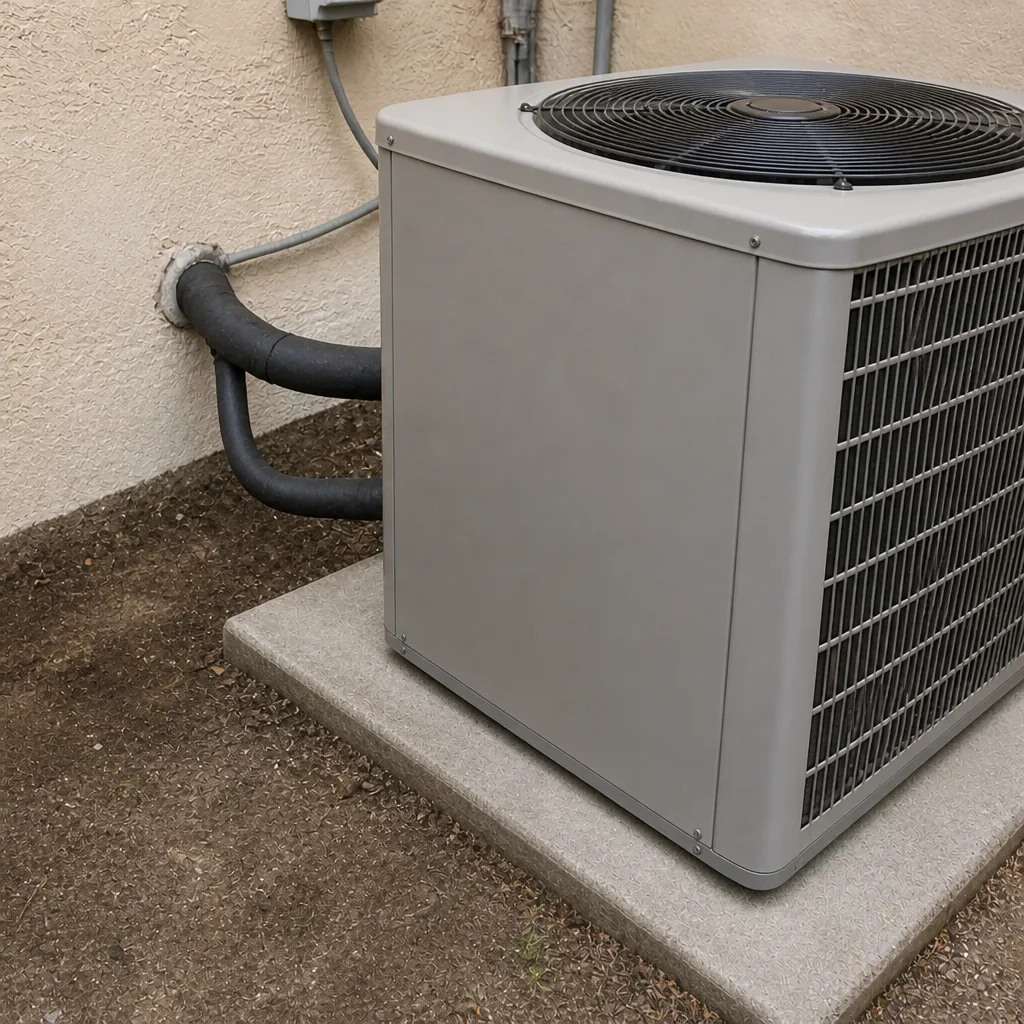 After
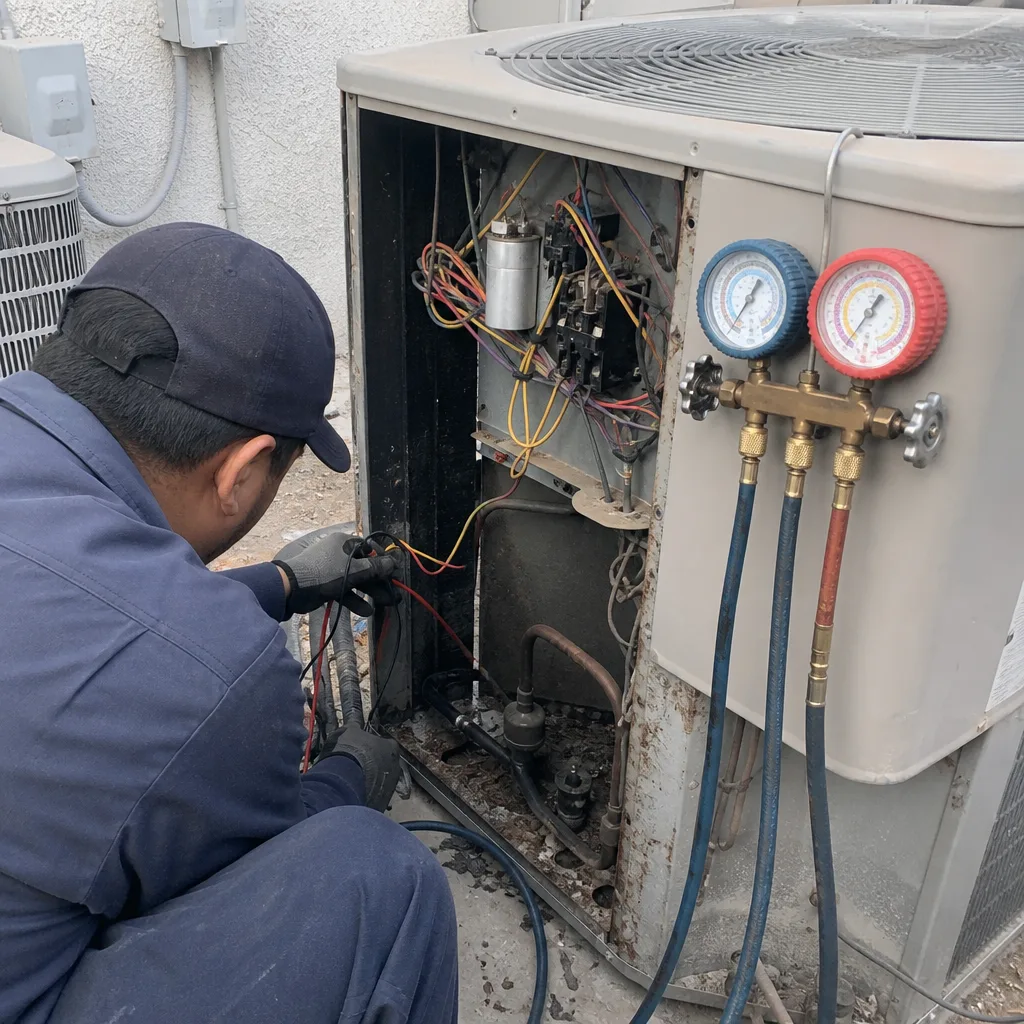 Before
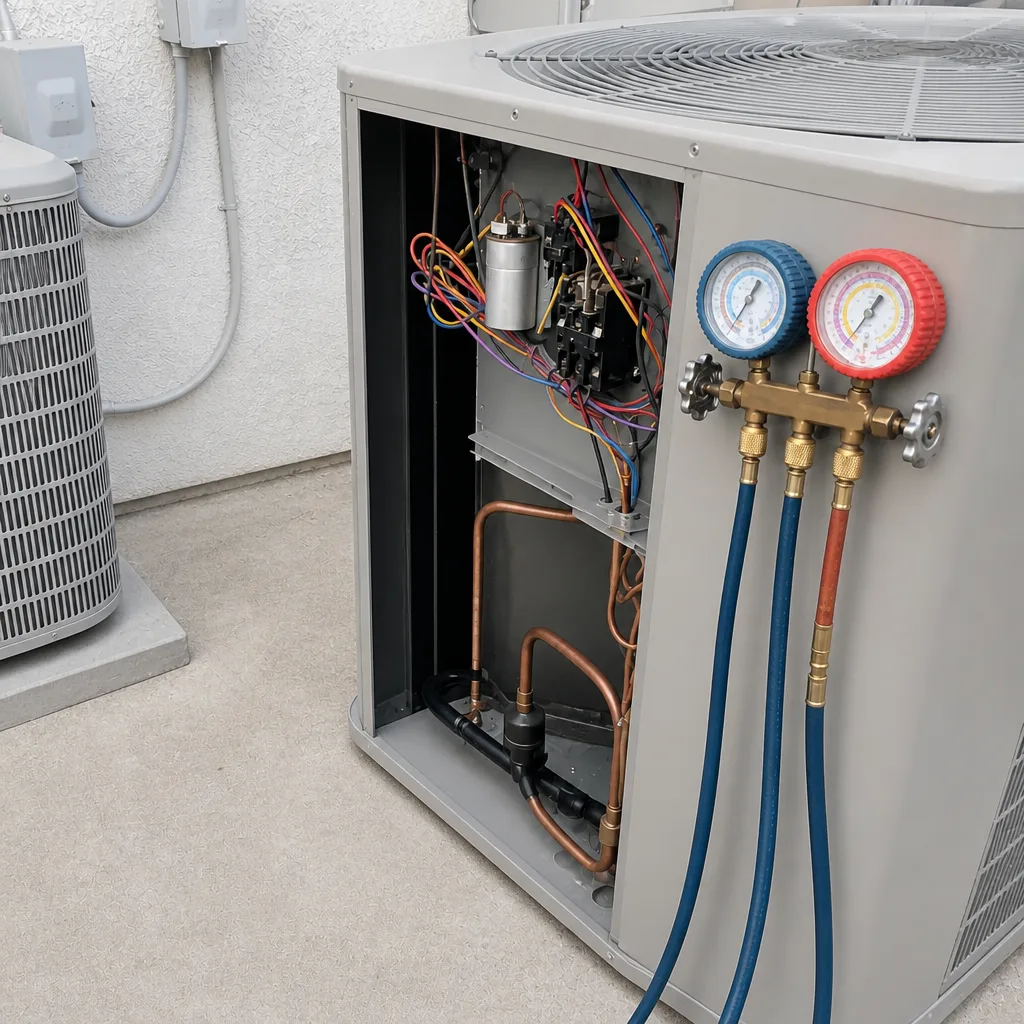 After
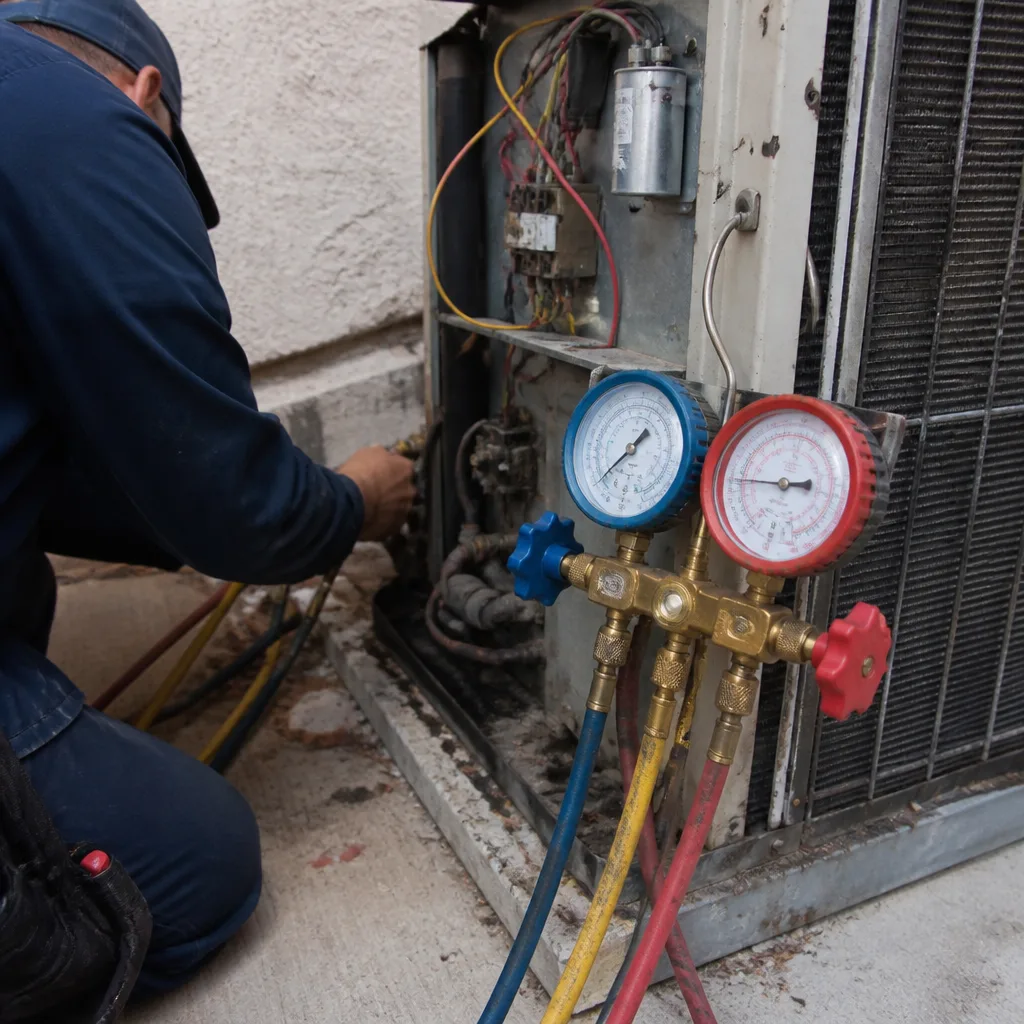 Before
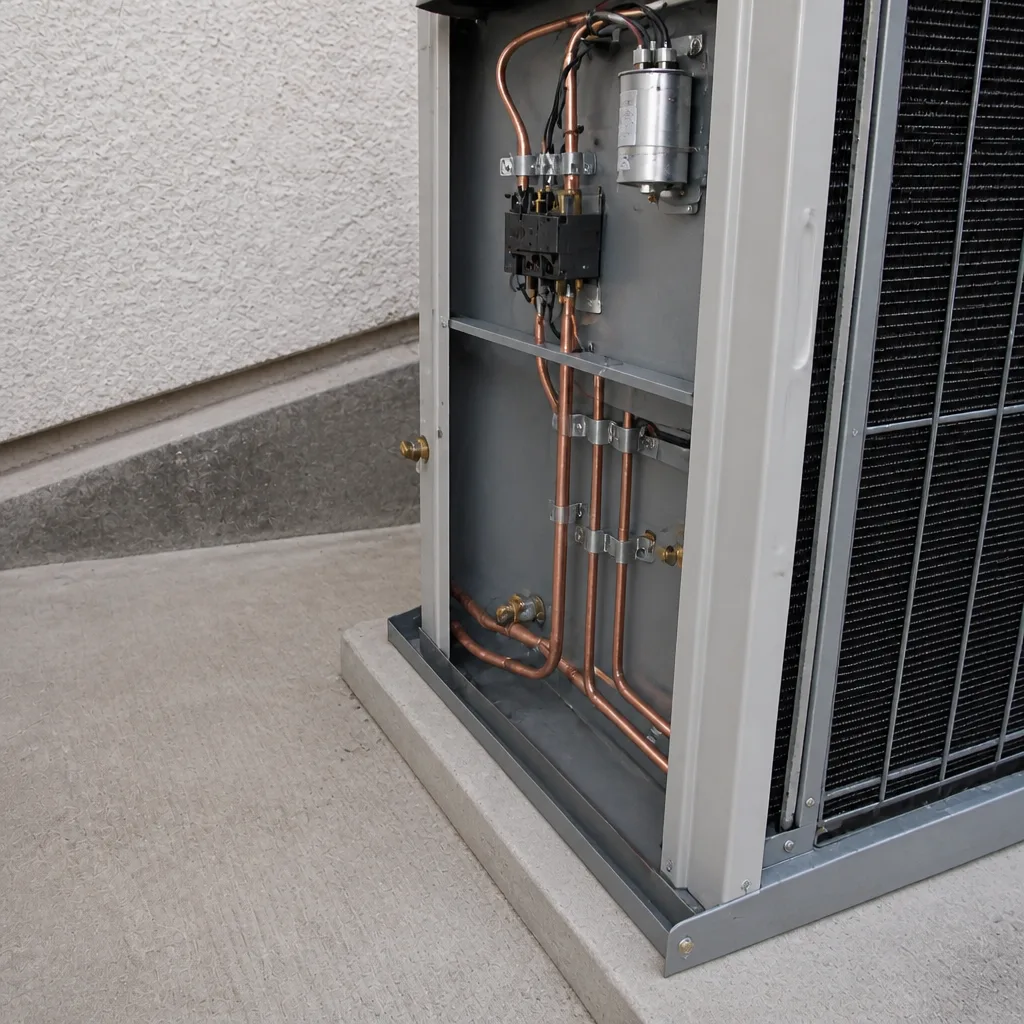 After
When to Call a Professional
Some things are DIY-friendly, and some are not. Call a professional for: any refrigerant work (federal law requires a licensed tech), ice on the outdoor coil that lasts more than an hour, water stains on the wall or ceiling near the indoor head, a heat pump that’s running but not heating or cooling, electrical smells or buzzing at the outdoor unit, and any repair on the compressor, reversing valve, or contactor. Sunrise Manor summers make waiting expensive – a unit that’s short on refrigerant in July will cost more to fix in August. Ray’s Heating & Air Sunrise Manor offers free estimates in Sunrise Manor – call (877) 311-5951. Phones are answered by a live person, 24/7, and there’s no trip charge inside the county.
Frequently Asked Questions
Every 3-4 weeks during cooling season (roughly May through September) and every 6-8 weeks the rest of the year. Sunrise Manor’s dust load is heavier than the manufacturer’s national average, so the “monthly” recommendation on the box is often too little here. During a heavy dust-storm week, check it after the storm passes – a filter packed with caliche dust will ice the indoor coil in a single afternoon.
You can’t skip it entirely, but you can reduce how much of it matters. Homeowner cleaning handles filters, coils, and drain pans. It does not check refrigerant pressure, test capacitors, tighten electrical connections, or catch a slow drain-line clog inside a wall. The annual professional visit is what turns a $40 capacitor replacement into a repair rather than a $2,000 compressor failure. Call (877) 311-5951 to schedule – free estimate, no trip charge in the county.
For 5-10 minutes at a time during a heating cycle, that’s normal – it’s the defrost cycle reversing flow to melt ice off the outdoor coil. If cold air lasts more than 15 minutes or the outdoor unit stays iced over, that’s a defrost failure or low refrigerant, and it needs a professional. Sunrise Manor winters are mild, but a heat pump that loses its defrost cycle can drop heating output by half within an hour.
It varies by system size and condition, but a routine annual visit is a flat fee – usually quoted upfront before anyone touches the system. We give the same number on the phone that we give at the door. If the visit turns up a repair, you see the readings and the numbers before any work begins, and the 90-Day Done Right Promise applies to every job. Call (877) 311-5951 for a quote on your specific system.
A mini split has one filter per indoor head plus the outdoor coil – simpler, fewer moving parts, less to break. A ducted heat pump adds a central air filter, ductwork (which can leak or collect dust), and a single indoor coil serving the whole house. Both need the same outdoor coil cleaning and the same annual professional visit. A ducted system also needs the ducts checked periodically for leaks – a leaky duct in a Sunrise Manor attic can cost 20-30% of your cooling efficiency.
Less, not none. “Low maintenance” for a mini split means no ductwork to worry about and no belt to replace – not that you can ignore the filter and coil. In a desert climate with constant dust and spring cottonwood, the filter and coil work is actually more frequent than a Midwest homeowner would expect. The system is simpler; the duty cycle is not.
The Bottom Line
Mini split maintenance is real maintenance – it’s just simpler than a ducted system’s. Filter cleaning every 3-4 weeks in cooling season, outdoor coil rinsing every 4-6 weeks (picking off cottonwood before rinsing), drain pan check monthly, and a professional visit once a year for the things you can’t see: refrigerant charge, capacitor health, electrical connections, drain flow. In Sunrise Manor, the dust load and cottonwood season make the DIY side more frequent than the manufacturer’s national average – that’s the part most guides skip. Follow the schedule, and your system will likely last 15+ years. Skip it, and you’ll find out why “low maintenance” was always relative to where you live. If you want a second opinion on any maintenance or repair estimate, Ray’s Heating & Air Sunrise Manor gives those free. For service anywhere in Sunrise Manor, call (877) 311-5951, and see our Ray’s Heating & Air Sunrise Manor home page for everything else we do.
Written by the team at Ray’s Heating & Air Sunrise Manor.