
Last updated November 18, 2026
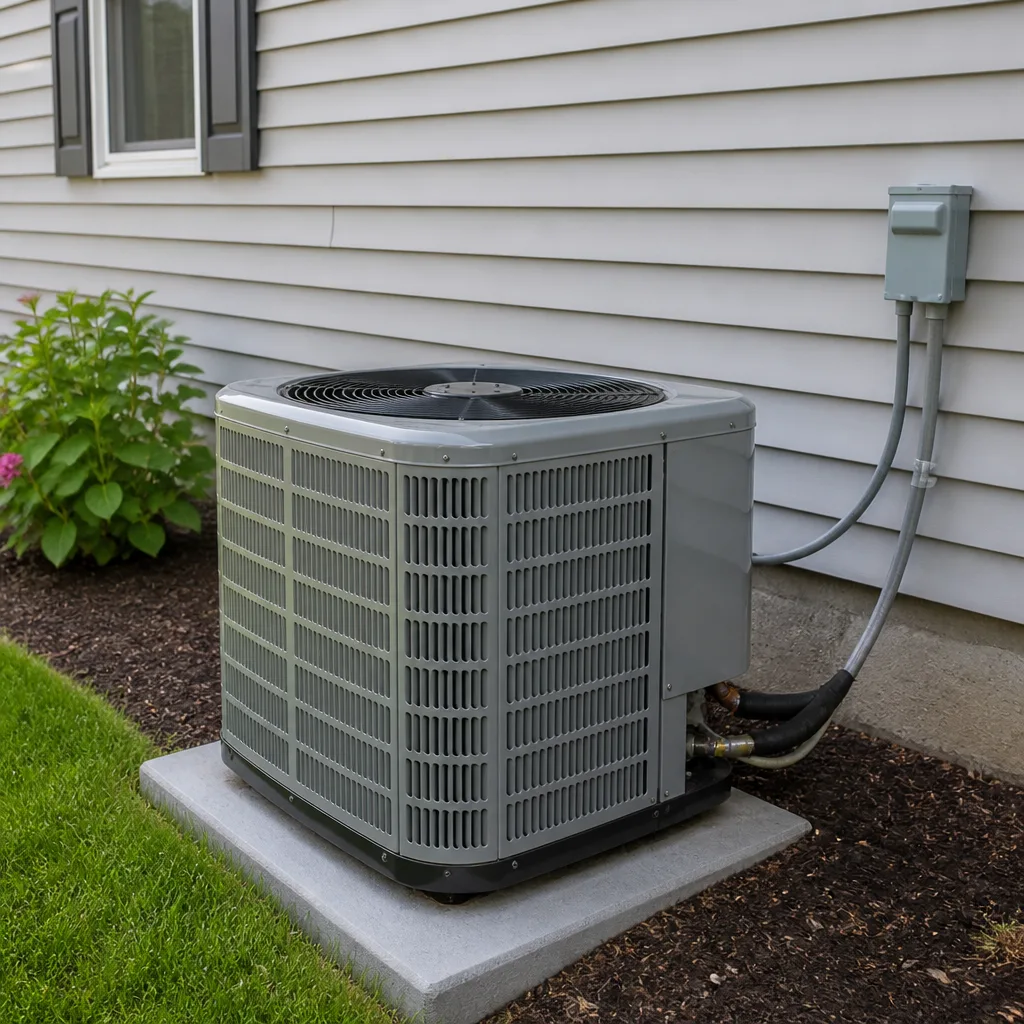 AC repair
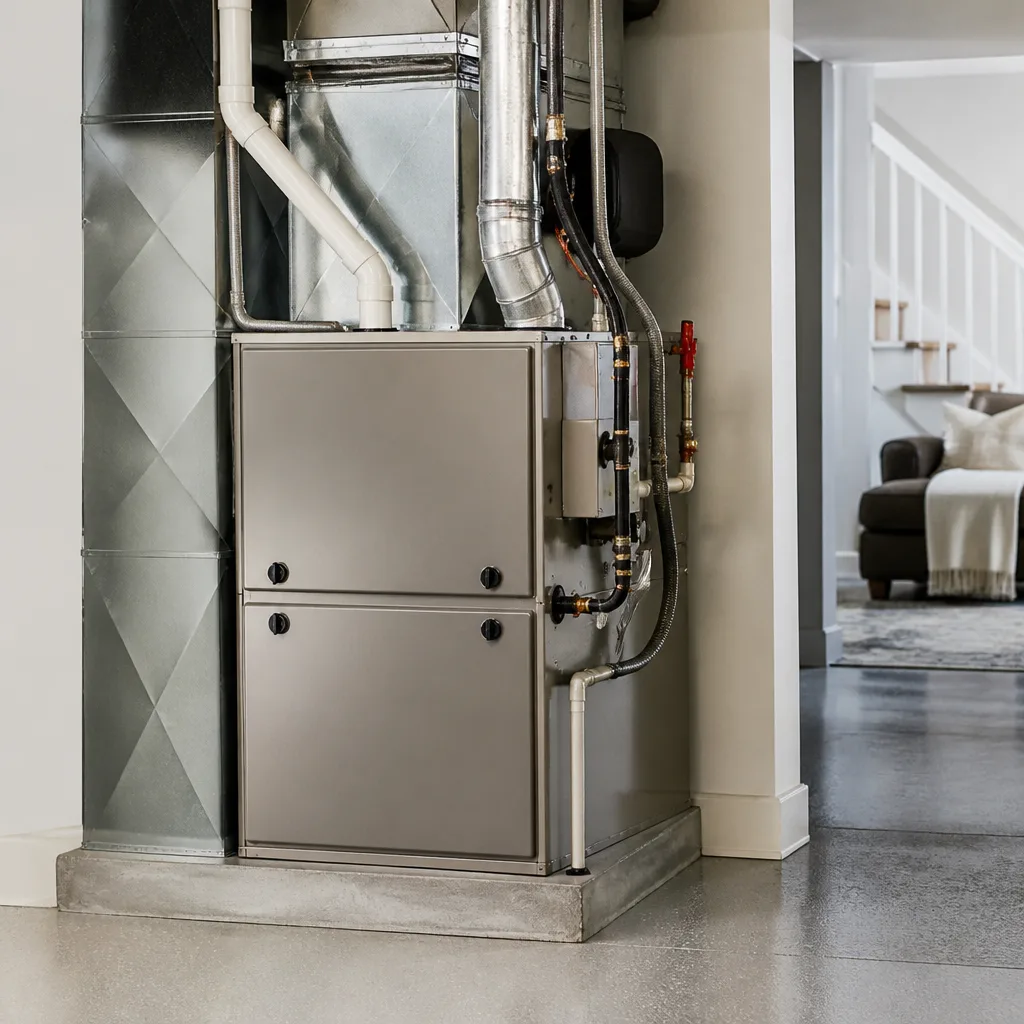 Furnace & heating
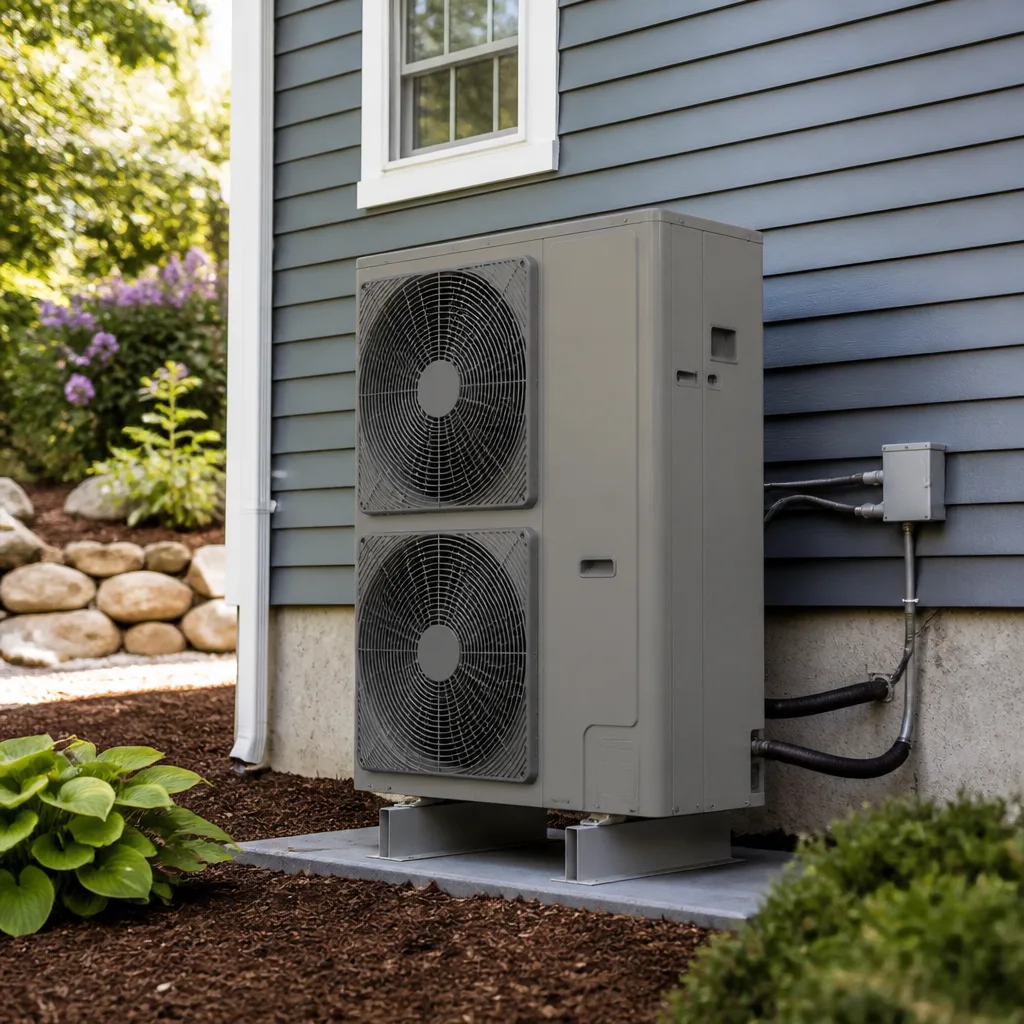 Heat pumps
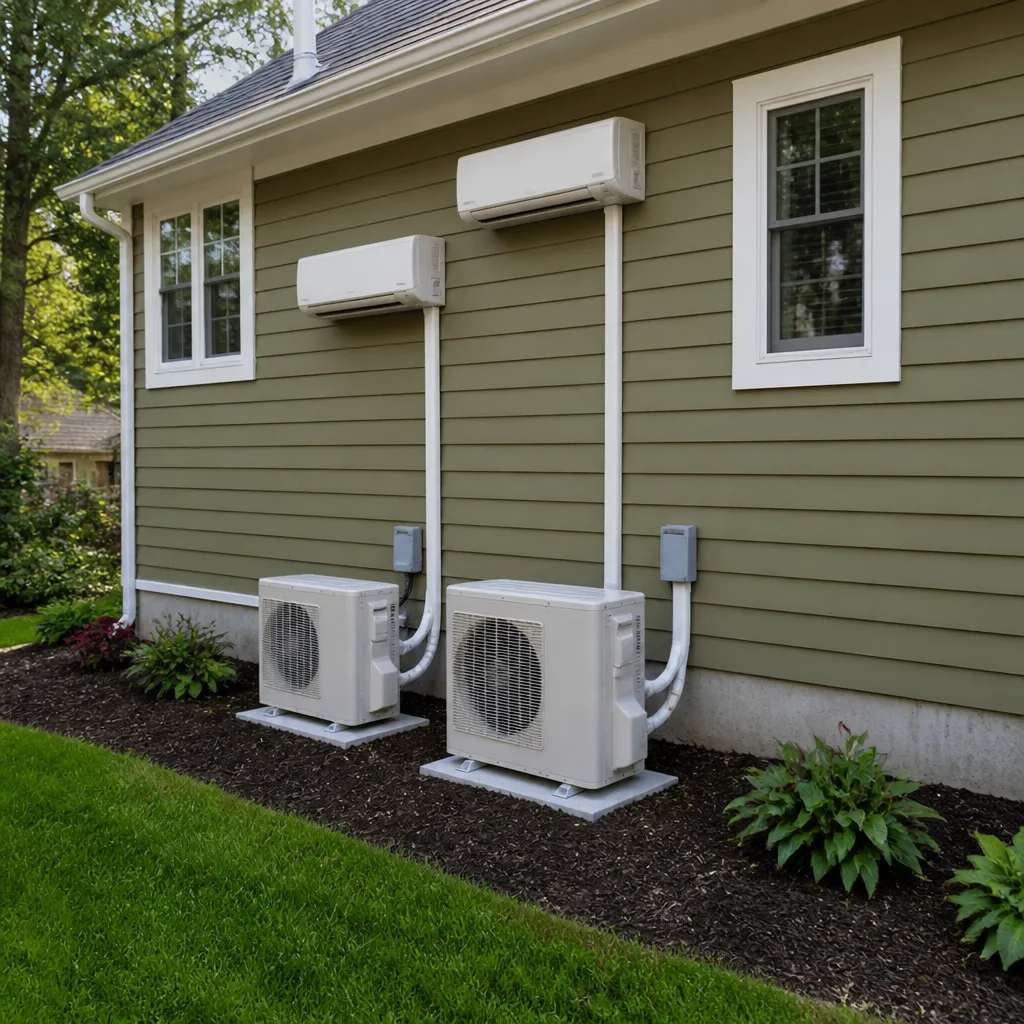 Ductless mini splits
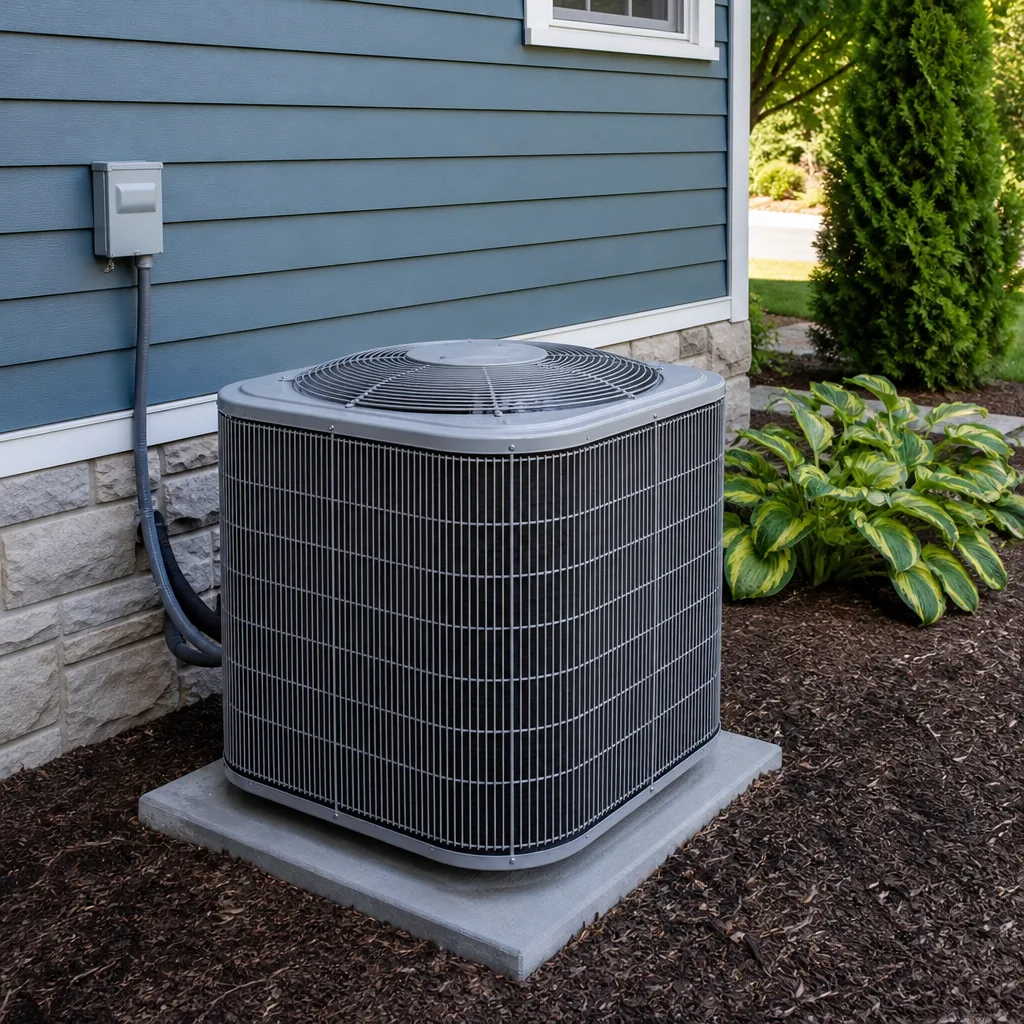 Carrier
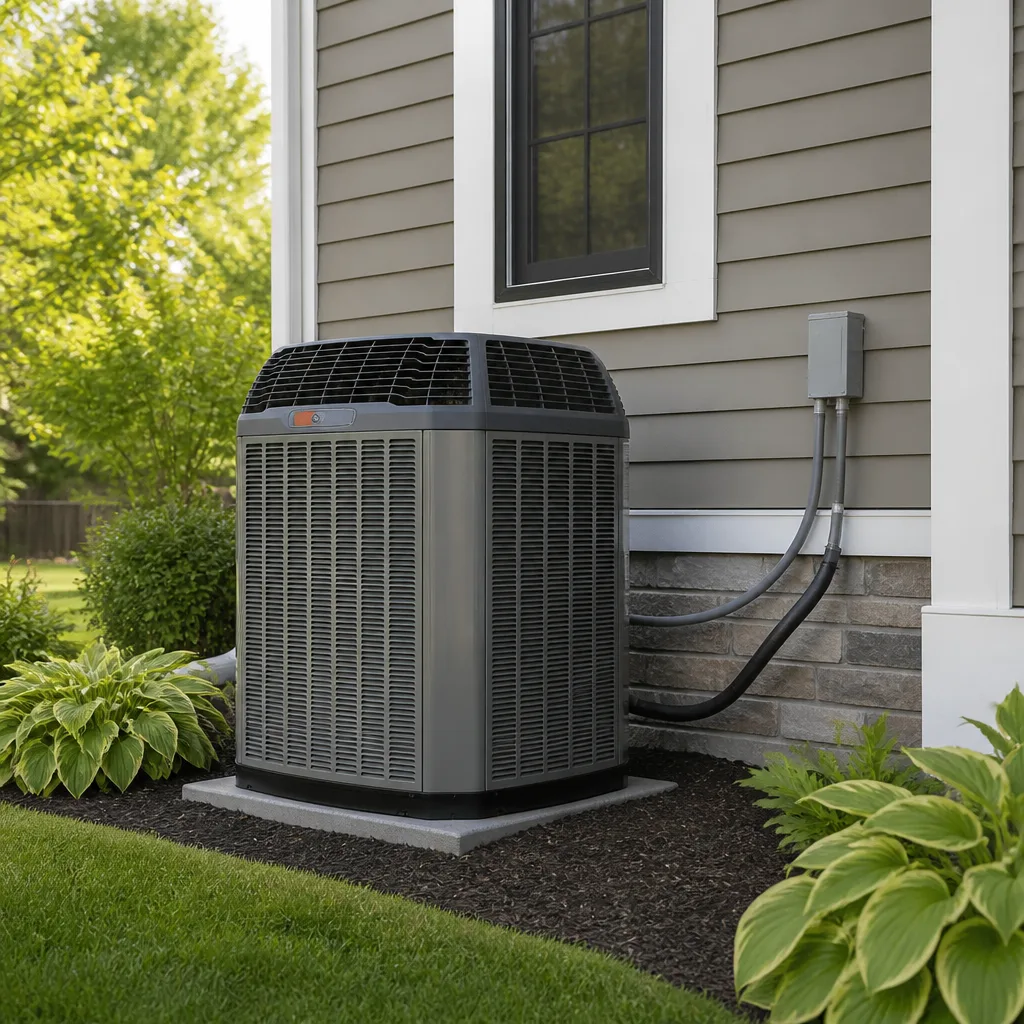 Trane
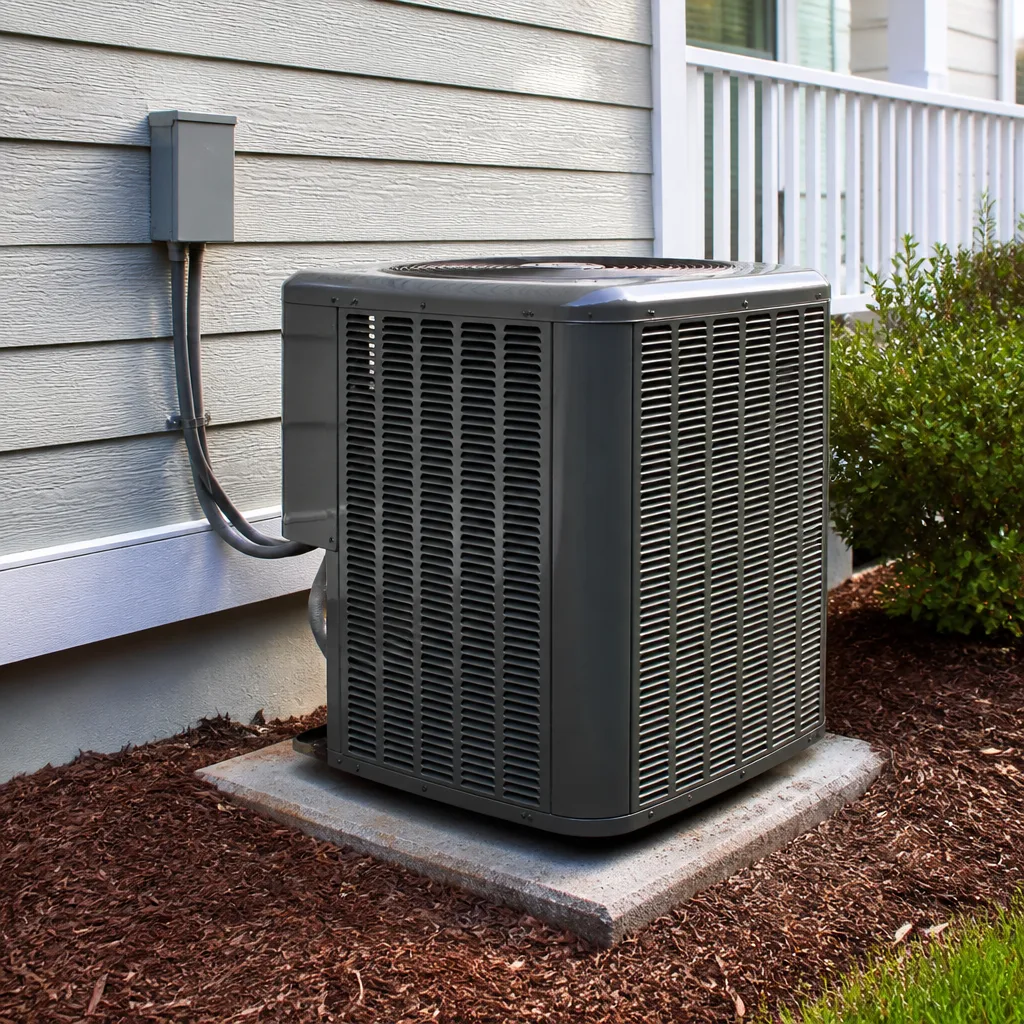 Goodman
Seasonal tune-up and full diagnostic on your Carrier, Trane, or Goodman system - readings shown to you before any repair is proposed
Diagnosis first, numbers second - you approve the repair price before a single part goes in.
Get your free estimateEmergency & Commercial HVAC Warning Signs Every Homeowner Should Know
The last three commercial emergency calls we took in June all had one thing in common: someone on staff had noticed something weird a week before the breakdown and figured it was “just the system being old.” It wasn’t. A commercial unit almost never dies without warning. It telegraphs failure for days, sometimes weeks, in ways that are easy to see, smell, and hear if you know what you’re looking at. The problem is that in most buildings, nobody is actually assigned to watch the equipment. This guide is written for whoever is in the space the most: the shop manager, the church volunteer, the property caretaker, the office admin who sits nearest the thermostat. We’ll walk through the warning signs that predict a breakdown in Sunrise Manor before it strands your building.
Quick Answer
Before a commercial HVAC system fails, it usually shows watchable warning signs: it takes noticeably longer to cool down, short-cycles in short bursts, kicks the breaker when it starts, makes the lights flicker, or spikes your electric bill in May. Uneven temperatures zone by zone and a faint burning or musty smell are also red flags. If you see two or more of these in Sunrise Manor, get it looked at before the Nevada heat peaks, not after.
Styles & brands we work with
- AC repair
- Furnace & heating
- Heat pumps
- Ductless mini splits
- Carrier
- Trane
- Goodman
Table of Contents
- The Staff-Level Signs No One Writes Down
- Why Short-Cycling in Nevada Heat Means Days, Not Months
- Your 60-Second Rooftop Visual Check (From the Ground)
- Electrical Warning Signs and What Each One Tells You
- The May Electric Bill That Predicts a June Breakdown
- Uneven Temperatures, Zone by Zone
- Smells and Sounds That Mean Stop and Call
- Common Mistakes to Avoid
The Staff-Level Signs No One Writes Down
Here’s the honest truth about commercial HVAC in Sunrise Manor: the person who notices trouble first is rarely the person who can authorize a service call. That gap is where breakdowns live. A front-desk worker feels the cool air fade at 2 p.m. and shrugs. A stock clerk hears a click-click-whir every few minutes near the back room and keeps working. Nobody owns the building’s comfort, so the early signs get filed under “the system being old.”
Start keeping a simple log. It costs nothing and it will save you thousands. Watch for these staff-level observations, which together form a reliable early-warning pattern:
- “It’s taking longer to cool down.” If the space used to hit setpoint by 9 a.m. and now it’s 11 a.m., that drift is real. It usually points to low refrigerant, a dirty condenser coil, or a failing compressor, not just age.
- Cycling that’s too fast. Normal cycles are long. Short bursts repeated every few minutes are not.
- Uneven cooling. If the front office freezes while the back warehouse bakes, the problem is airflow or zoning, not the thermostat setting.
- A faint burning smell. A little dust burnoff on first start of the season is normal. A sustained hot-wire smell in mid-July means shut it down and call.
- Musty, damp air. On a commercial system, that points to a drain pan or coil issue and can lead to mold and indoor air quality problems.
- Constant tripping breakers. A breaker that trips when the unit starts is telling you something specific, which we’ll cover below.
For more on what a cooling failure looks like from the homeowner’s side, see our AC Repair & Installation in Sunrise Manor page. If you’re running a home office with a mini-split, the same early signs apply, and our Heat Pump & Mini Split in Sunrise Manor page breaks those down.
Why Short-Cycling in Nevada Heat Means Days, Not Months
A commercial system that runs in short bursts repeatedly in June or July is not “working hard.” It’s in trouble. Short-cycling means the unit starts, runs for a few minutes, then shuts off well before it should. In Sunrise Manor summer heat, that pattern has a very short fuse. A compressor that can’t finish a full cycle is often days away from failing, because every short run puts a hard start on the compressor motor and drives locked-rotor current through it over and over.
Here’s why it happens in commercial spaces specifically:
- Refrigerant is low. The unit reaches a pressure trip point and shuts down to protect itself. That’s a safety reaction, not a fix.
- The condenser coil is fouled. Sunrise Manor dust and cottonwood debris pack the coil, the head pressure climbs fast, and the system trips on high pressure.
- The compressor is failing. A tired compressor overheats and trips its internal thermal overload. It restarts when it cools, then trips again.
- Oversized or undersized unit. A unit matched wrong for the space cools too fast to dehumidify, then restarts. It feels like it’s “working hard” but it’s actually delivering less comfort per dollar.
When we hear a customer say “it’s working hard, it’s fine,” that’s the moment to test the capacitor before anyone says the word compressor. Readings first, numbers second. A weak capacitor causes the same short-cycling behavior as a failing compressor, and it’s a fraction of the cost to fix. If the weather pattern matters here, it matters everywhere in the valley; our Heating & Furnace in Sunrise Manor page covers the winter side of the same story.
Your 60-Second Rooftop Visual Check (From the Ground)
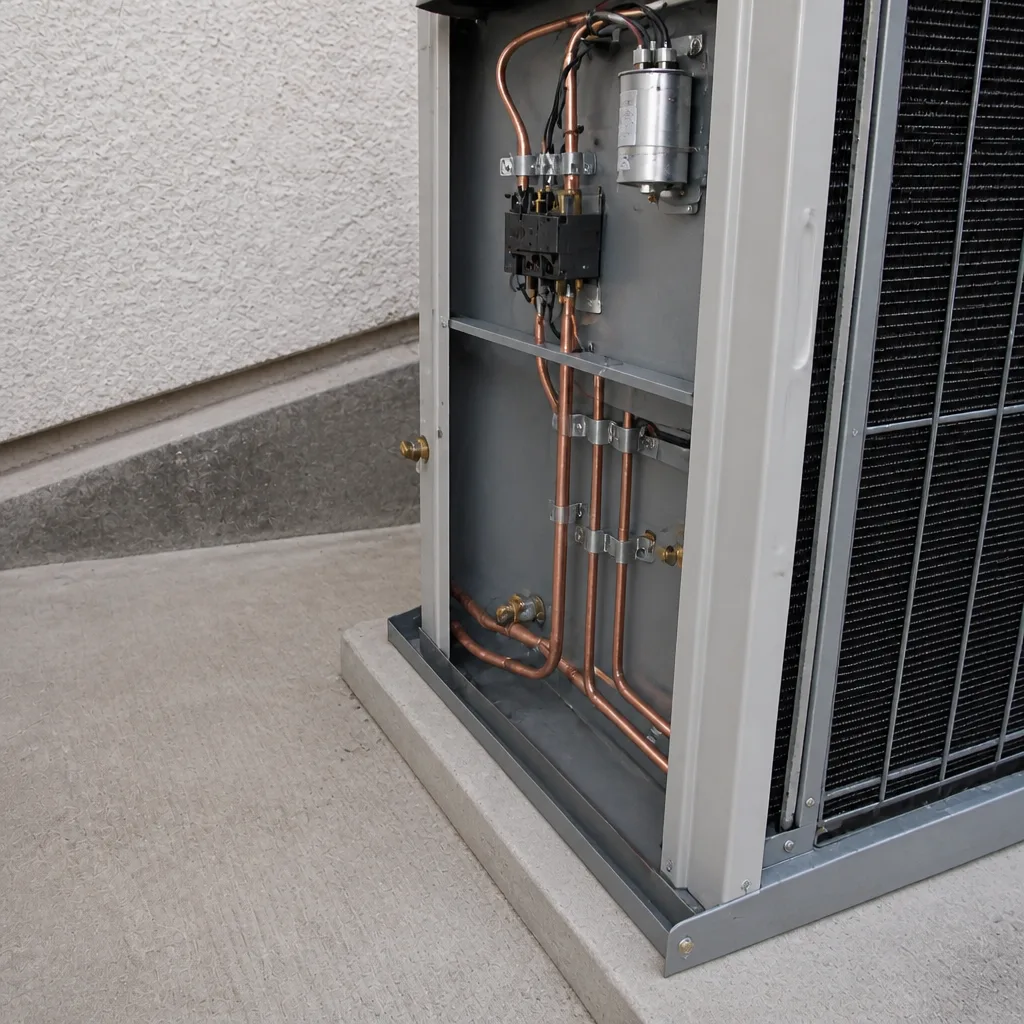
You do not need to climb on a roof to get useful information about a rooftop unit. And in fact, you shouldn’t. Roof work is a real fall hazard, and anyone who tells you to scramble up there to “take a quick look” is telling you to take a real risk. What you can do safely is look from a ladder at the edge, or from the ground at an angle, and check the things that matter.
Here’s the quick walk-around checklist we recommend to property managers in Sunrise Manor:
- Look at the coil face. Can you see daylight through it, or is it matted with debris? A packed coil is one of the most common causes of summer breakdowns here.
- Look for oil staining around fittings. A dark, oily residue at a joint can point to a refrigerant leak.
- Check for loose panels or damaged ducts. Gaps in ductwork dump your paid cool air onto the roof.
- Look at the fan blade. A bent or wobbling blade means a bearing or motor problem is developing.
- Look for standing water in the drain pan or a clogged condensate line. In monsoon season, a clogged line backs up and floods the ceiling below.
- Look for corrosion or rust streaks. On a unit more than a decade old in the desert, rust at the cabinet seams is a sign it’s been fighting the environment hard.
If you see the coil packed, the fan wobbling, or oil staining, that’s a service call. Not a project for a ladder and a shop vac. For AC systems of any size, the same discipline applies; head over to our guide to AC problems to go deeper, or to Ray’s Heating & Air Sunrise Manor home to see the full picture of how we serve the area.
Electrical Warning Signs and What Each One Tells You
Commercial HVAC draws serious current, and the electrical signs are the most objective early warnings you’ll get, because they don’t depend on anyone’s comfort. When electricity misbehaves around an HVAC unit, it’s telling you something specific about the system’s condition.
- A breaker that trips when the unit kicks on. This points to a failing compressor, a shorted contactor, or a capacitor that’s drifted out of spec. A breaker tripping on start is not “just a nuisance.” It’s the system’s internal protection doing its job.
- Lights that flicker when the unit starts. A brief flicker can be normal on a big start, but persistent flickering means the unit is pulling more current than it should, which can be a failing motor, a loose connection, or undersized wiring.
- A buzzing or humming contactor. Contactor chatter is often a low-voltage control issue, and it can leave the unit short-cycling.
- Warm spots at a junction box or panel. Warmth and a faint hot smell at a breaker or disconnect box is a warning, not a minor annoyance.
- Repeated resets. If your staff resets a breaker more than once a season, that’s a pattern worth investigating.
Electrical work around a commercial unit is genuinely dangerous. High voltage at the disconnect can kill you, and arc faults cause real fires. That’s the line where a trained professional takes over. Our team has up to 24 years of experience, and we test the circuit and the compressor’s start components before we recommend anything.
The May Electric Bill That Predicts a June Breakdown
If your May electric bill jumps 15 to 30 percent over last May, and you haven’t added equipment or changed your hours, that’s a signal worth a service call in June. Here’s why. Before a commercial compressor fails mechanically, its efficiency drops. The unit draws more power to deliver less cooling. That inefficiency shows up on your bill before it shows up in the room, because the system compensates by running longer.
On a commercial building, that’s a meaningful number. A single rooftop unit that’s dragging an extra 2 to 3 kW through a hot Sunrise Manor season can add hundreds of dollars to the bill, and it’s often the same unit that’s going to fail. A cheap, early service call in May costs a fraction of an emergency commercial call in July, when every contractor in the valley is slammed.
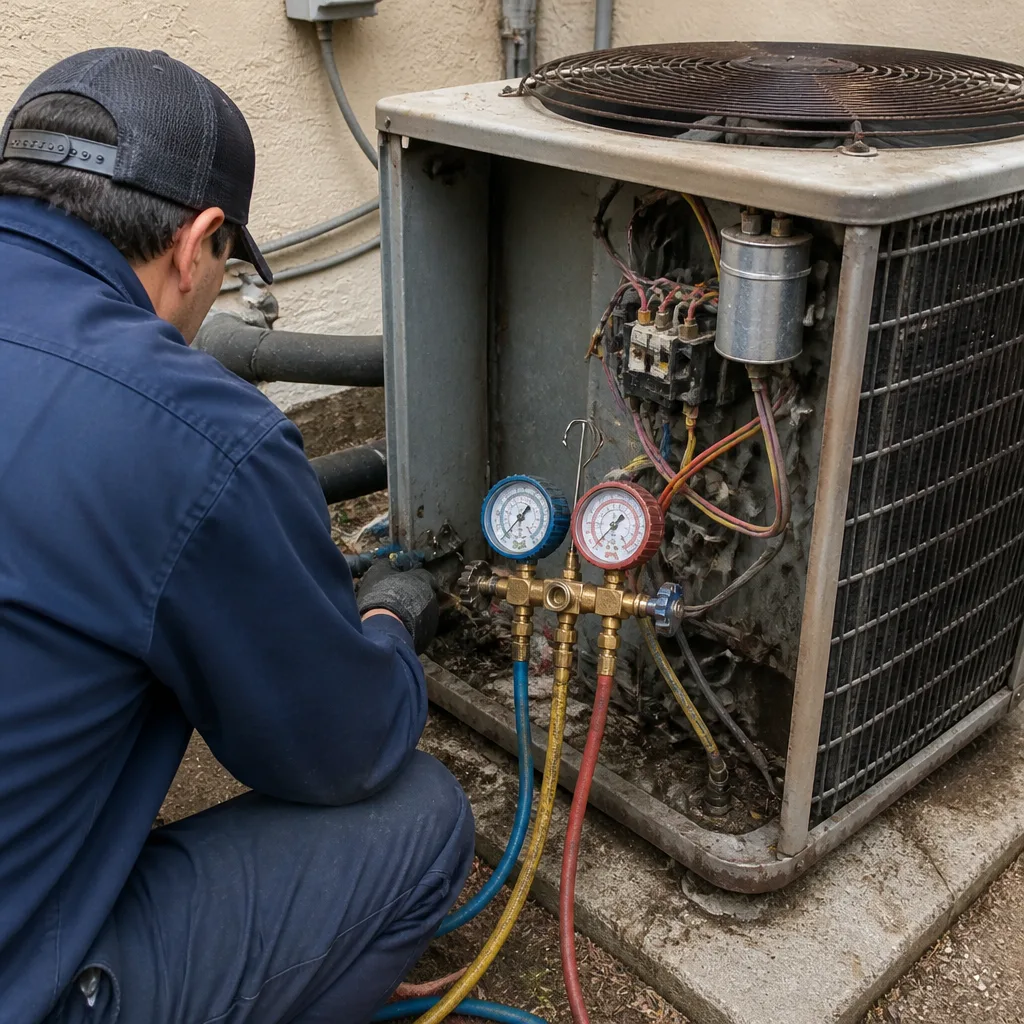
If you want proof that a high bill is a system problem rather than a rate change, the readings tell you. We put a meter on the unit and check its draw against its rating. Readings first, numbers second. You see the evidence before anyone gives you a number. That’s the difference between a guess and a diagnosis.
Uneven Temperatures, Zone by Zone
If one zone of the building is comfortable and another is not, the first instinct is often “the thermostat is broken.” Usually it isn’t. Uneven temperatures point to one of a handful of specific problems, and each has a different fix. For a Sunrise Manor commercial property with multiple rooftop units, map it out. Walk the space with a thermometer in hand if you don’t have zone sensors.
- One zone cold, one zone warm: often a failed damper actuator or a zone control issue rather than a refrigerant problem.
- One zone fine, another can’t keep up: could be a unit that’s undersized for its duties, a dirty coil, or low refrigerant on that particular unit.
- Whole building gradually warm: more likely a system-wide issue, low charge, or fouled condenser coil.
- The zone closest to the rooftop unit is comfortable, the far zone isn’t: look at duct runs for leaks or insulation that has come loose.
Because Sunrise Manor sits near the valley floor, dust, debris, and seasonal temperature swings make coil fouling a real issue and make zoning problems worse. If one zone has been warm for more than a couple days, that’s not a comfort nuance. It’s a service call. For mini-split zone systems in a small commercial space, our mini-split guide covers the specifics.
Smells and Sounds That Mean Stop and Call
The nose is a remarkable diagnostic tool. A few smells are ordinary, but a few are not, and knowing the difference keeps your building safe.
- A dusty burnoff on first start of the heating season is normal. It goes away in 10 to 15 minutes.
- A musty, damp smell points to a wet drain pan, a fouled coil, or mold in the airstream. That’s an indoor air quality problem and a call.
- A hot, acrid, or electrical smell is the one that means shut it down and call immediately. That’s often a failing motor or a hot electrical connection.
- A sweet or chemical smell from the unit can point to a refrigerant leak in the area. Refrigerant leaks in commercial systems warrant prompt professional attention.
And the sounds: a loud clunk on startup, a grinding or screeching fan, or a persistent rattle is not the equipment “settling in.” It’s telling you about a bearing, a motor, or a loose part. A trained ear can tell the difference between a normal startup hum and a compressor that’s laboring. That’s part of why we put eyes and ears on a system before we put a price on it.
Common Mistakes to Avoid
- Waiting for a total failure. A short-cycling unit in a Sunrise Manor July is on a clock. The repair cost at the moment of failure is often two or three times the early-warning repair.
- Resetting a breaker more than once. A breaker that trips when your unit starts is the equipment’s safety net, not a suggestion to keep flipping it. Reset once, and if it trips, stop and call.
- Climbing on the roof. Rooftop units are real fall hazards. A 60-second ground-level look gives you almost everything you need, and you stay safe.
- Ignoring the May bill. Small efficiency drop, big warning. A service call at 60 percent of the bill increase is cheaper than an emergency call at 2 a.m.
- Assuming the person with the lowest phone quote is the best value. A phone quote on a commercial unit without readings is a guess. Read the number against real diagnostics. Ask for upfront pricing and the readings behind it.
- Not keeping a log. A service tech who can see what your staff noticed last month can find the problem in minutes and save you money.
- Signing a rotating-crew contract without continuity. A commercial building benefits from a technician who knows your system. A different face every visit means starting over each time.
See the difference
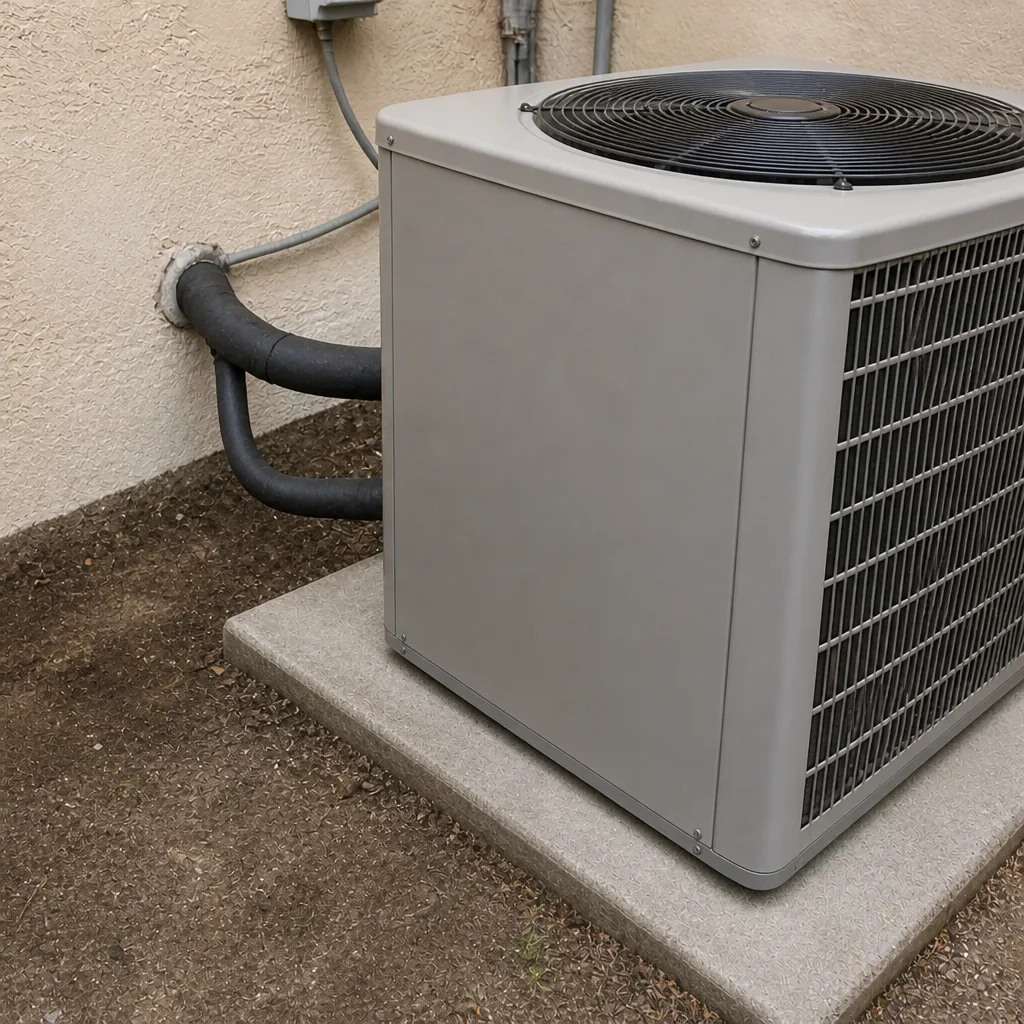
 Before
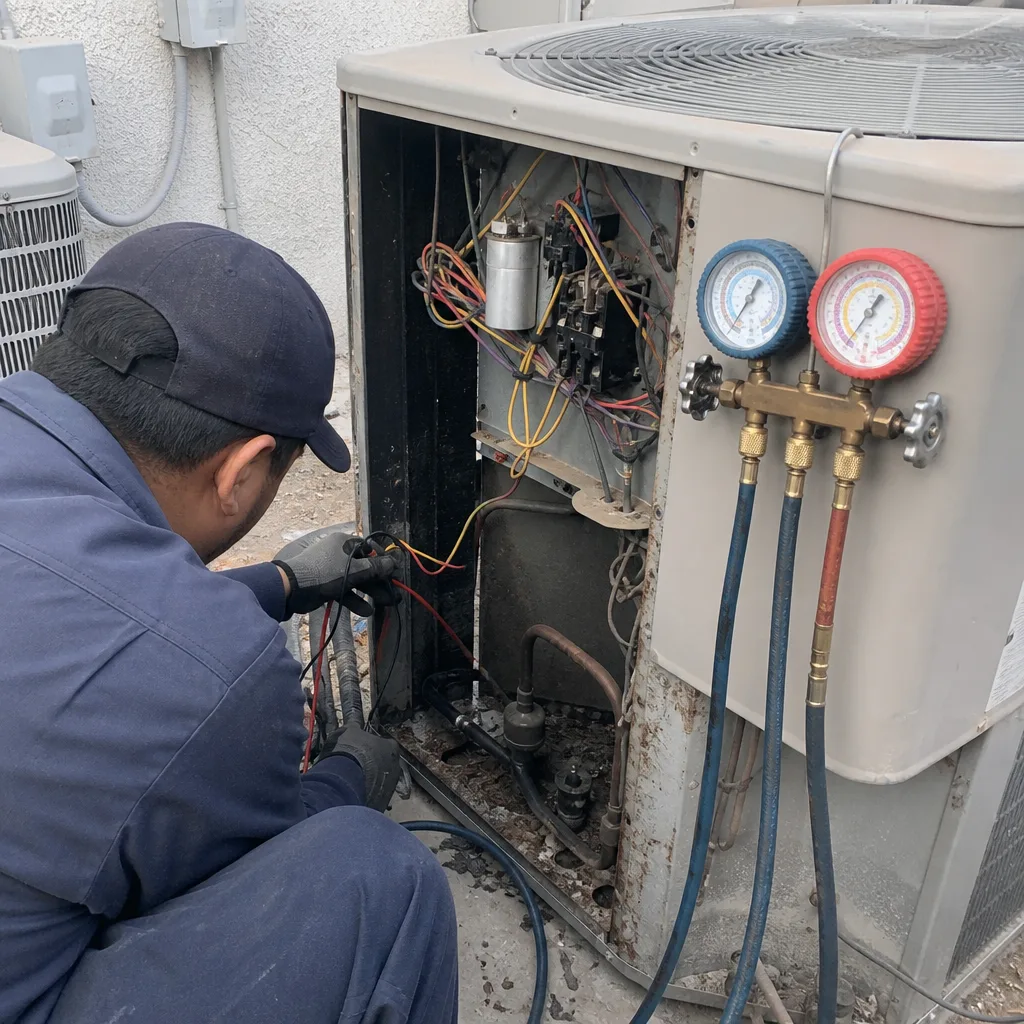
 After
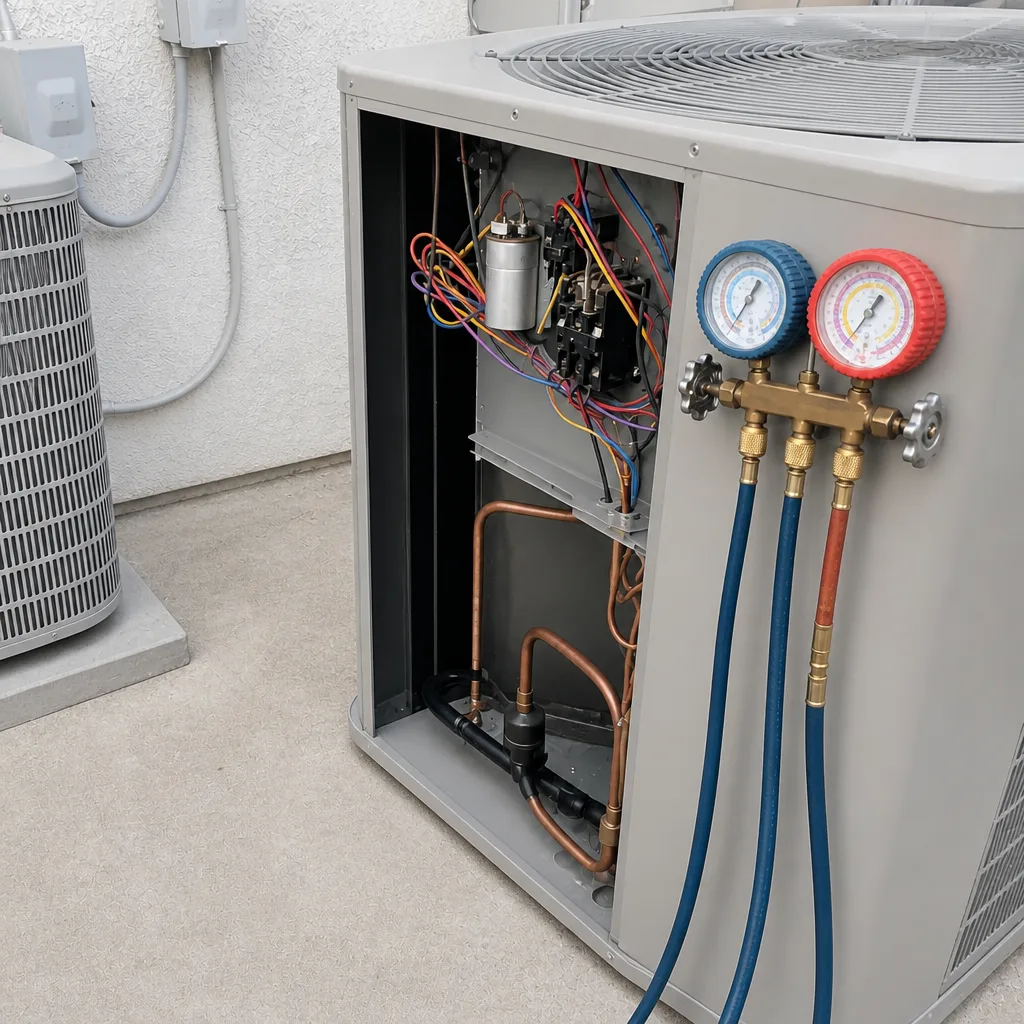
 Before
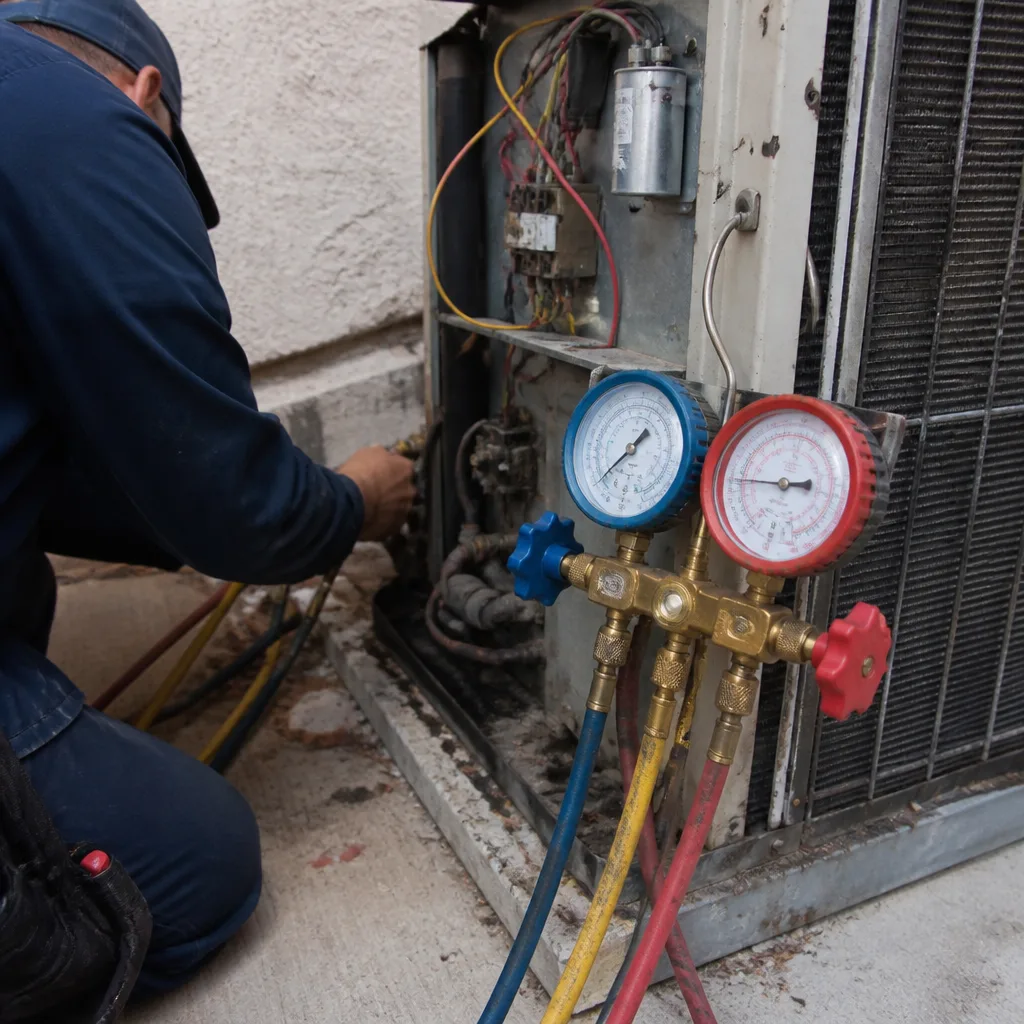
 After
 Before
 After
When to Call a Professional
Call when you see two or more of the signs in this guide together. Call when a breaker trips on start. Call when the space doesn’t hit setpoint by midday. Call when the May bill jumps and the system is short-cycling, and call when you smell something hot or electrical. Ray’s Heating & Air Sunrise Manor offers free estimates in Sunrise Manor, and the phone is answered by a live person, still, every time. A building full of people in July doesn’t have time for a voicemail maze.
If your system has one unit and it’s a plain residential setup, use the same logic; our AC service page has the details. If you’re weighing repair against replacement, our heat pump and mini split guide walks through that decision.
Frequently Asked Questions
We answer the phone around the clock and respond as quickly as possible for commercial calls in Sunrise Manor, and emergency calls get priority. Call (877) 311-5951 and tell us what the signs are. Estimates are free, and no trip charge inside our own county.
Short-cycling in summer heat. A system that starts and stops in short bursts repeatedly is often days from a compressor failure, because every short run stresses the compressor. If it’s short-cycling in July in Sunrise Manor, have it checked before the next heat wave.
That depends on the age, the readings, and the repair cost relative to a replacement. We test the capacitor and check the compressor’s draw before recommending anything. The number we give you is derived from the readings, not a phone guess. Call (877) 311-5951 for an exact quote; estimates are free.
Yes. We service all major brands including Carrier, Trane, Daikin, Bryant, Lennox, and American Standard. If your building has a mix of brands across rooftops, one visit can cover all of them, and our team has up to 24 years of experience.
Rebate programs vary by utility and by project, and the paperwork can be the difference between a good deal and a headache. We can walk through the rebate process with you as part of the conversation. If you’re weighing a new system, call (877) 311-5951 and we’ll look at the options together.
Yes. A live person answers around the clock, and you’re not getting a call center. When a commercial unit fails, that’s the difference between a fix by morning and a building full of heat by morning.
The Bottom Line
Commercial HVAC systems almost never fail without warning. The signs show up in staff observations, in short-cycling, in electrical flickers and breaker trips, in the May bill, and in zone-by-zone unevenness. The trouble is that in most buildings, nobody is assigned to watch. If you take nothing else from this guide, take this: write it down, keep a log, and get an early call out. In Sunrise Manor summer heat, that discipline is the difference between a modest repair and a several-thousand-dollar emergency. If your building has shown any of these signs, call (877) 311-5951 for a free estimate. We’ll test it, show you the readings, and tell you the truth about what it needs.
Written by the team at Ray’s Heating & Air Sunrise Manor.