
Last updated November 18, 2026
 AC repair
 Furnace & heating
 Heat pumps
 Ductless mini splits
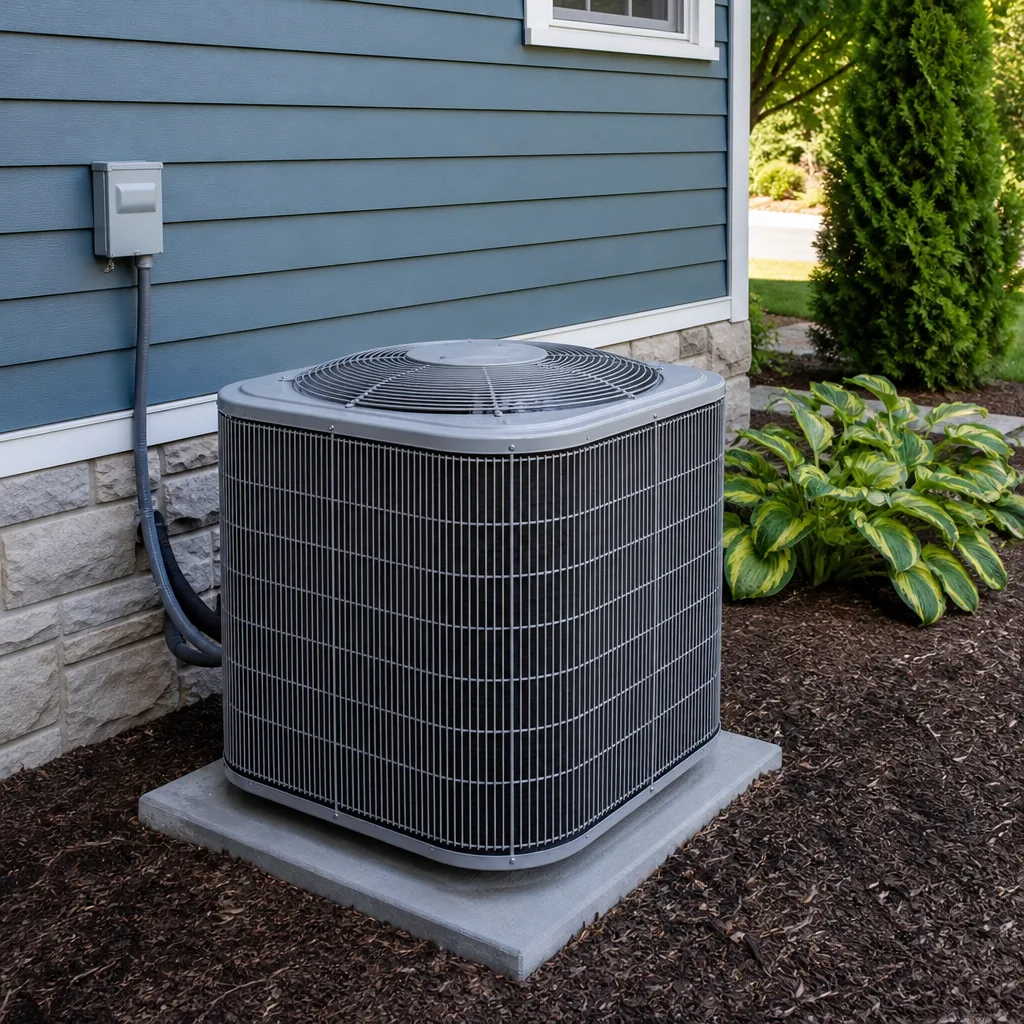 Carrier
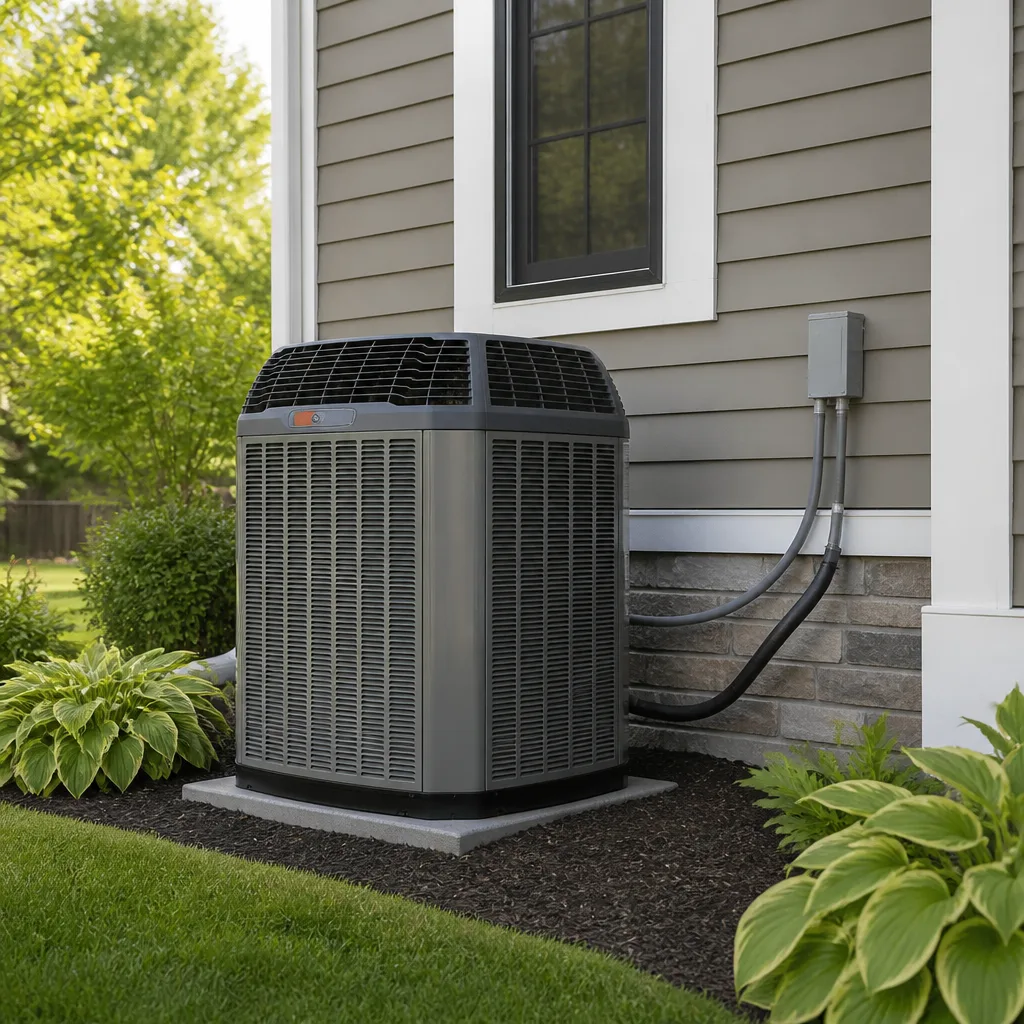 Trane
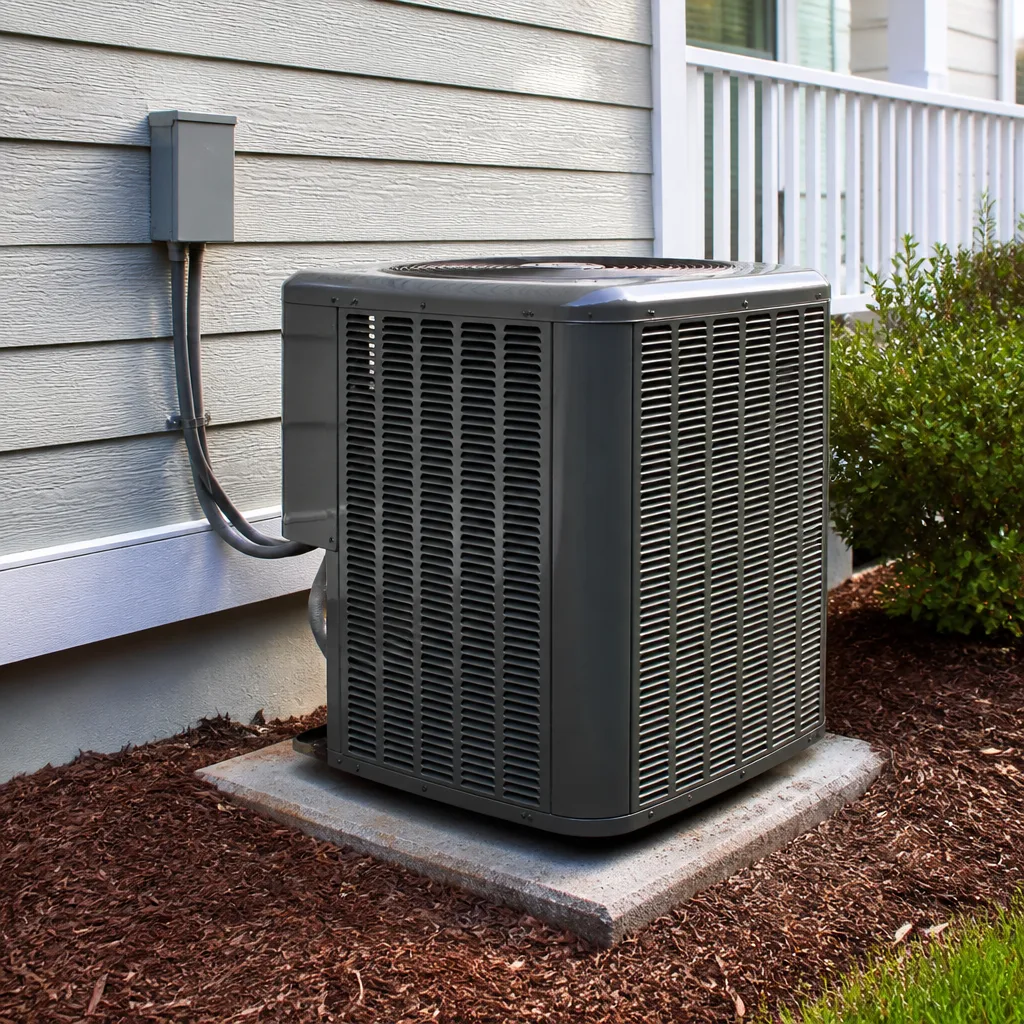 Goodman
Seasonal tune-up and full diagnostic on your Carrier, Trane, or Goodman system - readings shown to you before any repair is proposed
Diagnosis first, numbers second - you approve the repair price before a single part goes in.
Get your free estimateDIY vs Professional Emergency & Commercial HVAC: What’s Safe to Do Yourself
If an employee files a heat illness claim and an inspector finds out the thermostat was last worked on by the owner with a YouTube video and a screwdriver, your insurance carrier has a problem with you – not the system. That’s the part nobody warns small business owners about. At home, a botched DIY repair costs you a Saturday and maybe a compressor. At your shop, your restaurant, your warehouse, or your church, it can cost you a claim denial, a failed inspection, and a voided warranty all at once. This guide draws the line exactly where Nevada draws it, and tells you which small tasks are genuinely safe to keep in-house and which ones belong to a licensed tech.
Quick Answer
Safe for a business owner: swapping filters on accessible units, replacing thermostat batteries, and clearing debris away from the condenser. Everything else – refrigerant, electrical connections, gas components, and rooftop unit diagnostics – requires a licensed Nevada contractor, and touching those yourself can void your commercial warranty and create real liability exposure. When in doubt in Sunrise Manor, call a licensed pro and get it fixed right the first time.
Styles & brands we work with
- AC repair
- Furnace & heating
- Heat pumps
- Ductless mini splits
- Carrier
- Trane
- Goodman
Table of Contents
- Why Commercial DIY Carries Risk a Home Repair Doesn’t
- The Small Tasks That Are Genuinely Safe to Handle
- Where Nevada Law Draws the Line on Commercial HVAC
- How Commercial Warranties Get Voided Differently
- Safe After-Hours Stop-Gaps While You Wait for a Tech
- Why a Residential Tech on a Rooftop Unit Is a Code Problem
- The Sunrise Manor Heat Factor
Why Commercial DIY Carries Risk a Home Repair Doesn’t
At your house, if you open a panel and something goes wrong, the worst case is usually an expensive repair. At your business, the exposure widens into three directions at once: liability, compliance, and warranty.
Liability. Commercial spaces have employees, customers, and sometimes tenants moving through them. If a failed repair leads to a workplace condition – heat stress in a kitchen, carbon monoxide exposure in a shop, a 95-degree sales floor in July – the workers’ comp carrier and OSHA both come asking who touched the equipment last. An unlicensed repair is a red flag that converts a straightforward claim into a contested one.
Compliance. Commercial mechanical code in Nevada is stricter than residential code because the stakes are higher. A rooftop unit serving a commercial kitchen falls under different ventilation and combustion-air requirements than the package unit on your house. Code officials in Clark County expect the work to be permitted and inspected where required, and an owner-installed part that fails inspection can shut a business down mid-week.
Warranty. This is the one that surprises people. Manufacturer warranties on commercial equipment – York, Daikin, Bryant, American Standard, all of them – use language like “authorized service provider” and “unauthorized service.” That second phrase is what gets invoked when the factory rep asks who installed the part. We’ve seen a $9,000 compressor warranty denied over a $40 part that was installed by the wrong hands.
The math is simple: the money you save on one DIY repair rarely covers the cost of one denied claim. In our experience serving Sunrise Manor businesses, the owners who get burned the worst are the ones who are the most capable – the guys who really can swap a capacitor, so they do, and then discover the hard part was never the repair.
The Small Tasks That Are Genuinely Safe to Handle
Here’s the good news. A handful of maintenance tasks are safe, sensible, and worth keeping in-house. If you do only these, you’ll extend the life of your equipment and cut some of the wear that leads to emergency calls in the first place.
- Filter changes on accessible units. This is the single most valuable thing you can do yourself. On a commercial rooftop unit or a split-system air handler with an accessible filter rack, swapping a clogged filter monthly (every two weeks in peak cooling season) keeps static pressure down and protects the blower motor. No tools required beyond a screwdriver to open the panel. Write the date on the new filter with a Sharpie so you know when the clock restarted.
- Thermostat battery replacement. A blank or flashing thermostat display is usually a dead battery, not a dead system. Pull the faceplate, match the battery size (AA is common on York and Bryant commercial stats), and swap them. This is genuinely safe. Just don’t start pressing programming buttons if the layout is unfamiliar – a misprogrammed commercial schedule can leave a space without cooling for hours.
- Clearing the condenser area. Commercial condensing units and rooftop coils need airflow. Pull weeds, clear cardboard, boxes, pallets, and trash bags away from the unit. A 24-inch clearance is the general rule. Check that no one has stacked a pallet against the louvered side. You’d be surprised how often we find a rooftop unit that’s been fully choked by a stack of shipping crates someone “moved out of the way” six months ago.
- Visual inspection. Walk your units once a month. Look for ice on the coil, oil staining at the refrigerant line connections (which suggests a leak), rust, and obvious loose panels. You don’t have to fix anything – you just have to notice.
- Keeping a log. A notebook with dates, filter changes, and symptoms observed is worth more to a tech than you’d think. It shortens diagnostics, saves billable time, and – this matters for warranty claims – documents that the equipment was maintained.
That’s the list. Everything else has a reason to belong to a licensed contractor, and the next section explains what that reason is.
Where Nevada Law Draws the Line on Commercial HVAC
Nevada treats HVAC work as a licensed trade with a defined scope, and the moment your hand touches certain components, you’ve stepped over the line into work the state expects a licensed contractor to perform. This isn’t a technicality – a permit and an inspection trail is a big part of what protects a business owner from liability.
The specific components that trigger licensing requirements:
- Refrigerant lines and charge work. Opening a refrigerant circuit requires EPA Section 608 certification, and in Nevada it also requires a licensed contractor with the right classification. Venting refrigerant into the air is a federal violation. Recovering, evacuating, and recharging a commercial split system or rooftop unit takes gauges, a vacuum pump, and the certification to use them legally.
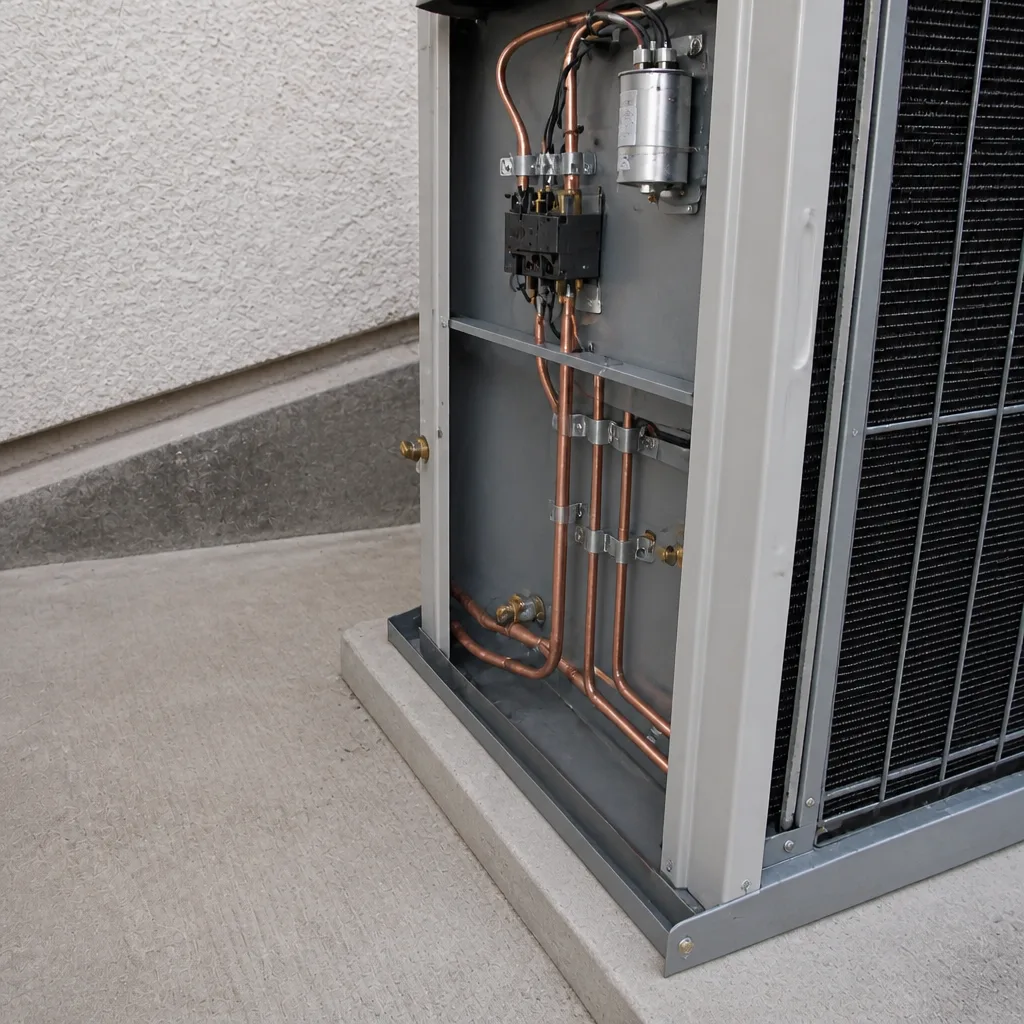
- Electrical connections. Any work inside the unit’s electrical panel – disconnects, contactors, capacitors, wiring harnesses – is electrical work. On a commercial unit it’s often 208/230V three-phase, which is not a “I’ll just poke around” voltage. Your general liability carrier will have questions about an unlicensed electrical repair.
- Gas components. Any gas-fired heating section – burners, gas valves, igniters, flue work – is regulated. Gas work requires a licensed plumber or HVAC contractor with the correct endorsement. This is a safety line, not a paperwork line.
- Permitted installations. Replacing a rooftop unit or adding a new system typically requires a mechanical permit and inspection in Clark County. An unpermitted install can complicate a sale, an insurance renewal, or a certificate of occupancy.
Here in Sunrise Manor, we see a lot of small commercial buildings along the major corridors that predate some of the current code requirements. Older equipment doesn’t excuse anyone from current code, but it does mean the correct approach often involves a call to the county to confirm what’s required before work starts. If you’re not sure whether a permit is needed for a specific repair, a licensed contractor can tell you before anyone turns a wrench.
For the day-to-day residential side of your property – the HVAC in your own house – the same licensing rules apply, and that’s covered on our AC Repair & Installation in Sunrise Manor page.
How Commercial Warranties Get Voided Differently
Residential warranties get voided too, but the commercial versions tend to have longer fine print and less patience for owner service. If you want to protect the investment, read the warranty language before you touch anything.
What “unauthorized service” means in practice: the manufacturer defines it as work performed by anyone other than a licensed HVAC contractor, or on some commercial extended warranties, anyone other than a contractor who has completed the manufacturer’s own training for that equipment line. York, Daikin, Bryant, and American Standard all write their commercial coverage around this language.
Here’s what tends to get denied:
- Compressor failures after owner-installed capacitors. If you match the wrong microfarad rating or wire it backwards, the compressor takes the hit, and the factory rep will notice.
- Refrigerant loss after a DIY line repair. Even a “temporary” fix that holds for two weeks leaves a leak and a documented non-authorized repair in the log.
- Electrical faults after a non-licensed repair. A loose connection inside a control panel that arcs and damages a control board is a denied warranty waiting to happen.
- Gas train issues. Any gas-side repair by a non-licensed party is excluded, full stop.
One more commercial-specific quirk: commercial equipment sometimes has a labor warranty on top of the parts warranty, and that labor warranty is tied to authorized service. If you do the repair yourself, you often still have parts coverage under the manufacturer’s terms but zero labor coverage. On a large package unit, that can be thousands of dollars out the window for a problem you didn’t cause. And if you use a contractor, keep the invoices – that’s your paper trail for a warranty claim later. We keep those records on every commercial job we do in Sunrise Manor, and we hand copies to the owner.
Safe After-Hours Stop-Gaps While You Wait for a Tech
It’s 11 p.m., the system has failed, and you’re looking at a store full of product that won’t survive until morning without cooling. Here’s what you can safely do while you wait for a live person to pick up and dispatch a tech – and what to avoid.
Safe measures:
- Call and get a real person on the phone. A live voice can walk you through triage in a way a voicemail menu can’t. Ray’s Heating & Air answers every call 24/7 with a live person, day or night.
- Check the obvious. Breaker tripped? Thermostat dead? Is the unit running but not cooling, or is it completely silent? Note what you see and hear – this saves the tech 20 minutes on-site.
- Switch to backup cooling for sensitive spaces. If you have a server room, a walk-in cooler, or a freezer full of product that matters, move valuables or perishables into an area with a portable cooling unit or a temporary backup. For a restaurant, that might mean calling a refrigerated truck. For an office, it might mean a couple of fans and a plan to work from home tomorrow.
- Open doors and use fans only if it’s safe. Cross-ventilation and box fans can take the edge off a work area during a mild evening. In extreme Sunrise Manor heat – which is routine from June through September – this stops being safe quickly. Don’t ask people to work in a space over 85°F for more than short periods.
- Shut it down if it’s making a bad noise. A unit that’s grinding, screeching, or repeatedly tripping the breaker needs to be off. Running a seized blower or a shorted compressor turns a fixable problem into a replacement.
What not to do:
- Don’t reset the breaker more than once if it keeps tripping – that’s a fault, and it’s not going to resolve itself.
- Don’t open electrical panels to “look for the problem.”
- Don’t spray water on a hot compressor or coil to cool it down.
- Don’t bypass safety switches or jump out a pressure control to keep the unit running overnight. We’ve seen it done. Somebody always regrets it.
For the equipment that serves your own living space during a nighttime breakdown, the same logic applies. Our Heating & Furnace in Sunrise Manor page covers the safe triage steps for residential heating failures.
Why a Residential Tech on a Rooftop Unit Is a Code Problem
A common story we hear: a business owner calls the residential company that services their house, and a tech shows up to work on a commercial rooftop. Sometimes it goes fine. Often it doesn’t, and here’s why.
First, licensing classification. Nevada issues different contractor classifications for residential and commercial work, and a contractor licensed only for residential scope isn’t insured or authorized to work on commercial systems. If something goes wrong, the claim can be denied on the basis that the contractor exceeded their scope of licensure – and that comes back on the property owner or business operator, not the technician.
Second, insurance. Commercial equipment failures often involve code-required documentation and inspection. A contractor without the right classification may not carry the commercial liability coverage your building needs them to carry.
Third, the technical side. Commercial rooftop units and split systems are designed, wired, and controlled differently than residential equipment. Three-phase power, economizer controls, building automation interfaces, and larger refrigerant circuits all require commercial-specific knowledge. A residential tech may be excellent on the equipment at your house and out of their depth the moment they’re looking at a 15-ton package unit on the roof of your shop.
We service both. Our technicians have up to 24 years of experience, we work on Carrier, Trane, Lennox, Goodman, Rheem, York, Daikin, Bryant, and American Standard, and we carry the commercial classification and insurance to do the work. For commercial job sites in Sunrise Manor, we also handle the permit and inspection trail so the owner doesn’t have to chase it down.
For heat pump and mini-split commercial and residential work, our Heat Pump & Mini Split in Sunrise Manor page covers the safe limits and the equipment we work on.
The Sunrise Manor Heat Factor
Some of these rules apply no matter where you operate. Some of them are sharper in Sunrise Manor than they’d be in a milder climate, and that’s worth a paragraph.
From June through September, Sunrise Manor routinely sees stretches above 105°F, and rooftop equipment on low commercial buildings takes the full sun with no shade and a rooftop ambient that can run 20°F hotter than ground level. That environment is hard on capacitors, contactors, and condenser fan motors – and the failure rate climbs with every August we get. When a commercial system goes down in the middle of that weather, the timeline is short. This is exactly the scenario where a stopped system is no longer a convenience issue but a potential health and safety problem, especially on job sites and in kitchens.
The other local factor is dust. Between the spring winds and the dust that settles on rooftop units, coils foul faster here than in wetter climates. Owners who clear the condenser area and change filters monthly get noticeably longer service life out of York and Daikin equipment than owners who don’t. This is one of the few places where the safe, DIY tasks genuinely matter.
And the last one: monsoon season. When rain arrives after months of dry, dust on the rooftop panels can cause nuisance trips. If your system stops in a storm, don’t run up to the roof in the lightning. Call and let a licensed tech work it. The after-hours line at Ray’s is answered by a live person, and if it’s a straightforward issue, we can often walk you through what’s actually happening before anyone drives out.
Common Mistakes to Avoid
- Resetting a tripped breaker more than once. If a commercial unit is tripping, the fault will still be there the third time. Repeated resets can turn a cheap fix into a compressor replacement.
- Buying a capacitor or contactor “to try.” Every commercial unit has a specific microfarad rating on the capacitor. The wrong one causes compressor damage in a matter of hours. Match the part, not the look.
- Trying to top off refrigerant. It’s federal law that you can’t, and it’s also the wrong fix. If the charge is low, there’s a leak, and the leak has to be found before the charge means anything.
- Hiring a residential-only tech for commercial work. Better than doing it yourself, but still a code and insurance problem if the classification doesn’t cover the work.
- Letting the filter go. The single most common cause of premature commercial blower motor failure we see in Sunrise Manor is a filter that hasn’t been changed since the last busy season. It’s the easiest, cheapest task on this list.
- Waiting until the system fails to call. Commercial equipment gives warning signs – longer run times, higher energy bills, odd symptoms – weeks before it quits. A spring check before the first hot week beats an August emergency every time.
- Believing a warranty covers labor. It usually doesn’t without a licensed tech’s invoice to document the work. If there’s no paper trail, there’s no claim.
See the difference
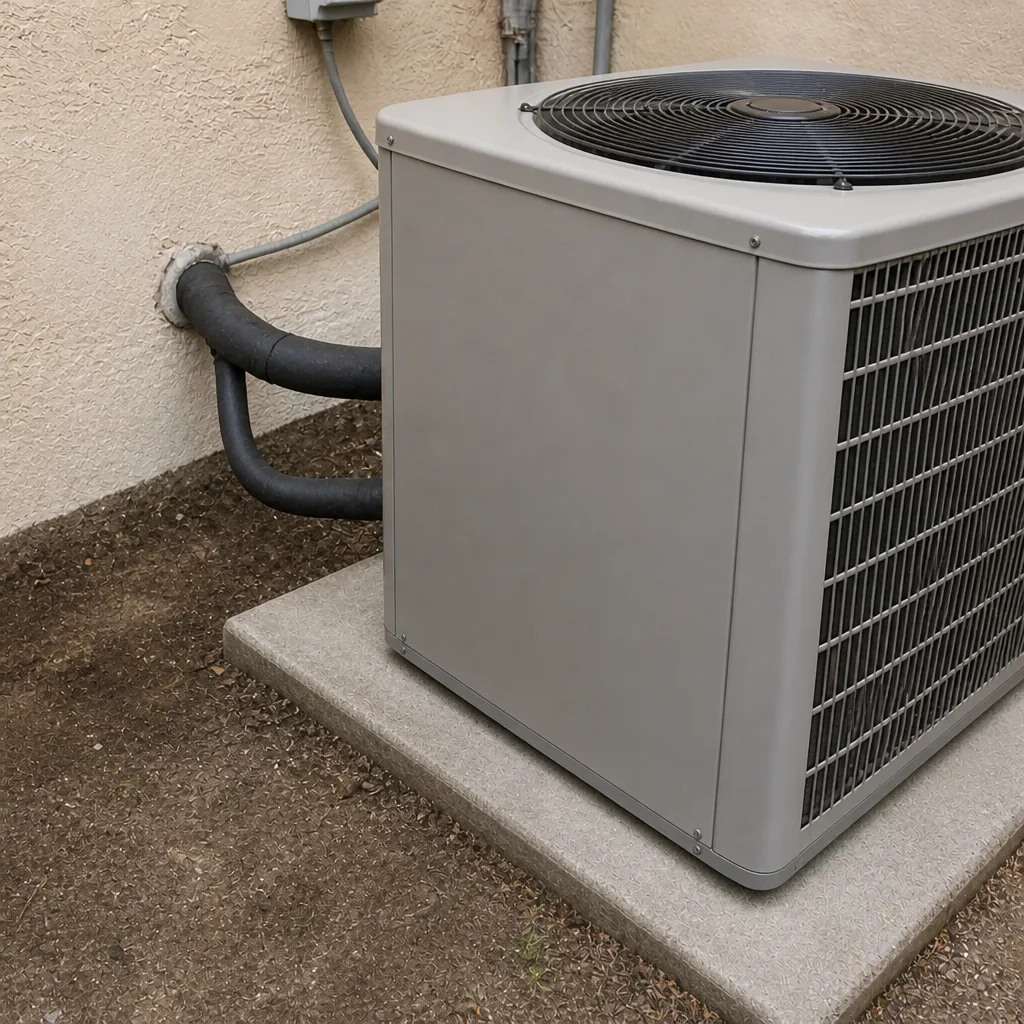
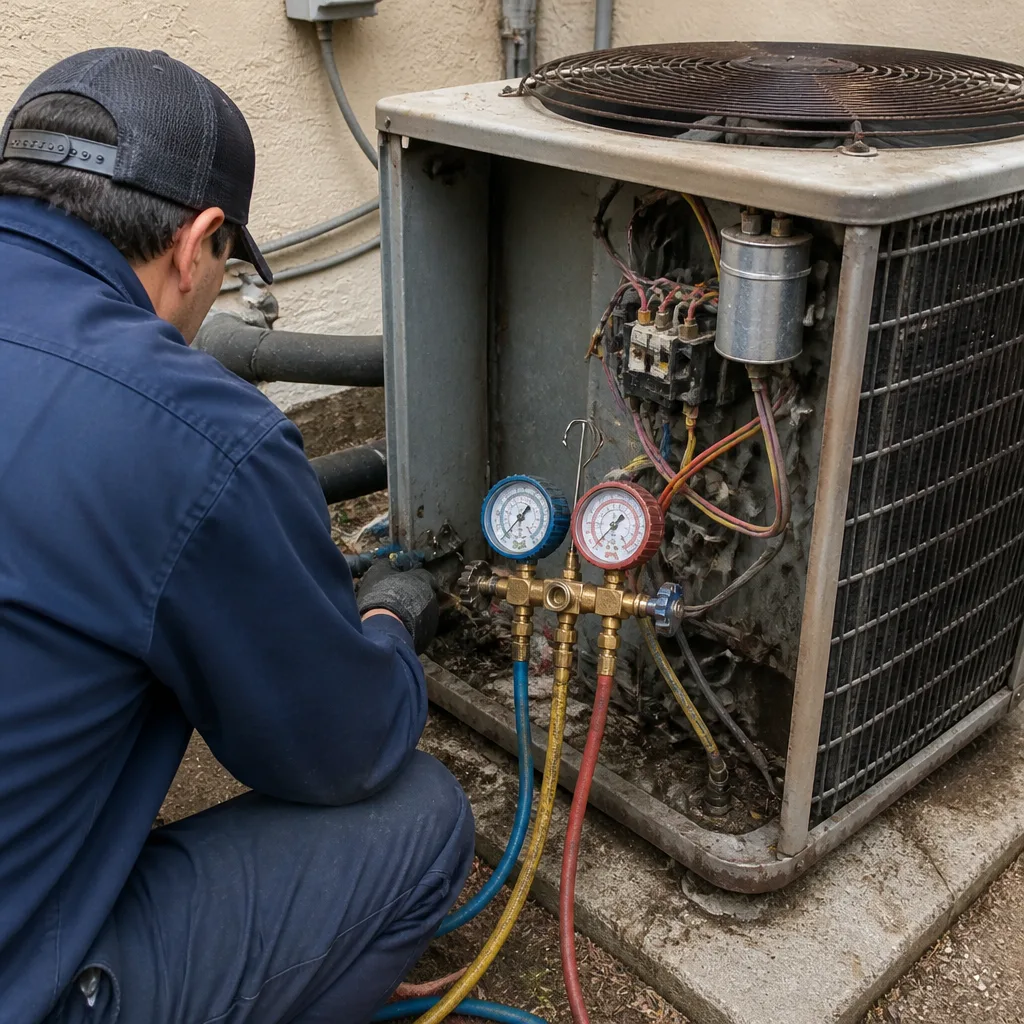 Before
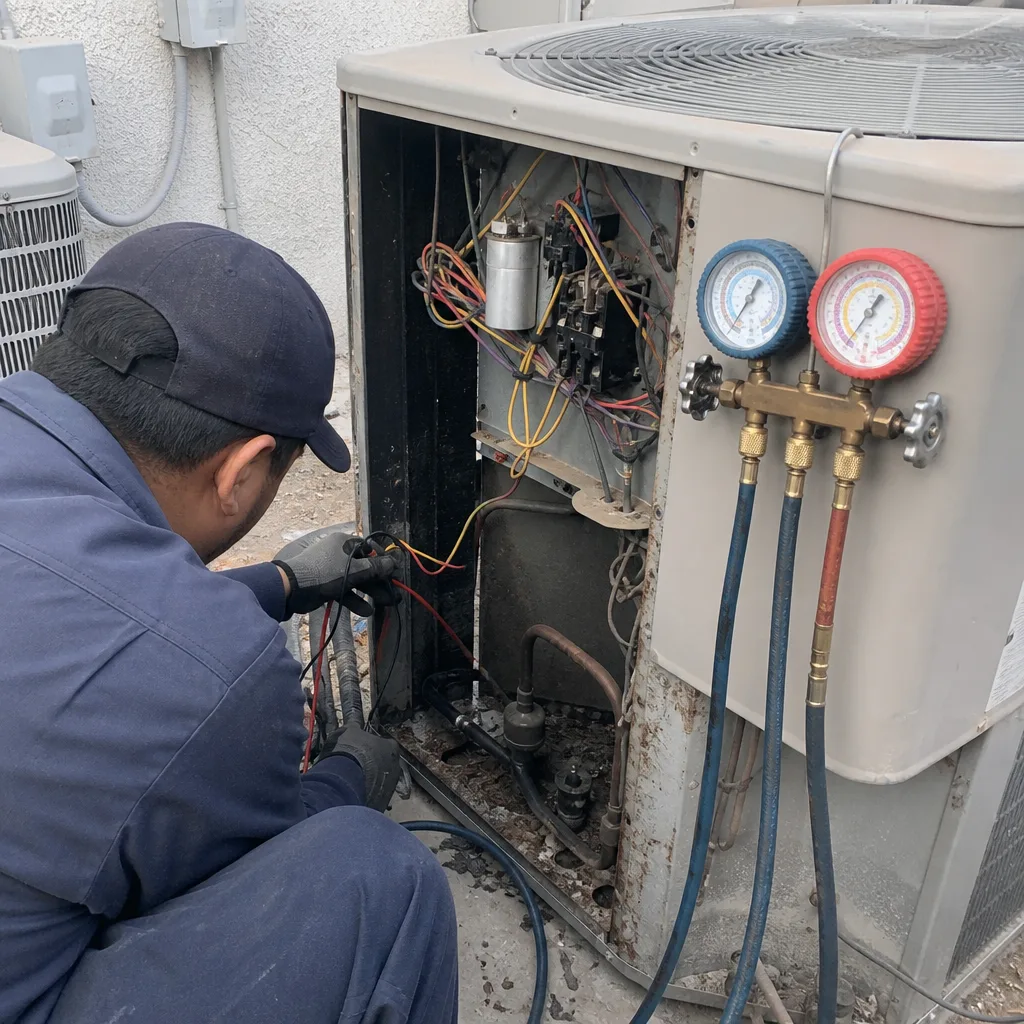
 After
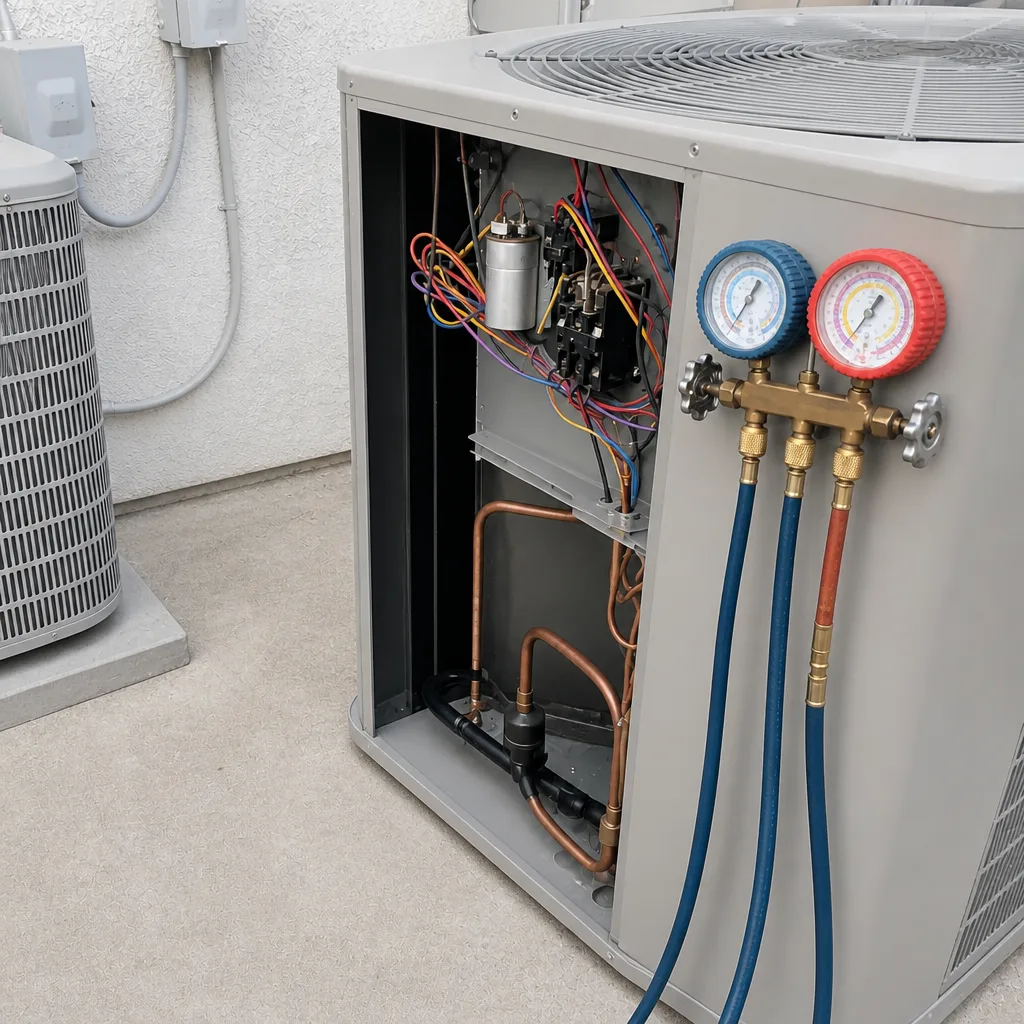
 Before
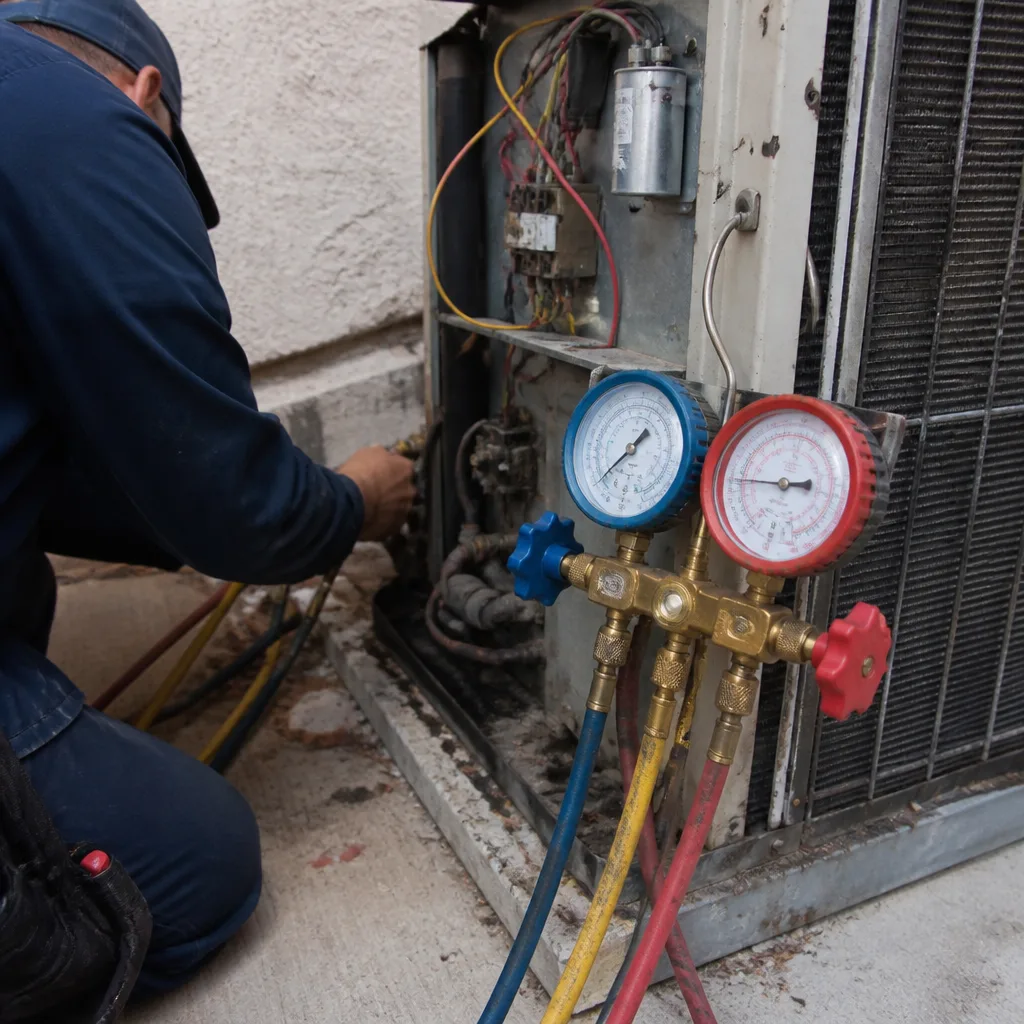
 After
 Before
 After
When to Call a Professional
Call a licensed commercial HVAC contractor when the system involves refrigerant, electrical work inside the unit, gas components, or any diagnosis beyond “the filter is clogged” or “the thermostat battery is dead.” Call when the unit is making grinding, screeching, or repeated tripping sounds. Call when the system is out of service and people or products are at risk. Call before you touch anything that requires a permit, and call any time you’re not sure which category a repair falls into – that’s what the phone is for.
Ray’s Heating & Air Sunrise Manor offers free estimates in Sunrise Manor, no trip charge inside our own county, and a standing Free Second Opinion on any written estimate if you’ve been quoted a big number and want a straightforward read on it. Call (877) 311-5951 to get scheduled.
For everything else about the equipment in your own home, our Ray’s Heating & Air Sunrise Manor home page is where we keep the residential side organized.
Frequently Asked Questions
Yes. Changing filters on an accessible commercial unit is safe and one of the best things you can do for long-term reliability. Turn off the unit, open the filter access panel, note the size and airflow arrow, swap the filter, and write the date on the new one. Change every 30 days in busy season, or every two weeks in dusty stretches here in Sunrise Manor.
Usually yes, on the labor side at least and often on the parts side too. Manufacturer language on York, Daikin, Bryant, and American Standard commercial equipment ties coverage to “authorized service,” and a factory rep will ask who did the work. A $40 part you installed to save an hour can cost you a $9,000 compressor warranty. Call (877) 311-5951 for a licensed repair you can document.
Nevada issues separate contractor classifications for residential and commercial work, and the insurance and permit requirements follow the classification. A residential-only contractor isn’t insured or authorized to work on your commercial rooftop unit, which means a claim arising from that work can be denied. Always ask to see the commercial classification before any work starts.
Call and get a live person on the line first. Note whether the unit is silent or running, check the thermostat and the breaker (once), clear valuables from a space without cooling, and don’t reset a tripping breaker repeatedly. Ray’s Heating & Air answers the phone 24/7 with a live person, and our after-hours line is (877) 311-5951.
No. Opening a refrigerant circuit requires EPA Section 608 certification, and in Nevada it requires a licensed contractor. Venting refrigerant is a federal violation, and low charge means a leak that has to be found and fixed before recharging. Please don’t try it – the fix is a licensed repair, and the fine is real.
The installation itself requires a mechanical permit and inspection in Clark County, which means it should be done by a licensed commercial contractor. What you can do is prepare – document the existing unit’s size, model, and age, get a couple of written quotes, and let the contractor handle the permit and warranty registration. We handle the whole paper trail on commercial installs in Sunrise Manor. Call (877) 311-5951 for a fixed-price quote.
The Bottom Line
The line between safe DIY and licensed HVAC work is drawn sharply in a commercial context, and it’s in your interest to respect it. Filter changes, thermostat batteries, condenser-area cleanup, and walking the units are all fine to keep in-house – and worth doing regularly because they genuinely extend equipment life. Everything involving refrigerant, electrical work, gas, or a rooftop diagnosis belongs to a licensed commercial contractor. The risk of DIY on commercial equipment isn’t the repair itself. It’s the liability, the voided warranty, and the denied claim six months later. Stay on the safe side of the line, document what you do, and call a pro when the answer isn’t obvious. In Sunrise Manor, that call is (877) 311-5951 – free estimates, live person every time, and the 90-Day Done Right Promise in writing on every job.
Written by the team at Ray’s Heating & Air Sunrise Manor.