
Last updated November 18, 2026
 AC repair
 Furnace & heating
 Heat pumps
 Ductless mini splits
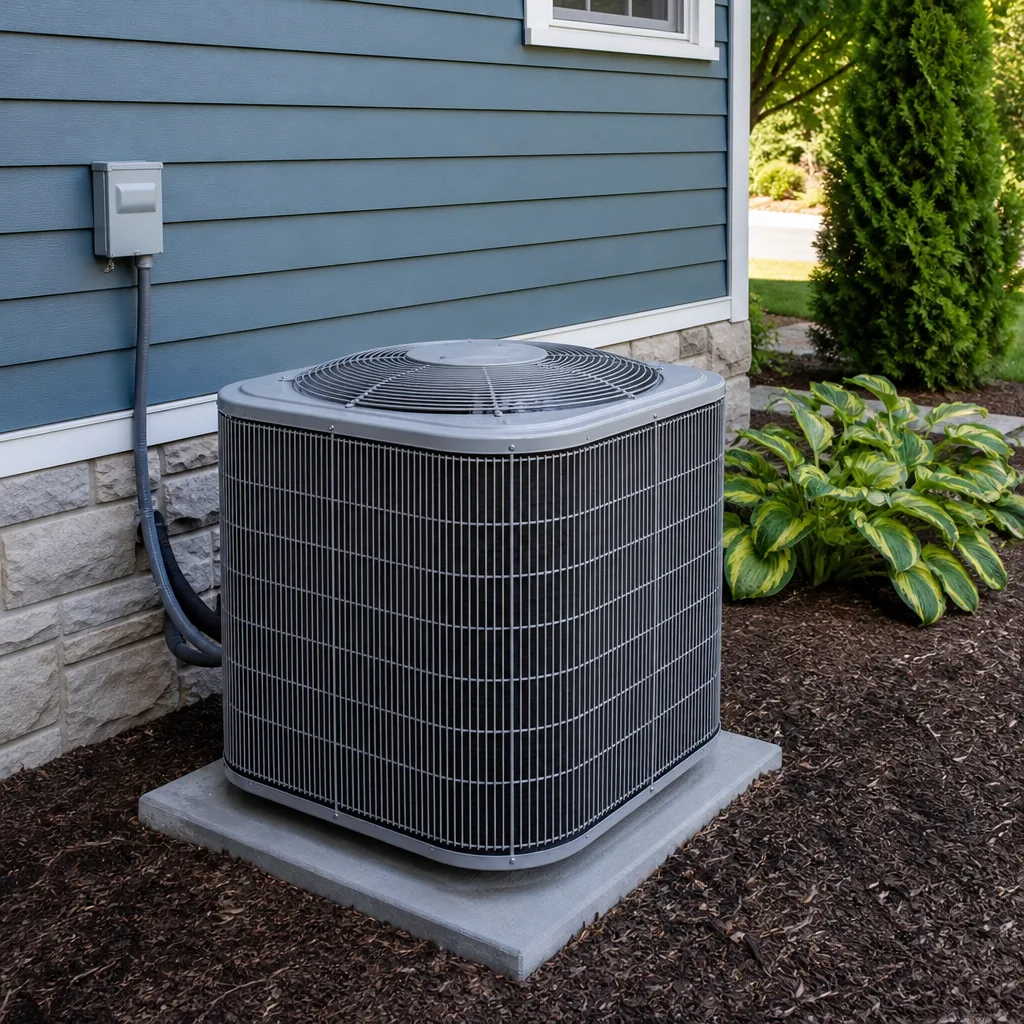 Carrier
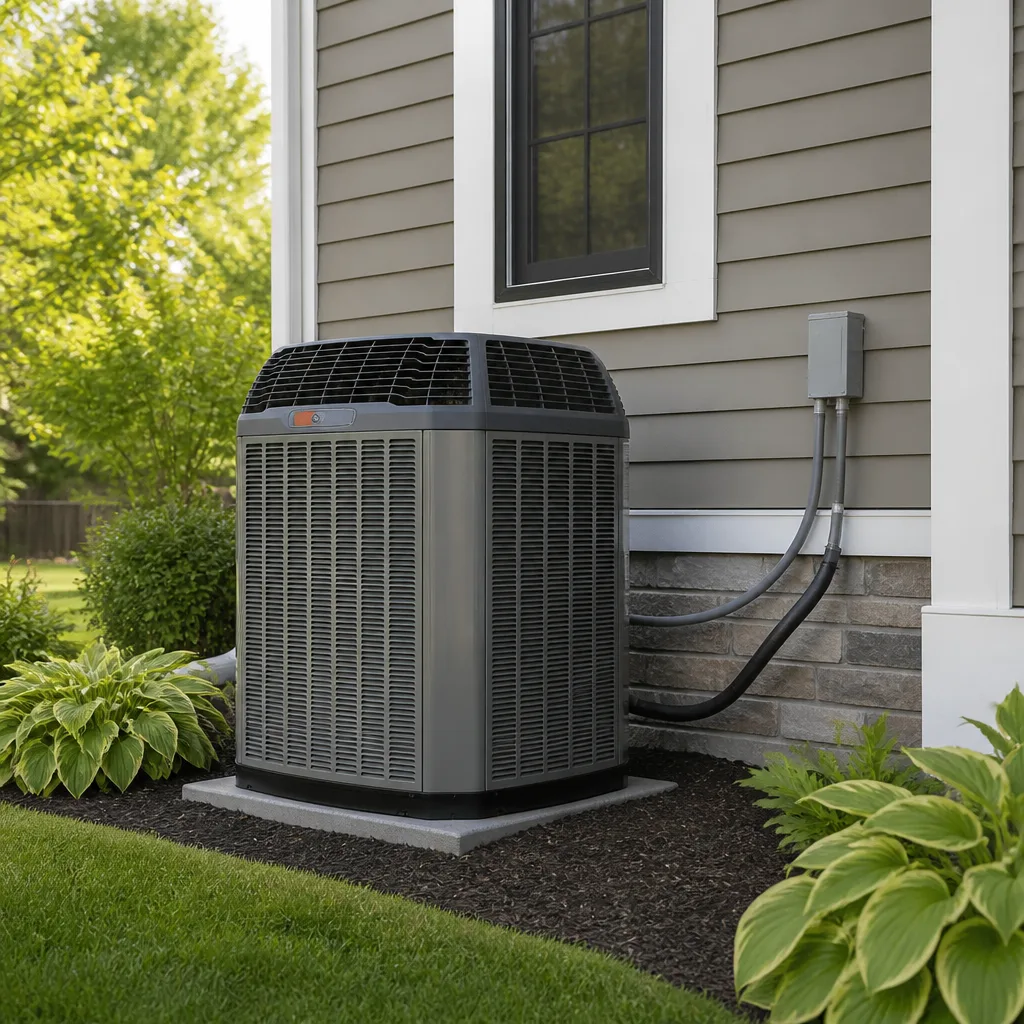 Trane
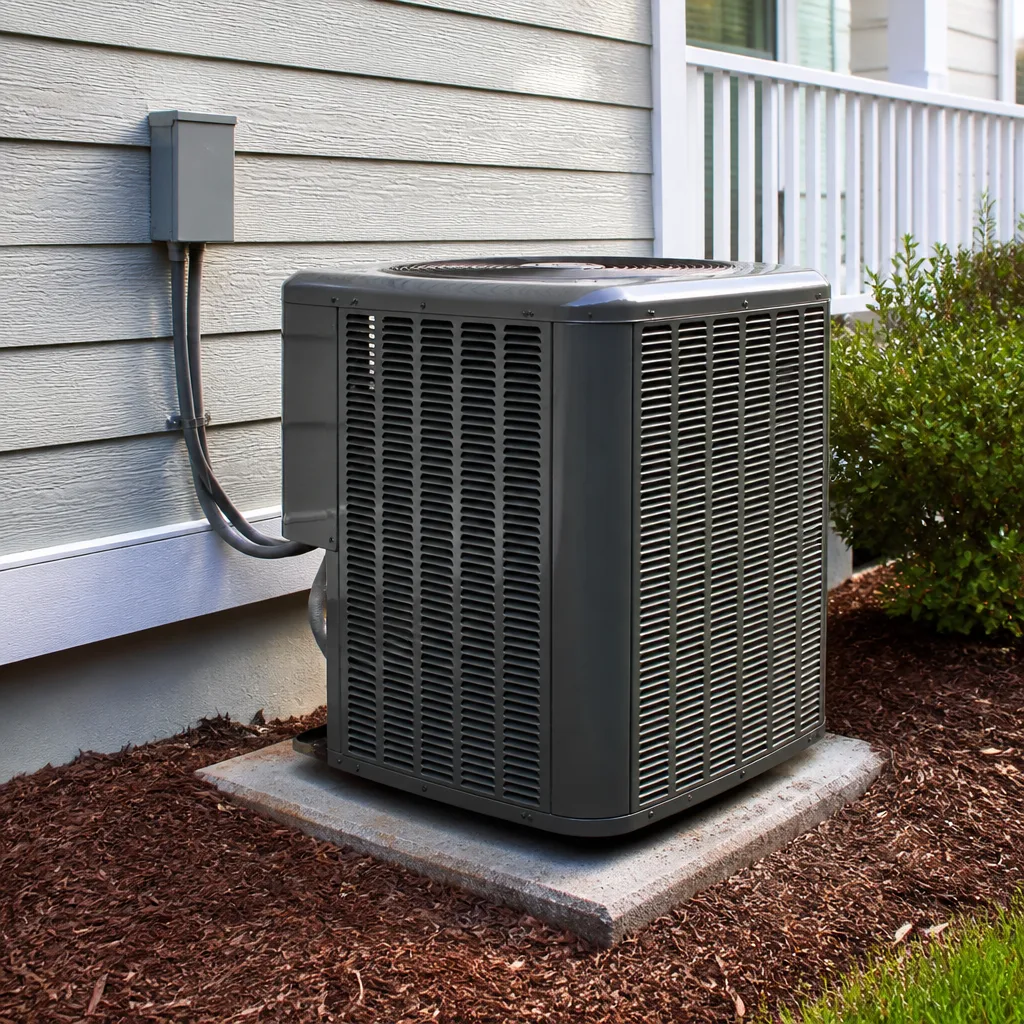 Goodman
Seasonal tune-up and full diagnostic on your Carrier, Trane, or Goodman system - readings shown to you before any repair is proposed
Diagnosis first, numbers second - you approve the repair price before a single part goes in.
Get your free estimateEmergency & Commercial HVAC Troubleshooting: Common Problems and How to Fix Them
Nine out of ten “the whole system just stopped” calls we get on commercial jobs trace back to one of four causes. Three of those four leave a clue you could have spotted two days earlier with a five-second look at the condenser. That’s the frustrating part. By the time the phone rings, the office is at 88 degrees, the break room is a sauna, and the person calling is a manager who wasn’t there when things started going sideways. This guide works backward from symptoms to likely causes. No assumption that anyone was watching the system fail. Just what to look for, what to photograph, and what to tell the person who shows up so the diagnosis doesn’t start from zero. We’re writing this from Sunrise Manor, where the heat tests equipment harder than almost anywhere in the country.
Quick Answer
Most commercial HVAC failures in Sunrise Manor come down to refrigerant loss, restricted airflow, a failed capacitor, or a controls fault, and the last three often announce themselves before full shutdown. A weak capacitor causes hard-starting and short cycling before the compressor gives out; a clogged filter or coil shows up as “cooling but not enough”; a controls fault leaves a code history on the thermostat. Reading those clues before you call cuts diagnostic time roughly in half and can be the difference between a $400 capacitor replacement and a $3,000 compressor job.
Styles & brands we work with
- AC repair
- Furnace & heating
- Heat pumps
- Ductless mini splits
- Carrier
- Trane
- Goodman
Table of Contents
- The Four Failure Modes Nevada Heat Creates
- How to Read a Commercial Thermostat’s Error Code History
- “It’s Cooling But Not Enough”: Narrowing It Down Without Tools
- Capacitor vs. Compressor: Telling Them Apart From Outside
- What to Tell the Tech to Cut Diagnostic Time in Half
- Emergency Call or Planned Repair? A Decision Guide
- Why Commercial Systems Fail Differently Than Home Systems
The Four Failure Modes Nevada Heat Creates
Commercial rooftops and condensing units in Sunrise Manor run through a brutal cycle every summer. Afternoon temperatures climb past 105, the equipment works at maximum capacity for hours, then the evening cool-down forces it to cycle off and back on. That on-off-on rhythm is what kills components. Here are the four failure modes we see most, and the visual clue each one leaves behind.
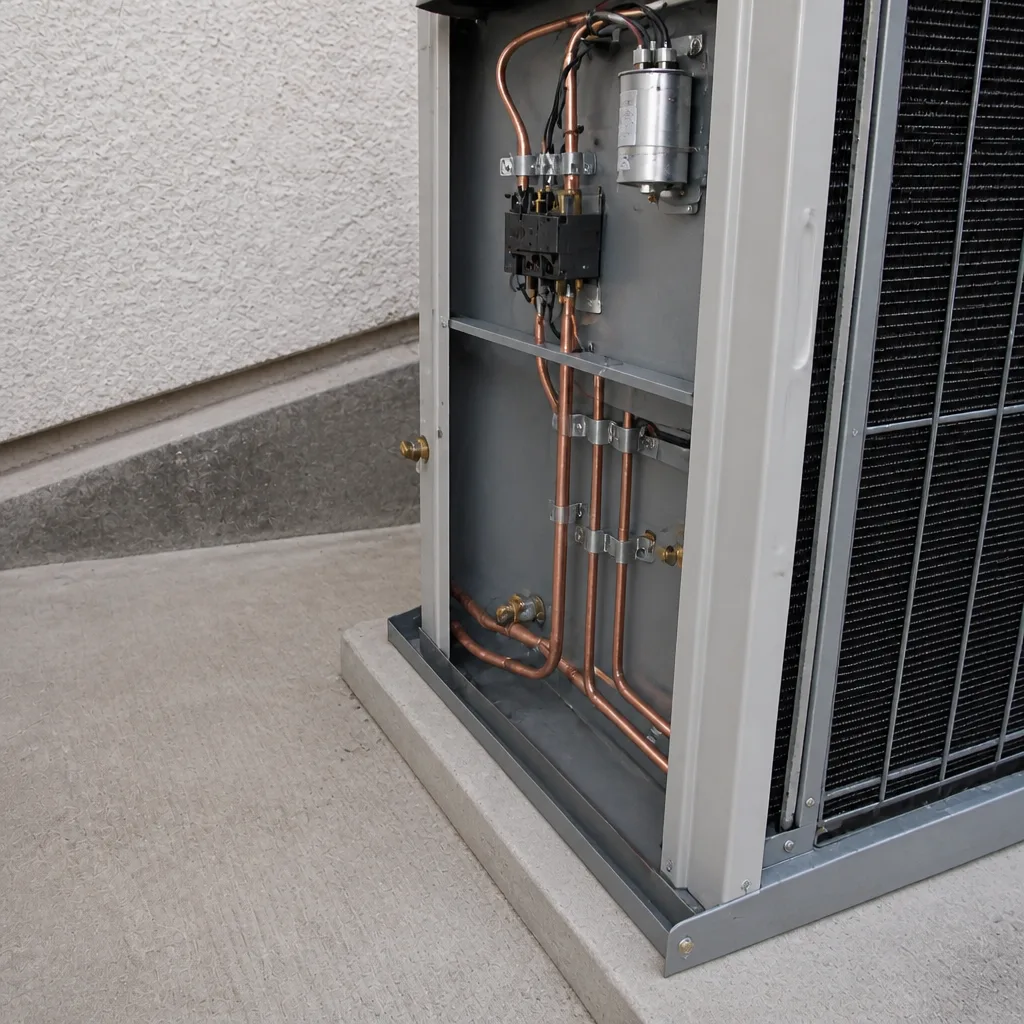
- Failed run capacitor. The clue: the unit tries to start, hums, clicks off, tries again. You may see the condenser fan spinning slowly or not at all. Capacitors age faster in sustained heat, and a swollen or bulging top on the capacitor itself is visible if the panel is off (leave that to a pro).
- Refrigerant loss. The clue: ice on the suction line or the indoor coil, or oil residue at a fitting. Cooling fades gradually over days rather than dying all at once.
- Restricted airflow. The clue: a filter that looks like a felt blanket, or a belt on a commercial blower that’s glazed and shiny. Supply vents feel weak. This is the cheapest problem to fix and the most common one to ignore.
- Controls or thermostat fault. The clue: the unit is mechanically fine but never gets the signal to run, or runs when it shouldn’t. The screen may show a schedule nobody recognizes, set by the last person who touched it.
Sunrise Manor sits in the Mojave band where spring dust storms load condenser coils with fine grit in a single afternoon. We regularly see coils that were washed in March and half-plugged by May. That grit restriction looks exactly like low refrigerant on a gauge until you clean the coil and the pressures normalize. If your building is near open desert on the east side of town, plan on coil cleaning twice a season, not once.
How to Read a Commercial Thermostat’s Error Code History
You don’t need to be the person who programmed the thermostat to read its history. Most commercial thermostats and building controllers, from the common York and Bryant commercial lines to the newer Daikin controls, store a rolling log of fault codes and lockouts. That log tells the story of the last failure even if nobody was watching.
Here’s how to pull it without breaking anything:
- Photograph the main screen first. Before you touch a button, take a clear picture of the current display, including any code or alert icon. This is your baseline.
- Find the menu or “status” button. On most commercial stats it’s labeled Status, Alerts, or a wrench icon. Do not enter installer or setup mode – that’s where settings get wiped.
- Scroll through the alert or fault history. Write down every code and the timestamp next to it. The pattern matters more than any single code. Repeated low-pressure faults point to refrigerant; repeated high-pressure faults point to airflow or a dirty coil.
- Photograph each history screen. The person diagnosing your system can decode them faster from a photo than from your description.
- Check the schedule and setpoints. If the unit is running at the wrong time or the setpoint is off by ten degrees, the “failure” may just be a schedule someone changed.
We’ve walked into Sunrise Manor shops where the thermostat had been locked out on a high-pressure fault for two days and the previous tech never checked the history. The code told the whole story. The photo would have too.
“It’s Cooling But Not Enough”: Narrowing It Down Without Tools
“It’s cooling but not enough” is the most common commercial complaint we hear, and it almost always falls into one of three buckets: refrigerant, airflow, or controls. You can narrow it down with your eyes and hands before anyone shows up.
- Refrigerant symptoms: cooling fades over several days, the outdoor unit runs constantly, and you may see ice on the indoor coil or a line. Warm air at the vents but a compressor that never shuts off.
- Airflow symptoms: some rooms are fine and others are hot, vents feel weak, and the unit cycles normally but never satisfies. Check the filter and any belt-driven blower first.
- Controls symptoms: the unit runs in short bursts, or the schedule and actual occupancy don’t match, or one zone is comfortable while another gets no air at all. The equipment is fine; the signal is wrong.
A quick split test: hold your hand at a supply vent in the hottest room. If the air is cold but weak, it’s airflow. If the air is cool but not cold, it’s refrigerant. If the vent is blowing room-temperature air, the unit isn’t running the way the stat thinks it is, and it’s controls. For a deeper walkthrough of the cooling side, our guide to AC Repair & Installation in Sunrise Manor covers what each symptom means for equipment in this climate.
Capacitor vs. Compressor: Telling Them Apart From Outside
This one matters because the two failures sound almost identical from the parking lot and differ by about $2,600. A failed capacitor means the compressor can’t get the jolt it needs to start; a failed compressor means the motor itself is done. Both present as a unit that hums, clicks, and shuts down.
The tell is in the pattern, not the noise:
- Capacitor: the unit tries to start, hums for a few seconds, clicks off, then tries again a minute later. The condenser fan may spin slowly or not at all. Sometimes it starts on a cooler morning and fails in the afternoon heat. Intermittent is the signature.
- Compressor: the unit hums and trips the breaker, or draws locked-rotor current and shuts down hard. No amount of cool morning helps. The fan spins fine but the compressor never engages.
A capacitor is a cheap part and usually a fast fix. A compressor is a major repair and sometimes the point where replacement makes more sense than repair. That’s why we test the capacitor before anyone says the word compressor. Readings first, numbers second. You’ll see both before we recommend anything. It’s also why a written estimate is worth asking for on any commercial repair: a second opinion on the diagnosis is free through us, and it can save you from paying compressor money for a capacitor problem.
What to Tell the Tech to Cut Diagnostic Time in Half
The single biggest time-waster on a commercial call is arriving without a story. When you can hand the tech a clear history, the diagnosis starts at the right place instead of the beginning. Here’s what actually changes where we start looking:
- When it started, and what changed. “It stopped after the storm Tuesday” is worth ten minutes. So is “we added a server rack last month.”
- What it’s doing right now. Running constantly, short cycling, dead, or blowing warm. Each sends us to a different part of the system.
- Any error codes and the photos of them. The code history narrows the field before we open a panel.
- Building layout and which areas are affected. One hot zone versus whole-building failure is a completely different diagnosis.
- What was done last. Filter changes, a schedule update, a part someone swapped, a breaker someone reset. All of it matters.
- Access. Where the thermostat, disconnect, and roof hatch are, and whether anyone needs to be there to let us in.
We keep a live person on the phone around the clock for exactly this reason. You call, you tell us what you’re seeing, and the person who shows up already knows where to start. For commercial work in Sunrise Manor, that continuity is the difference between one visit and three. If your issue is on the heating side, the same history-first approach applies, and our Heating & Furnace in Sunrise Manor page covers the winter version of this playbook.
Emergency Call or Planned Repair? A Decision Guide
Not every failure is an emergency, but some genuinely are. A commercial space without cooling in a Sunrise Manor July is a health and safety issue, not an inconvenience. Employees working in a 95-degree stockroom, food service equipment that can’t hold temperature, or a business that can’t open its doors are all reasons to call now rather than schedule for next week.
Rough guide:
- Call now: no cooling in occupied space during extreme heat, a burning smell or tripped breaker, water leaking from a unit, or a system that’s been dead for hours and the building is unusable.
- Schedule soon: reduced cooling but the space is livable, a single zone out while others work, or a unit short cycling but still running.
- Planned repair: a noisy but working unit, a filter change, a coil cleaning, or a controls adjustment.
This guide is about troubleshooting, not repair. Anything involving refrigerant handling, high-voltage electrical, or a compressor is a job for a trained professional. Refrigerant is regulated, and the voltages inside a commercial disconnect can kill you. Do the five-second visual check and the thermostat history, then let someone qualified open the panels.
Why Commercial Systems Fail Differently Than Home Systems
A house has one thermostat and one family. A commercial building has zones, schedules, occupancy patterns, and equipment running far harder for far longer. That changes the failure pattern. Commercial units in Sunrise Manor often run 12 to 14 hours a day through the summer, and the wear compounds. Rooftop condensers bake in direct sun with less shade than a residential unit. Belt-driven blowers wear. Economizers stick open and pull in 110-degree air when they should be closed.
We’ve seen retail buildings in Sunrise Manor where the economizer had been stuck for two summers, and the “system problem” was really the unit pulling outside air into a building that was already hot. Controls and economizers are the parts of commercial work that no one checks until something fails. The other difference is continuity. A commercial manager needs the same person to walk back in the door next time, not a new face who’s never seen the equipment. If your building runs on a heat pump or a mini-split setup for a smaller space, our Heat Pump & Mini Split in Sunrise Manor page covers how those hold up in this climate.
Common Mistakes to Avoid
- Ignoring the filter for a full season. In Sunrise Manor dust, a commercial filter can load up in weeks. A $20 filter change prevents a $400 airflow repair, and we see this every single summer.
- Resetting the breaker and calling it fixed. A breaker that trips twice is telling you something. Resetting it a third time can cost you a compressor.
- Assuming “not cooling” means low refrigerant. It’s often the capacitor or the airflow. Reaching for a recharge before checking the cheap stuff is how a small bill becomes a big one.
- Letting anyone change the thermostat schedule without a photo. Half the “failures” we diagnose in Sunrise Manor are a schedule somebody set and didn’t write down. Photograph it before anyone touches it.
- Waiting until the equipment is at full load before calling. A weak capacitor found in May is a cheap fix. The same capacitor found in July after it took the compressor out is a major repair.
- Taking the first quote without a second look. A second opinion on a written estimate is free through us. On a compressor-level bill, that’s worth asking for every time.
- Skipping the error code history. The thermostat already knows what happened. Not reading it means starting the diagnosis over.
See the difference
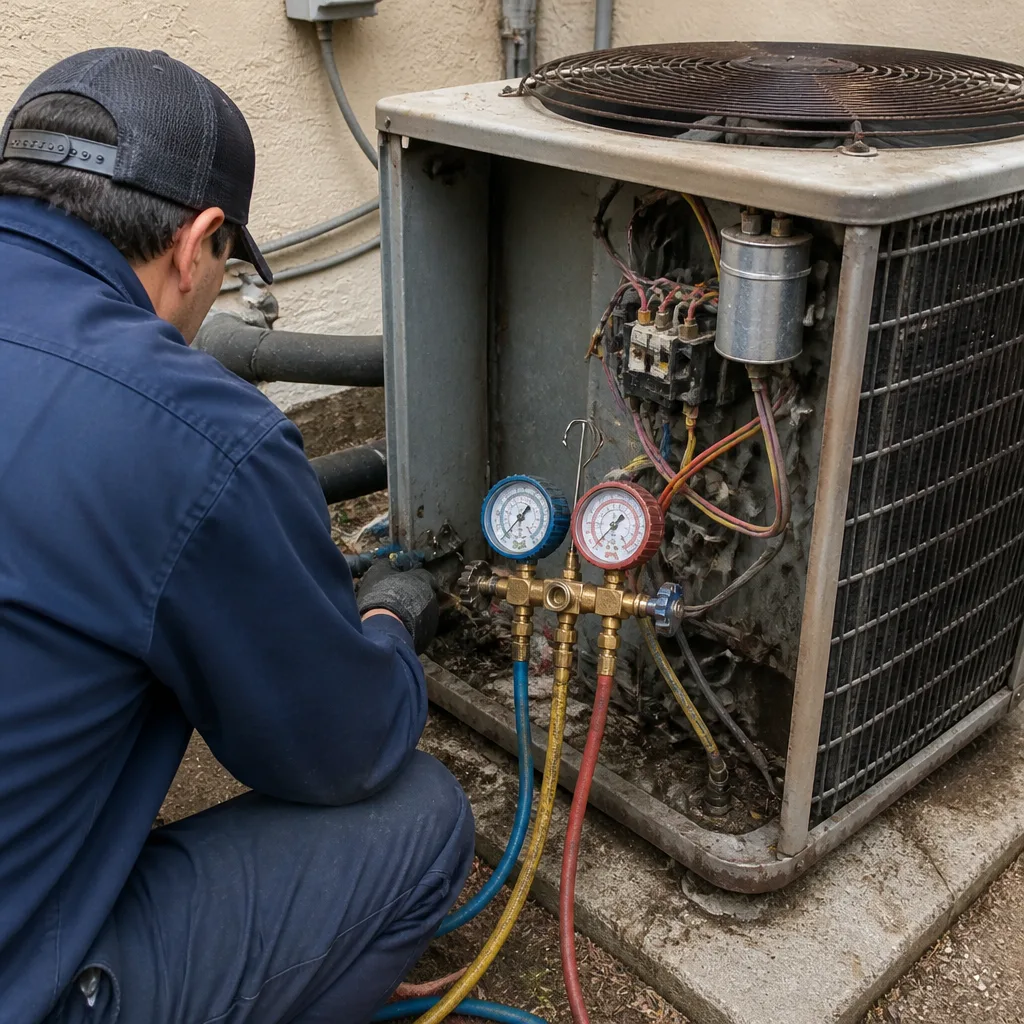 Before
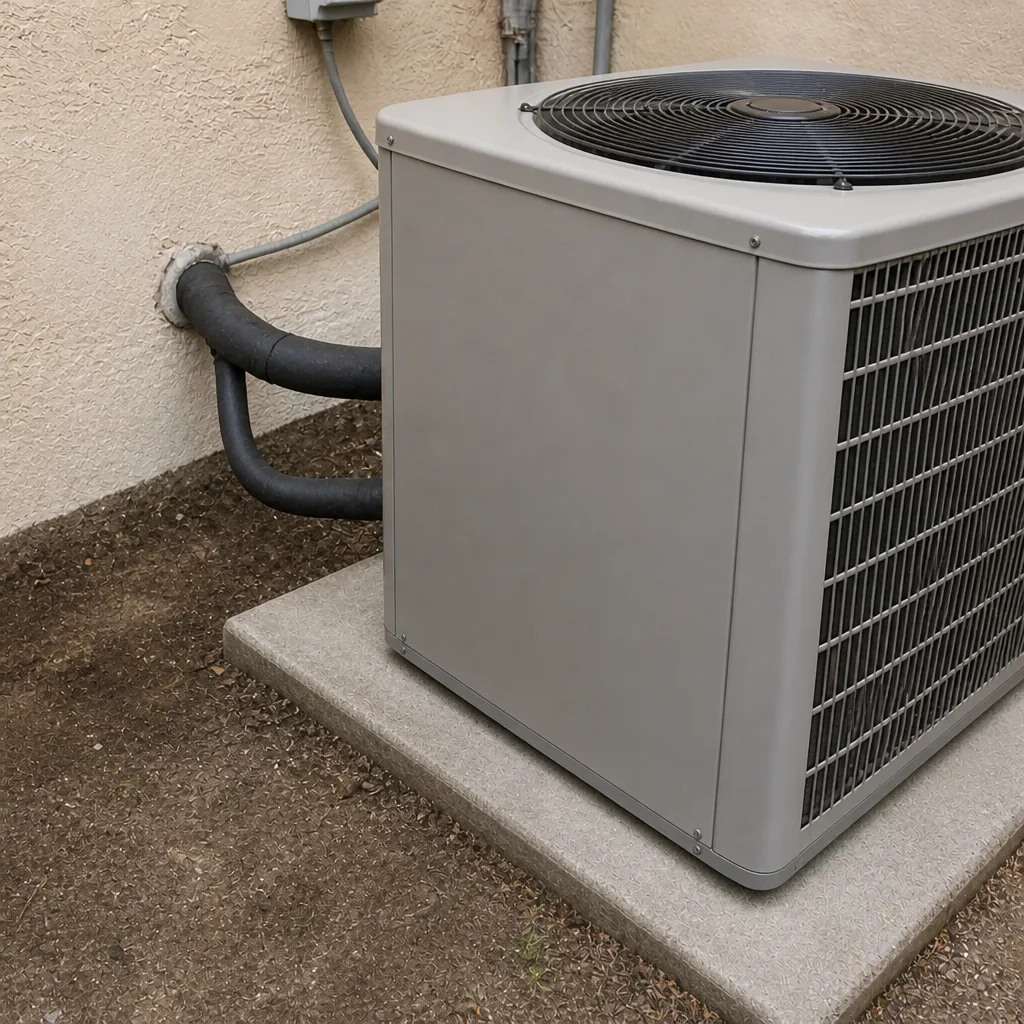 After
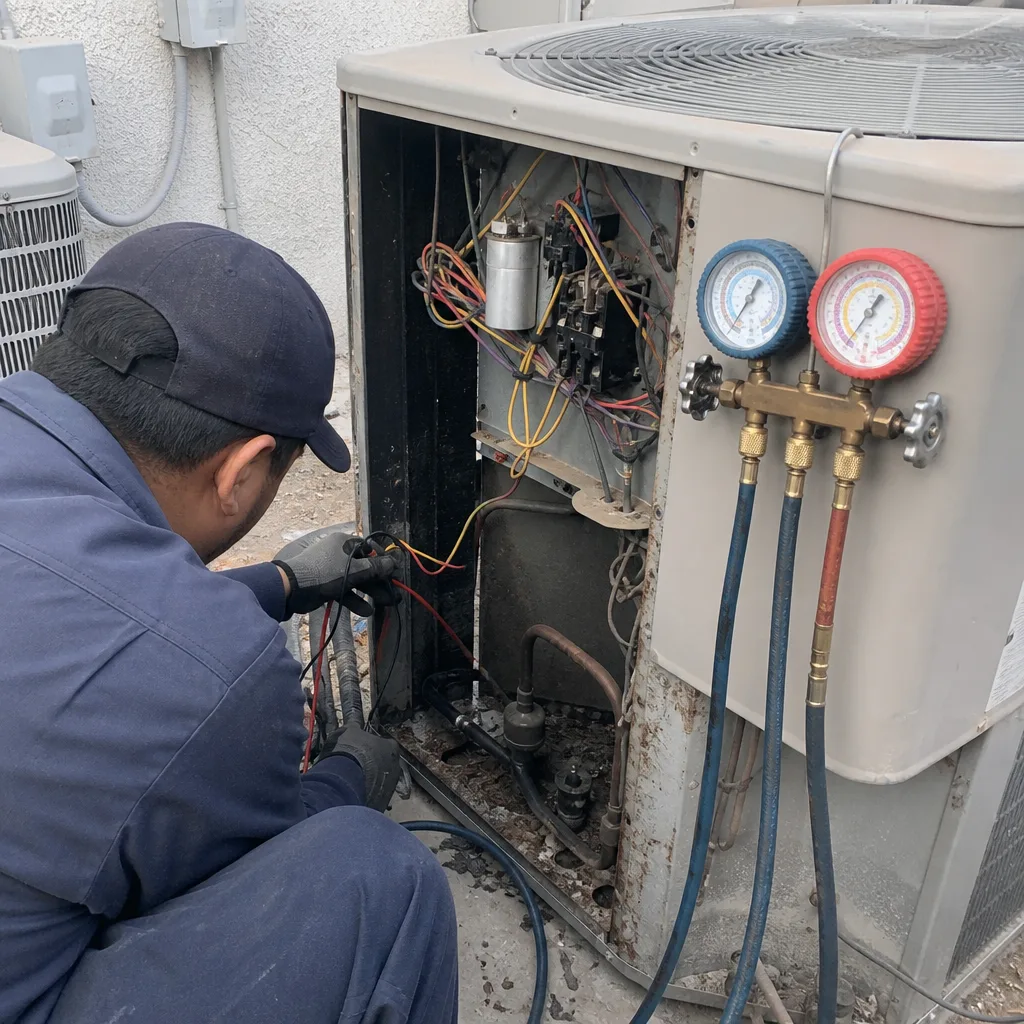 Before
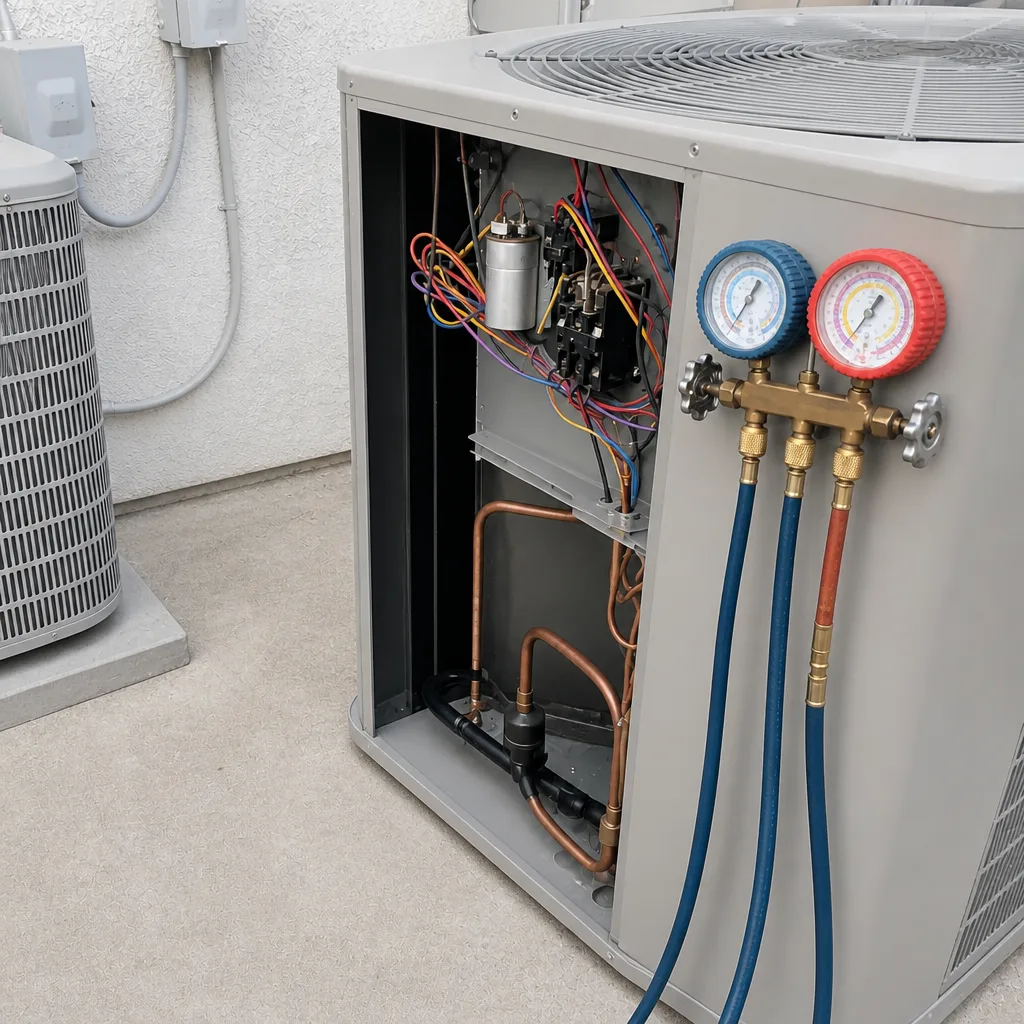 After
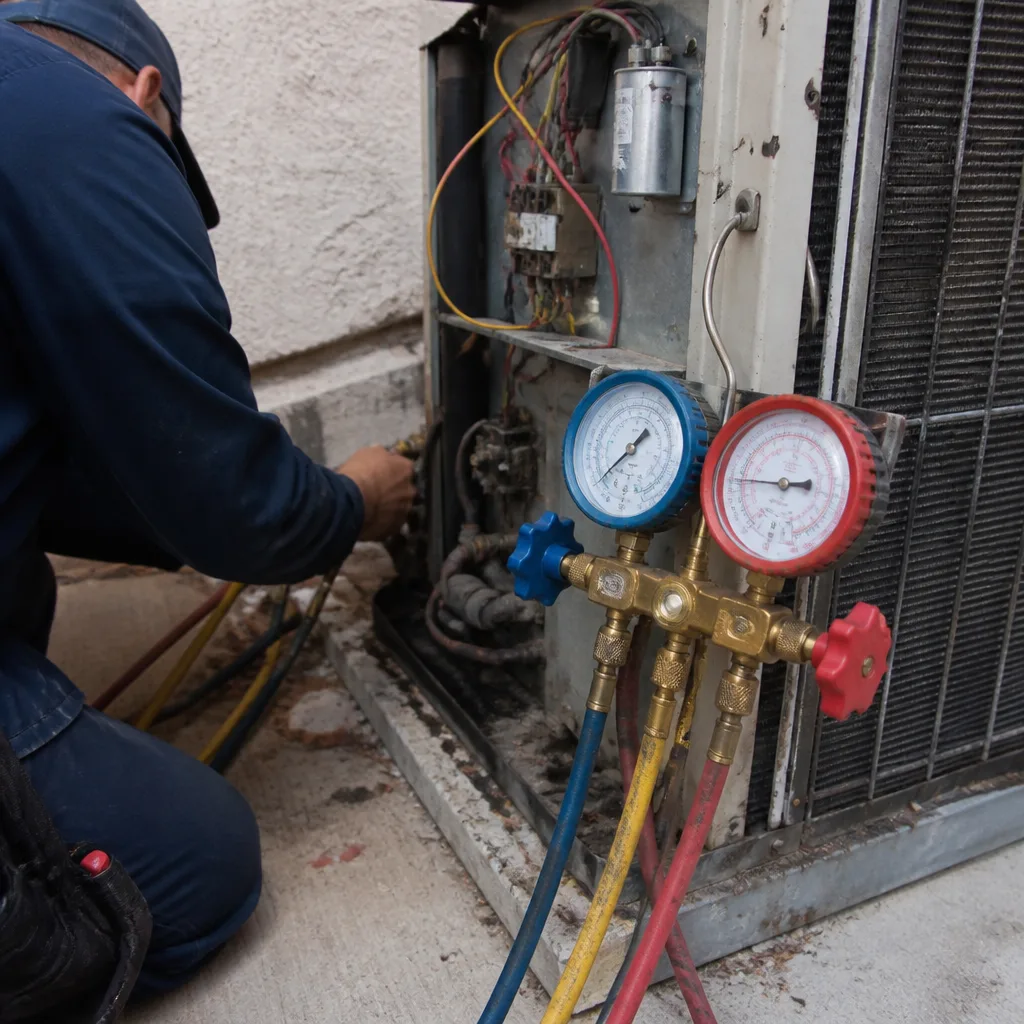 Before
 After
When to Call a Professional
Call a professional when the diagnosis points to refrigerant, electrical, or a compressor, and call immediately when there’s a burning smell, a repeatedly tripping breaker, or water coming from a unit. Those are safety issues, not convenience issues, and no amount of trouble-shooting from the outside fixes them. If the breaker trips twice, stop resetting it. If the outdoor unit hums and won’t start, leave it and call. If the space is occupied and hot in the Sunrise Manor summer, don’t wait for a slow Monday. Ray’s Heating & Air Sunrise Manor offers free estimates in Sunrise Manor – call (877) 311-5951, and a live person will pick up. Every heating and cooling job carries the 90-Day Done Right Promise: if it isn’t done right, one call brings us back.
Frequently Asked Questions
Restricted airflow from dirty filters and dust-loaded condenser coils is the most common problem we see, and it’s also the cheapest to prevent. Sunrise Manor sits in the Mojave dust band, so coils that look clean in spring can be half-clogged by early summer. Check filters monthly in the cooling season and schedule a coil cleaning at least once a year.
A failing capacitor causes hard starting, humming, short cycling, and intermittent failures that often ease on cooler mornings; a failed compressor hums and trips the breaker with no improvement. Capacitors usually cost a few hundred dollars, while compressors run into the thousands. We test the capacitor before anyone says the word compressor, and you see the readings before the numbers.
Yes. We handle same-day and emergency calls for commercial systems in Sunrise Manor, and a live person answers the phone around the clock, never a voicemail maze. Call (877) 311-5951 for an exact quote – estimates are free. If it’s a health and safety issue, call immediately rather than scheduling for later.
Repair usually makes sense when the failed part is a capacitor, blower, or controls component; replacement often makes more sense when a compressor fails on equipment that’s already near the end of its service life. We give you the readings and a written estimate, plus a free second opinion on any written estimate you already have, so you can decide without pressure.
Give the tech the when-it-started, what-changed, what-it’s-doing-now, and any error code photos you took. The thermostat history matters most: it tells us the sequence of lockouts and where to start. That one habit cuts diagnostic time roughly in half on a commercial call.
Plan on twice a year: a cooling service in spring before the heat and a heating service in fall. Between visits, change filters monthly in summer, photo the thermostat setpoints any time someone adjusts them, and clean the condenser coil at least once a season. For smaller spaces on a heat pump, the schedule is the same.
At the Bottom Line
Most commercial HVAC failures in Sunrise Manor come down to refrigerant loss, restricted airflow, a failed capacitor, or a controls fault, and three of those leave clues before shutdown. Look at the condenser, photograph the thermostat history, and note what changed and when. That small bit of information halves the diagnostic time and often saves a big bill. The pattern from a thermostat is free; a replaced compressor when the real problem was a capacitor is not. When the diagnosis points to refrigerant, electrical, or the compressor, stop and call. Ray’s Heating & Air covers all major brands, from Rheem and York to Daikin and Bryant, and every job carries the 90-Day Done Right Promise. For a headline reminder of who we are and where we work, start at Ray’s Heating & Air Sunrise Manor home.
Ready to get your building cool again? Call (877) 311-5951 for a free estimate. A live person answers around the clock, and if it isn’t done right, one call brings us back.
Written by the team at Ray’s Heating & Air Sunrise Manor.