
Last updated November 18, 2026
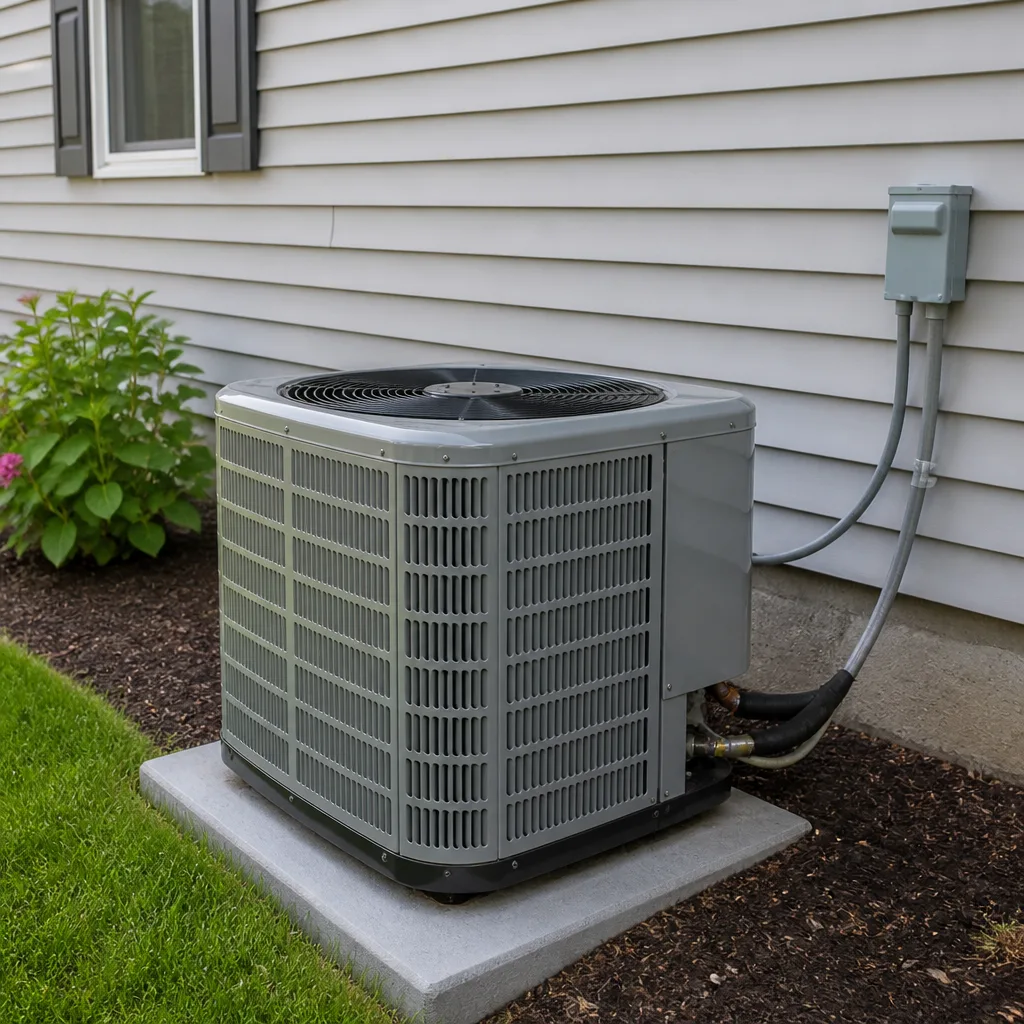 AC repair
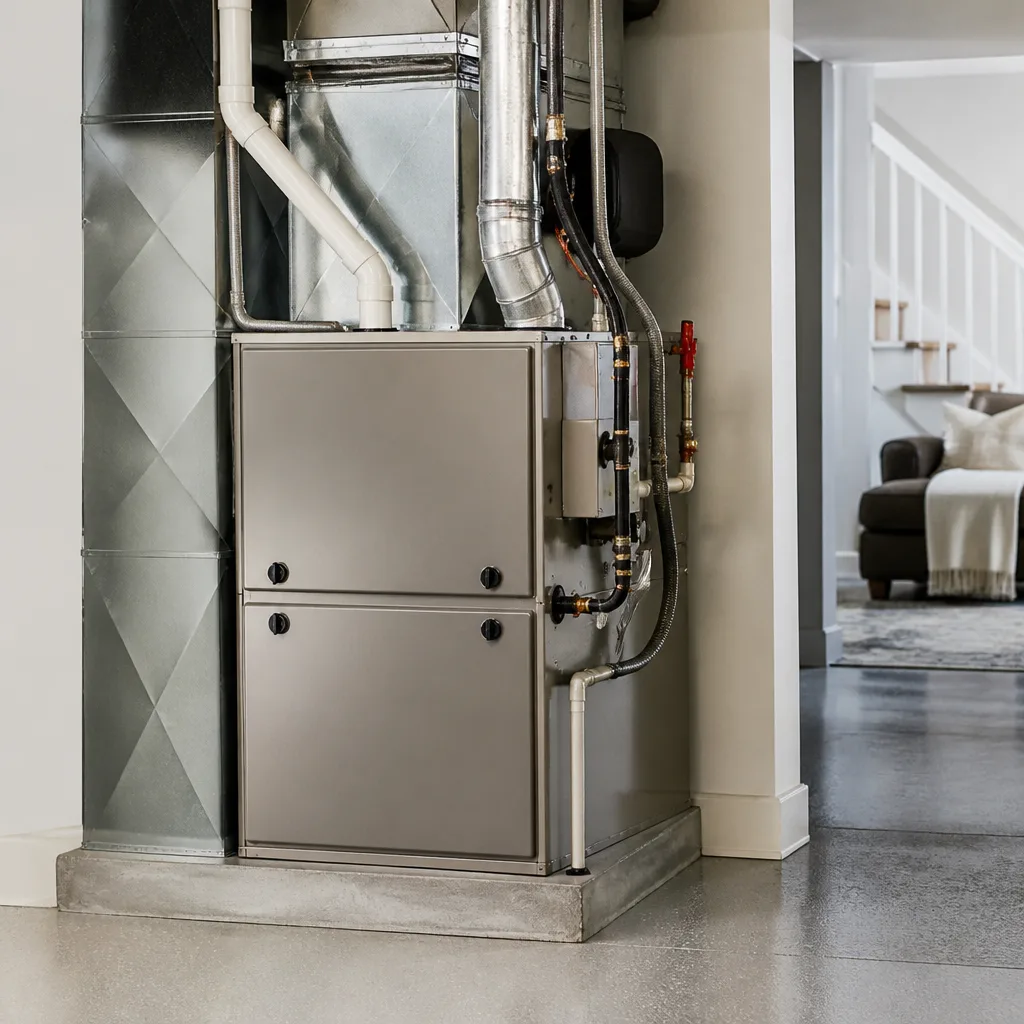 Furnace & heating
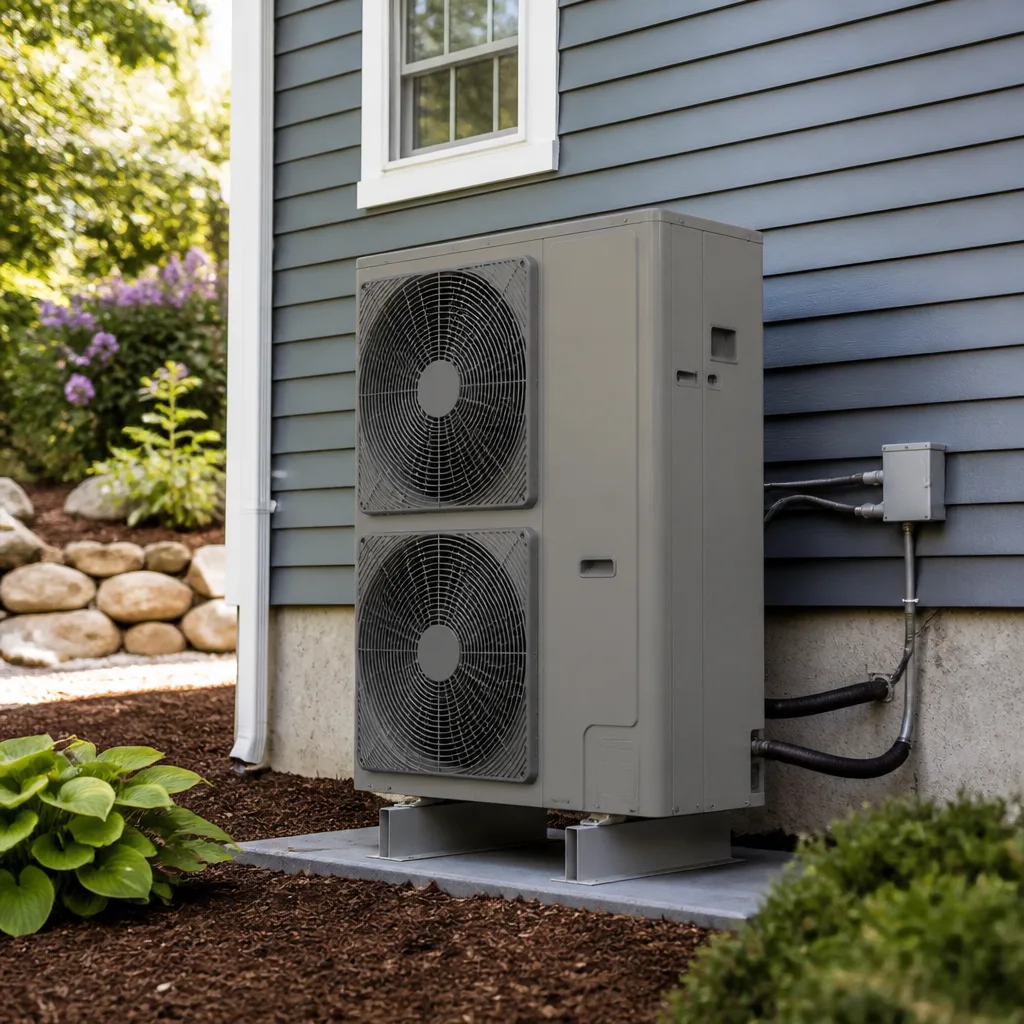 Heat pumps
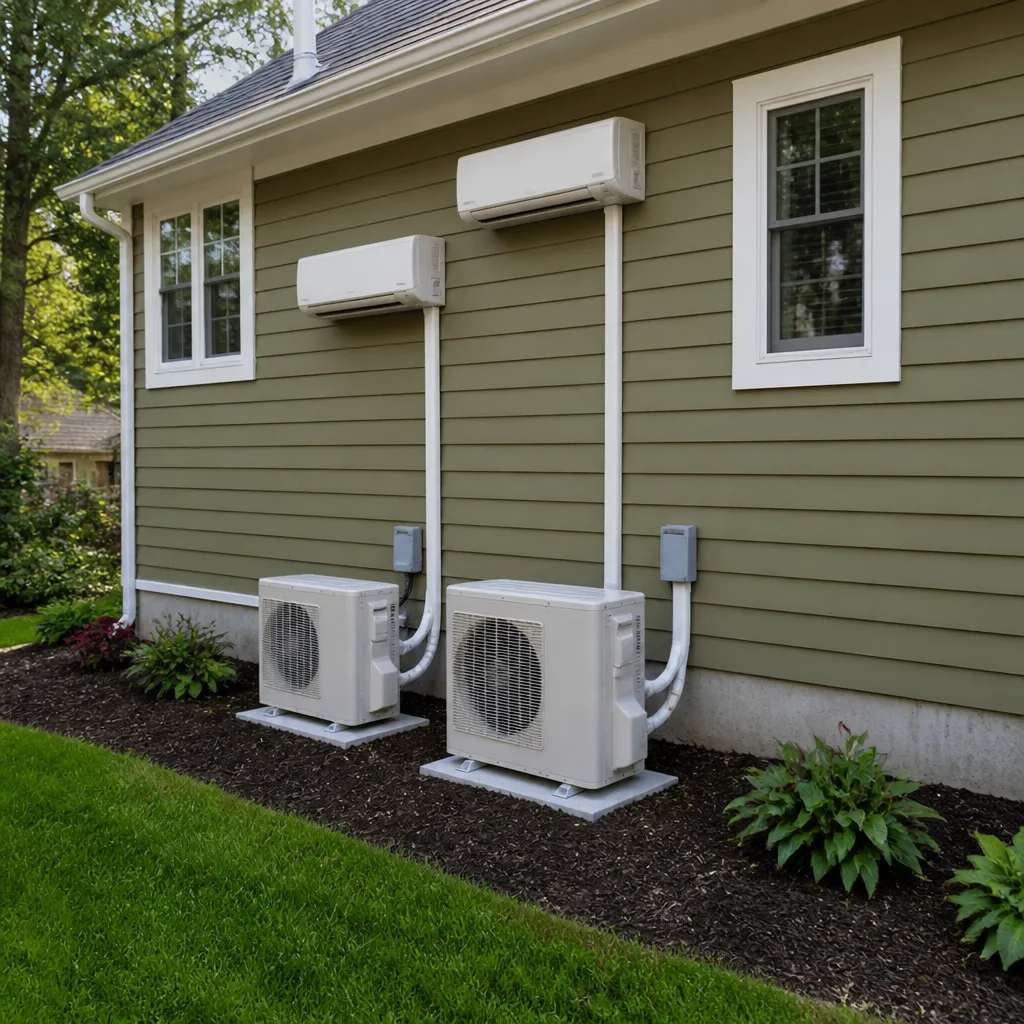 Ductless mini splits
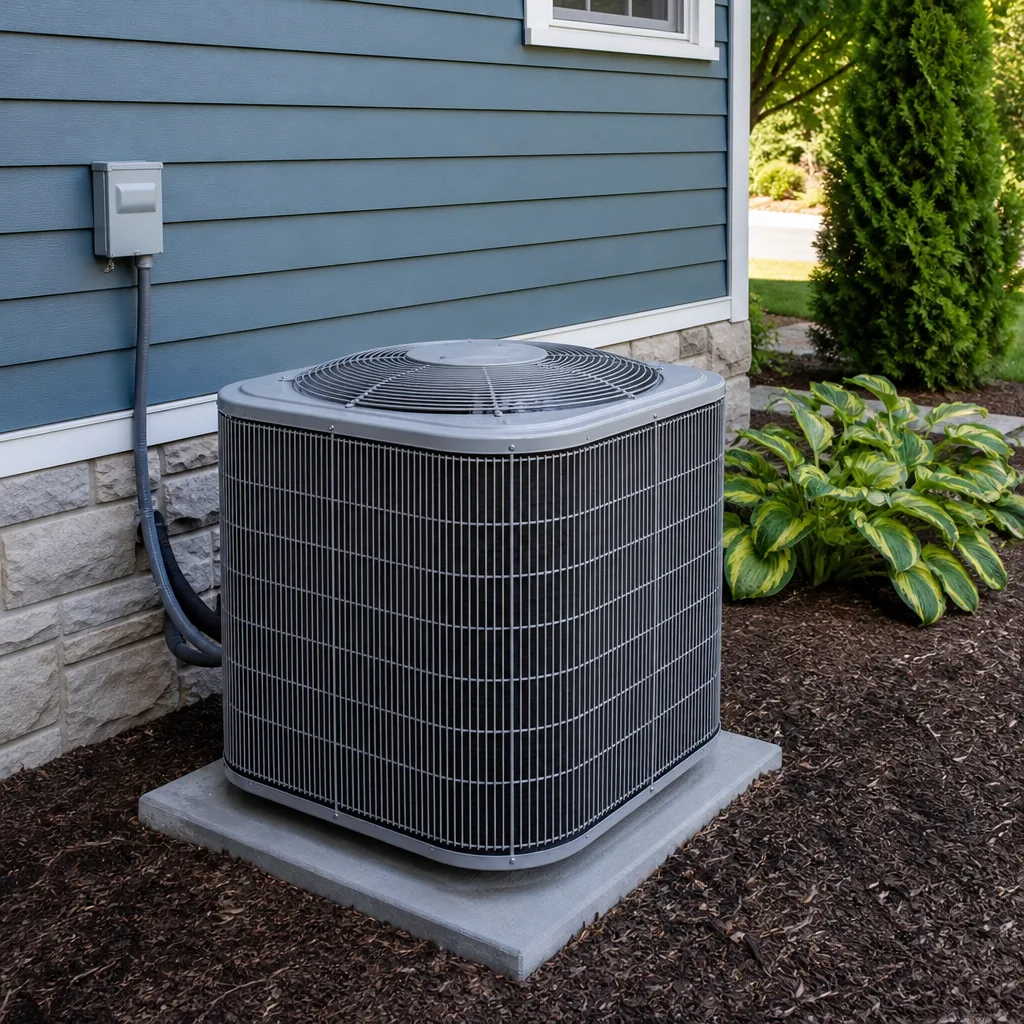 Carrier
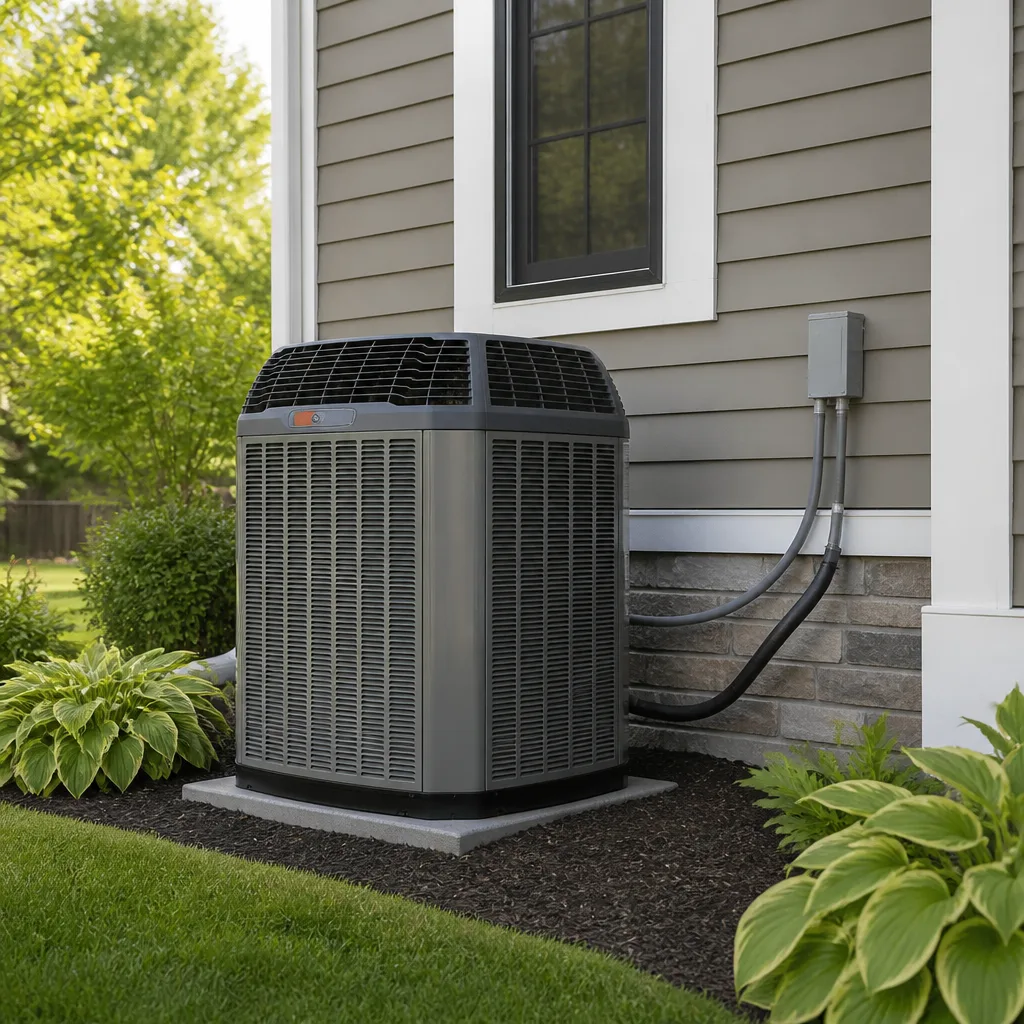 Trane
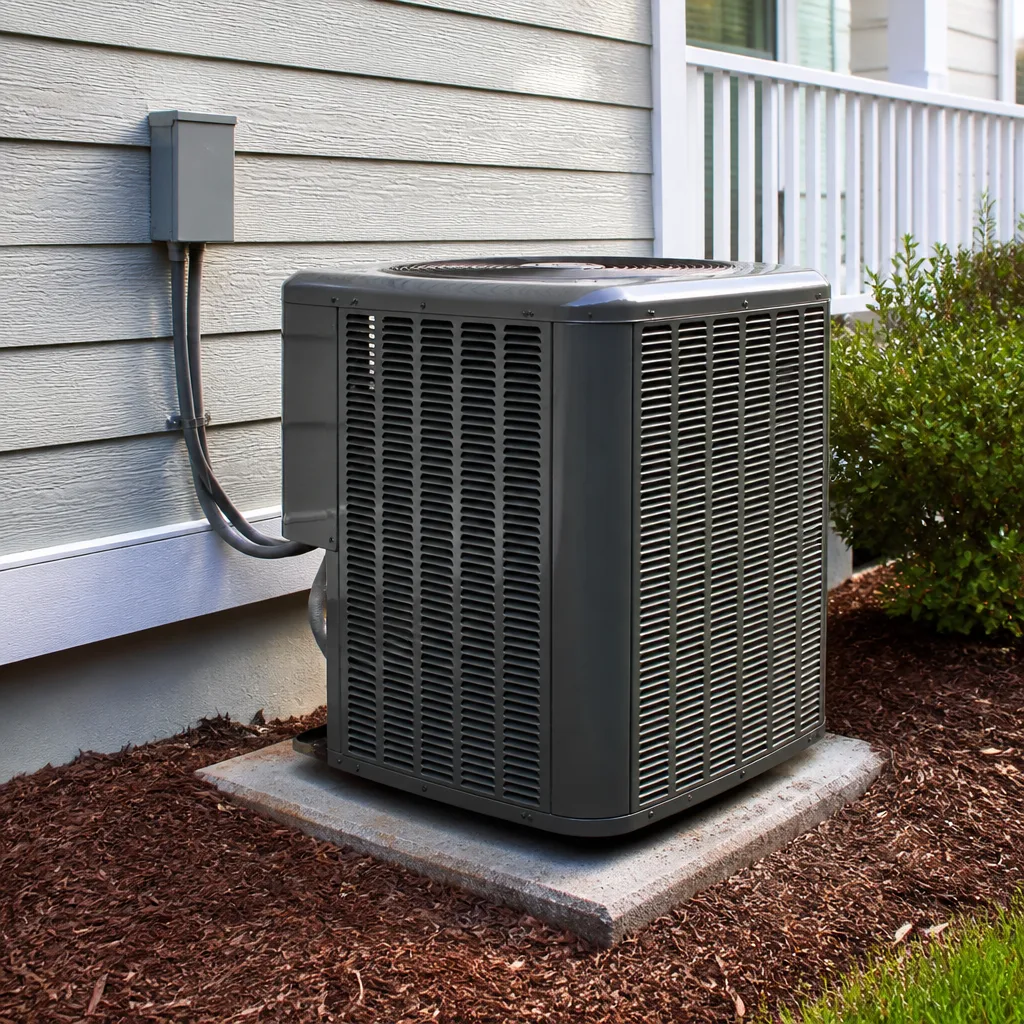 Goodman
Seasonal tune-up and full diagnostic on your Carrier, Trane, or Goodman system - readings shown to you before any repair is proposed
Diagnosis first, numbers second - you approve the repair price before a single part goes in.
Get your free estimateDIY vs Professional HVAC: The Sunrise Manor Homeowner’s Decision Guide
Replacing your own capacitor is legal, cheap, and genuinely within reach for a homeowner who is comfortable with a screwdriver and a multimeter. It also requires you to discharge the old capacitor first, and the ones in HVAC systems can hold enough charge to send you to the hospital if you skip that step. That gap between “legal” and “safe” is the whole conversation. This guide draws the line honestly: what you can do yourself in Sunrise Manor, what requires an EPA 608 certification or a Nevada contractor’s license, and why a rooftop unit at 115 degrees is a different animal than a YouTube video filmed in a Michigan basement.
Quick Answer
In Sunrise Manor, homeowners can legally and safely handle filter changes, coil cleaning, condensate drain clearing, and thermostat swaps. Anything involving refrigerant, electrical service panels, gas lines, or a rooftop unit in summer heat should go to a licensed professional. The break-even math matters too: if a repair requires a $200 tool you’ll use once, the service call is usually cheaper than the DIY route.
Styles & brands we work with
- AC repair
- Furnace & heating
- Heat pumps
- Ductless mini splits
- Carrier
- Trane
- Goodman
Table of Contents
- What Nevada Law Actually Allows You to Do Yourself
- The Four DIY Jobs Worth Doing (And How Long They Take)
- Why Refrigerant Work Isn’t a DIY Project (And What It Does to Your Warranty)
- The Rooftop Heat Problem: Why Sunrise Manor Summers Change the Safety Math
- The Break-Even Math: When a Service Call Is Cheaper Than the Tool
- How DIY Mistakes Affect Your Warranty and Homeowner’s Insurance
- What We See in Sunrise Manor Neighborhoods
- Red Flags That Mean Stop and Call Someone
What Nevada Law Actually Allows You to Do Yourself
Nevada is clearer than most states about this, and that clarity is useful. You can work on your own home’s HVAC system as a homeowner. What you cannot do is handle refrigerant without an EPA Section 608 certification, and you cannot perform work for compensation without a Nevada State Contractors Board license. Those two rules draw most of the line.
Here’s what that looks like in practice:
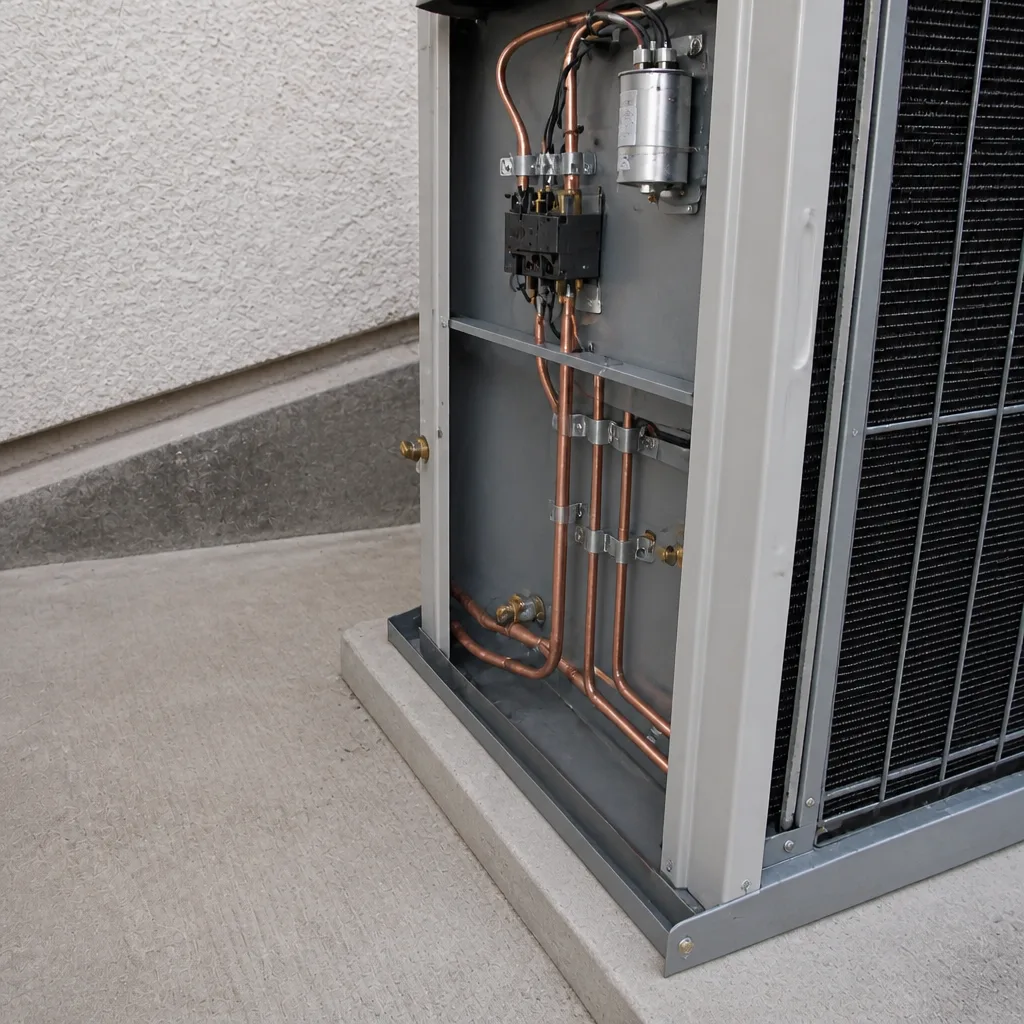
- Legal for homeowners: Replacing air filters, cleaning condenser and evaporator coils, clearing a condensate drain line, swapping a thermostat, replacing a capacitor (with proper discharge procedure), tightening accessible electrical connections at the disconnect, and replacing a blower motor on some residential units.
- Requires EPA 608 certification: Adding refrigerant, recovering refrigerant, repairing a leak in the sealed system, evacuating and recharging lines. This applies even to the small cans sold at hardware stores. Buying R-410A without certification is restricted.
- Requires a licensed contractor: Gas line work, electrical panel modifications, compressor replacement, full system replacement, and any work performed for payment.
- Unsafe regardless of legality: Opening the sealed refrigerant circuit, working on energized components at the panel, and climbing onto a rooftop unit alone in July.
What most homeowners don’t realize is that the capacitor example is the tricky one. It’s legal. It’s cheap. And it’s genuinely doable if you know how to discharge it safely. But the discharge procedure is the part the YouTube video skips past in fifteen seconds, and it’s the part that matters.
The Four DIY Jobs Worth Doing (And How Long They Take)
We’ve walked into thousands of Sunrise Manor homes, and the honest truth is that a homeowner who does these four things on schedule will extend the life of their system by years. None of them require a license. All of them are worth the Saturday morning.
- Filter replacement. Fifteen minutes. In Sunrise Manor’s dust, filters load up faster than the packaging suggests. During summer, check monthly. A clogged filter is the single most common cause of frozen coils and high electric bills we find. Cheap, easy, high impact.
- Condenser coil cleaning. Forty-five minutes to an hour. Shut the power at the disconnect, hose the outdoor coil from the inside out, straighten bent fins with a fin comb. Do this twice a year in Sunrise Manor – spring and late summer – because the dust and cottonwood fluff here pack the coil tighter than in wetter climates.
- Condensate drain clearing. Twenty minutes. Pour a cup of distilled white vinegar down the drain line every couple of months, or use a wet/dry vac on the exterior drain stub. In Sunrise Manor, our dry air doesn’t mean your AC isn’t producing condensate – it means the drain line is more likely to clog with dust and algae between service calls.
- Thermostat swap. Thirty to forty-five minutes for a like-for-like replacement. Turn off the breaker, label the wires, swap the base plate, reattach. Do not attempt this if you’re moving from a battery-powered to a C-wire-required smart thermostat without checking your control board first.
That’s the full DIY list. Everything else is either regulated, dangerous, or requires tools and knowledge that don’t pay for themselves on a one-time job.
Why Refrigerant Work Isn’t a DIY Project (And What It Does to Your Warranty)
Refrigerant is the part where well-meaning homeowners get into real trouble. Under Section 608 of the Clean Air Act, anyone who adds, removes, or handles refrigerant must be EPA-certified. That’s not a suggestion. Buying a can of R-410A or R-32 without certification is a federal violation, and the small DIY “recharge kits” sold online skirt the rules without telling you.
Beyond the legal issue, there’s the warranty. Every major manufacturer – York, Daikin, Bryant, American Standard, all of them – writes their warranty terms with an implicit assumption that refrigerant work is done by a certified technician. If a compressor fails and the manufacturer’s warranty administrator sees evidence that the sealed system was opened by an uncertified party, the coverage is typically voided. On a system that costs $6,000 to $12,000 to replace, that’s the whole ballgame.
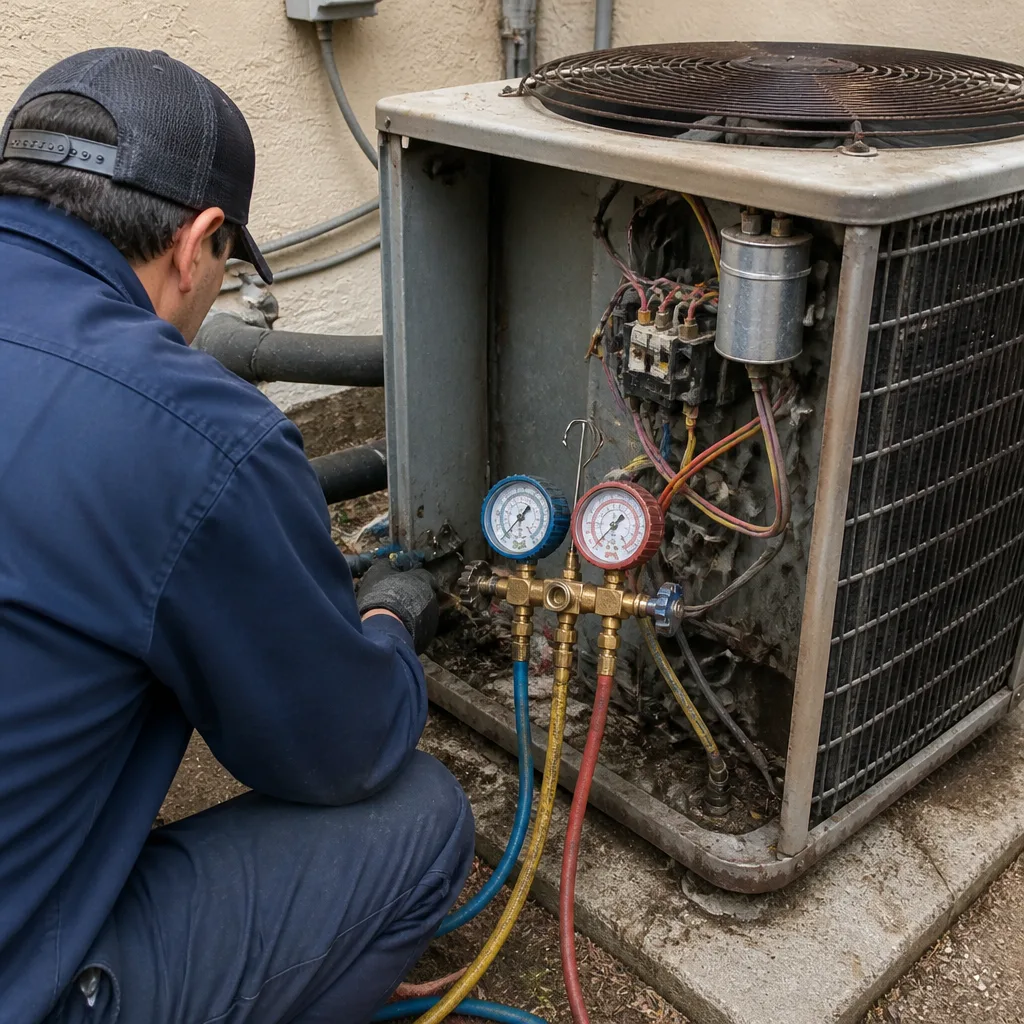
There’s also the leak question. Refrigerant doesn’t get “used up.” If your system is low, it’s leaking. Topping it off without finding the leak is like adding air to a tire with a nail in it – it works for a while and then it doesn’t. Our team uses electronic leak detection and nitrogen pressure testing to find the actual source. Readings first, numbers second. That’s the only way to know whether you’re looking at a $300 repair or a system that’s on its way out.
The Rooftop Heat Problem: Why Sunrise Manor Summers Change the Safety Math
Most HVAC safety advice you’ll read online was written for a split system in a Texas backyard with the condenser at ground level and shade from a live oak. Sunrise Manor is not that. Most of the housing stock here – especially the older single-story homes and the manufactured housing communities on the east side – has the air handler and often the condenser on the roof. In July, that rooftop surface hits 150 to 165 degrees on a sunny afternoon.
That changes the safety math in three specific ways:
- Heat illness hits fast. At 160-degree surface temperatures and 110-degree ambient air, a homeowner working on a rooftop unit without shade, water, and a partner can go from “fine” to disoriented in under twenty minutes. Heat stroke is not a liability disclaimer – it’s a real, recurring injury here.
- Burns from contact. Compressor housings, discharge lines, and metal cabinets on a rooftop unit will cause second-degree burns on contact during a mid-afternoon call. Even a trained technician wears gloves and waits for the unit to cool before opening the panel.
- Fall risk multiplies. Add heat exhaustion, a steep pitch on some roofs, and a single-story drop to hard ground. We’ve seen more rooftop injuries in this climate than anywhere else our team has worked.
If your unit is on the roof and it’s over 100 degrees, that’s not a DIY day. That’s a call-us day. The rooftop work we do, we do with the right equipment, a second person, and the discipline to shut down and come back when conditions are unsafe.
The Break-Even Math: When a Service Call Is Cheaper Than the Tool
Here’s the reality check nobody wants to hear: most one-time DIY HVAC repairs don’t pencil out. The tool costs more than the service call.
Take a capacitor replacement. A capacitor is $15 to $30 at the parts house. Sounds great – until you realize you need a multimeter with capacitance testing (a real one, $60 to $150), a screwdriver set, insulated gloves rated for the voltage, and a discharge resistor. Unless you already own those, you’re spending $150 to avoid a $180 repair and taking on the injury risk. That math doesn’t work.
Same goes for a blower motor. The part is $150 to $300, but a proper ECM motor diagnostic and replacement also involves understanding the control board, matching the motor spec, and setting the speed taps. A homeowner who gets it wrong burns out a $600 control board on the first power-up.
The DIY jobs that actually save money are the recurring ones – filters, coil cleaning, drain clearing. Those cost under $20 and take under an hour. They pay back every month. Every other repair has a real break-even point where a professional service call in Sunrise Manor is the cheaper path. If you want to see actual pricing on the common repairs, our AC repair and installation in Sunrise Manor page lists the ranges.
How DIY Mistakes Affect Your Warranty and Homeowner’s Insurance
Two separate systems protect you from a bad HVAC repair, and both can be voided by doing the wrong job yourself.
Manufacturer warranty. Every major brand – Carrier, Trane, Lennox, Goodman, Rheem, York, Daikin, Bryant, American Standard – covers their equipment on a schedule conditional on proper installation and service. If a technician determines the failure was caused by an unlicensed repair, the parts and labor coverage can be denied. That’s a $1,500 to $4,000 decision, not a footnote.
Homeowner’s insurance. Standard homeowners policies cover “sudden and accidental” damage from mechanical failure. They do not typically cover damage resulting from improper installation or unpermitted work. If a DIY refrigerant addition causes a compressor failure and water damage, or if a DIY electrical modification causes a fire, the claim can be denied. The adjuster will look at who did the work – and if it wasn’t a licensed contractor, you’re holding the bag.
In our experience, this is the piece homeowners miss. The 90-Day Done Right Promise on our work exists partly for this reason – it puts the accountability in writing so that if something fails, we’re the ones resolving it, not you. Our heating and furnace in Sunrise Manor work is documented the same way. Documentation is the whole point.
What We See in Sunrise Manor Neighborhoods
Sunrise Manor is not one climate. The neighborhoods closest to the valley floor – near the 147 and the older stretches off Lamb – run hotter and dustier than the slightly elevated pockets east toward Frenchman Mountain. That difference shows up in what fails first.
In the older single-story homes, we regularly see capacitors and contactors fail in late spring, before the first real heat wave. The units sat all winter, the capacitor dried out, and the first 105-degree day is when it quits. In the manufactured housing communities, the condensate drain lines are more likely to clog with algae because the drain runs shorter and warmer. In the newer builds near Hollywood and Owens, we see smart thermostat installs that were done without a C-wire and cause intermittent fan run issues.
In every case, the pattern is the same: a homeowner who did the four DIY jobs on the calendar list has fewer emergency calls. A homeowner who ignored the filter and the coil calls us in July with a frozen system and a $600 repair that could’ve been a $15 filter. If you want a second set of eyes on your system’s condition before summer, our Ray’s Heating & Air Sunrise Manor home page is the place to start.
Red Flags That Mean Stop and Call Someone
Some symptoms are DIY-able. Others are not. Here’s how we tell them apart.
- Burning smell from a vent or the air handler. Shut it down and call. Could be a failing blower motor, a burnt wire, or a control board issue. Not a filter problem.
- Ice on the refrigerant lines or the outdoor unit. This means low refrigerant or restricted airflow. Both are professional diagnoses. Do not just keep running it.
- Any smell of gas near a furnace or water heater. Leave the house and call your gas utility first, then us. Do not troubleshoot.
- Tripping breaker every time the AC starts. Could be a failing compressor, a short, or a bad capacitor. Requires meter diagnostics, not a guess.
- Loud banging, grinding, or screeching from the outdoor unit. Compressor or fan motor bearing failure. Running it makes it worse.
- System runs but doesn’t cool, and it’s 108 degrees outside. Could be refrigerant, could be compressor, could be a control board. This is a diagnostic call, not a filter change.
Common Mistakes to Avoid
- Buying a “recharge kit” online. It’s a federal violation without EPA 608 certification, and it doesn’t fix the leak that caused the low charge in the first place.
- Skipping capacitor discharge. The stored charge in an HVAC capacitor can injure or kill you. If you don’t know how to discharge it, don’t open the cabinet.
- Working on a rooftop unit alone in summer. Heat exhaustion on a Sunrise Manor rooftop in July is a real injury and in some cases a fatal one. Never alone, never without water, never mid-afternoon.
- Mixing R-410A and R-22 equipment. Older Sunrise Manor homes sometimes still run R-22 systems. Do not assume the parts you buy online are compatible.
- Resetting the thermostat repeatedly when the system trips. It doesn’t fix the problem and it may hide a symptom that leads to a more expensive failure.
- Washing the coil with a pressure washer. It will bend fins and can damage the coil. Garden hose only, and gently.
- Doing a thermostat swap without photographing the wiring. If you don’t know what wire went where, you can short a control board. Take a picture before you disconnect anything.
See the difference
 Before
 After
 Before
 After
 Before
 After
When to Call a Professional
If you’re smelling gas, seeing ice on the lines, hearing grinding metal, or watching the breaker trip every time the system starts, those are professional calls. If your unit is on the roof, that’s a professional call in summer. If you’re considering any refrigerant work, that’s a professional call regardless of the season – it’s EPA-regulated and it affects your warranty. If the system is over 12 years old and this is the second or third repair in three years, that’s a replacement conversation, and a professional evaluation is the way to have it honestly. Ray’s Heating & Air Sunrise Manor offers free estimates in Sunrise Manor – call (877) 311-5951. You’ll see the readings first, then the numbers. No pressure, no surprise pricing, and you’ll be talking to a person who answers their own phone.
Frequently Asked Questions
Yes. Nevada homeowners can service their own equipment, and capacitor replacement does not require an EPA certification because it doesn’t involve refrigerant. It does require discharging the old capacitor safely first – stored charge in HVAC capacitors can be lethal – and matching the microfarad rating and voltage exactly. If you don’t know how to discharge it, call a professional.
Yes. Section 608 of the Clean Air Act applies to anyone who handles refrigerant, including homeowners working on their own equipment. Buying or using R-410A, R-32, or R-22 without certification is a federal violation. It also voids most manufacturer warranties if a future failure is traced to the sealed system.
Typical repair ranges in Sunrise Manor are $180 to $340 for a capacitor replacement, $280 to $550 for a blower motor, and $500 to $1,400 for a refrigerant leak repair with recharge. Free estimates are available – call (877) 311-5951 for exact pricing on your specific system.
Not mid-afternoon in July, and not alone. Rooftop surfaces here hit 150 to 165 degrees, and heat illness can develop in under twenty minutes. Even our technicians wait for cooler parts of the day or return the next morning when rooftop work isn’t safe. If your unit is on the roof, call a professional.
Not automatically, but yes for certain repairs. Filter changes, coil cleaning, and thermostat swaps don’t affect the warranty. Refrigerant work, electrical modifications, and anything that causes subsequent failure typically do – and a warranty administrator who sees an uncertified repair on the sealed system can deny the claim. Read your warranty terms before attempting anything beyond the four safe DIY jobs.
When the tool required costs more than the repair. A capacitor replacement needs $150 worth of tools if you don’t own them, so a $200 service call is the cheaper path. Filter changes and coil cleaning always pay back. Every other repair has a real break-even line that depends on what you already have in the garage. Call (877) 311-5951 and we can quote the repair so you can run the math yourself.
The Bottom Line
There are four HVAC jobs worth doing yourself in Sunrise Manor – filter changes, coil cleaning, condensate drain clearing, and thermostat swaps – and doing them on schedule prevents the majority of emergency calls we see. Everything else involves either EPA regulation, real electrical danger, warranty risk, or rooftop heat that makes the DIY math bad. If a tool costs more than the repair, the service call wins. If the job touches refrigerant, gas, or a panel, it’s a professional call. That’s the honest line. And if you’re not sure which side of it you’re on, our heat pump and mini split in Sunrise Manor team is happy to talk it through with you.
Contact
If this guide has you rethinking your weekend plans, one call is all it takes. Ray’s Heating & Air Sunrise Manor has been locally owner-operated since 2002, with a 90-Day Done Right Promise in writing on every job and a real person answering the phone around the clock. Whether you need a quick diagnostic, a free second opinion on a written estimate, or a full system evaluation, give us a call at (877) 311-5951 for a free estimate. The readings come first, the numbers come second, and you decide from there.
Written by the team at Ray’s Heating & Air Sunrise Manor.