
Last updated November 18, 2026
 AC repair
 Furnace & heating
 Heat pumps
 Ductless mini splits
 Carrier
 Trane
 Goodman
Seasonal tune-up and full diagnostic on your Carrier, Trane, or Goodman system - readings shown to you before any repair is proposed
Diagnosis first, numbers second - you approve the repair price before a single part goes in.
Get your free estimateEmergency & Commercial HVAC Maintenance Schedule: What to Do and When
Here’s the thing nobody tells a business owner in Sunrise Manor: the maintenance contract you were sold was probably written for a building in a milder climate. A once-a-year coil check might be fine somewhere with four gentle seasons. In Sunrise Manor, a rooftop condenser coil can go from clean to 40% blocked in about 90 days once cottonwood fluff, desert dust, and kitchen grease exhaust get to it. That blocked coil makes the compressor run hotter and longer, which is exactly how a $400 service call turns into a $4,000 replacement in July. This guide rewrites the calendar around how this valley actually treats equipment, so you know what to do month by month and what your contract should actually cover.
Quick Answer
Commercial HVAC in Sunrise Manor needs filter checks monthly, coil cleanings every quarter (monthly for restaurants and any building near grease exhaust), a dedicated rooftop inspection right after monsoon season in September, and a full pre-summer tune-up by April. A quarterly contract should include real cleaning and documented readings, not just a signature and an invoice. If your current contract only visits once a year, it’s built for the wrong climate.
Styles & brands we work with
- AC repair
- Furnace & heating
- Heat pumps
- Ductless mini splits
- Carrier
- Trane
- Goodman
Table of Contents
- Why Manufacturer Templates Fail in Sunrise Manor
- The Month-by-Month Commercial Maintenance Calendar
- The Post-Monsoon Rooftop Inspection Nobody Includes
- Restaurant and Food Service Coil Cleaning Frequency
- Building a Maintenance Log That Protects You
- Quarterly Contract vs. Box-Check Visit
- Emergency Readiness Before the Heat Hits
- Common Mistakes to Avoid
Why Manufacturer Templates Fail in Sunrise Manor
Most commercial maintenance schedules get pulled from a manufacturer’s generic recommendation and never adjusted for the building’s actual conditions. That advice assumes moderate summers and mild dust. Sunrise Manor runs the other direction. Summer highs push past 110°F, rooftop units sit in full sun with surface temps well above ambient air, and the valley throws windblown dust at cooling coils all spring. Add cottonwood in late spring and early summer, and you have a coil-loading problem that a national template simply doesn’t model. If you’re weighing a repair against replacement on aging rooftop equipment, our guide to AC Repair & Installation in Sunrise Manor walks through how we make that call with real readings.
The other issue is operating hours. A retail store that runs 10 a.m. to 8 p.m. stresses its system differently than a restaurant that runs lunch and dinner service with a hot kitchen exhausting grease into the airstream. And a warehouse near the industrial edges of Sunrise Manor deals with far more airborne particulate than a small office off Lamb Boulevard. The schedule below is calibrated to those realities, not to a building in Portland.
- Heat load: Sunrise Manor summers demand more compressor runtime, so coils foul faster and capacitors fail sooner.
- Dust: Spring wind events load filters and condenser fins weeks ahead of a generic schedule’s first check.
- Grease: Food service exhaust coats coils in a way that plain water won’t cut.
- Monsoon: Late-summer storms drive debris, water intrusion, and electrical issues on rooftop units.
The Month-by-Month Commercial Maintenance Calendar
Here’s the calendar we actually run for commercial accounts around Sunrise Manor. It’s built around what the equipment faces here, not around a one-size template. Print it, hand it to your facilities person, and hold your contractor to it.
- January: Heating season check. Inspect heat exchangers, test safeties, verify gas pressure, replace filters. Catch heating failures before a cold snap.
- February: Electrical inspection. Tighten connections, check contactors and capacitors, look for heat damage. Winter is the calm window to get ahead of summer failures.
- March: Pre-summer tune-up. Full coil cleaning on all units, refrigerant charge verification with readings, belt and bearing inspection. This is the most important month on the calendar.
- April: Confirm everything from March is ready to run. Test in cooling mode under load before the first 100°F day, not during it.
- May: Cottonwood season. Filter changes and condenser coil checks every two to three weeks. This is when the fluff loads coils fast.
- June – August: Monthly filter service and coil inspection. Monitor refrigerant pressures and amp draws. Watch for the early signs of a failing capacitor before it strands you.
- September: Post-monsoon rooftop inspection (see below). This one most contracts skip and shouldn’t.
- October: Heating changeover. Test the heat side, check the reversing valve on heat pumps, clear condensate lines.
- November – December: Filters, belts, and a final walk of every unit before the holiday rush and cold nights.
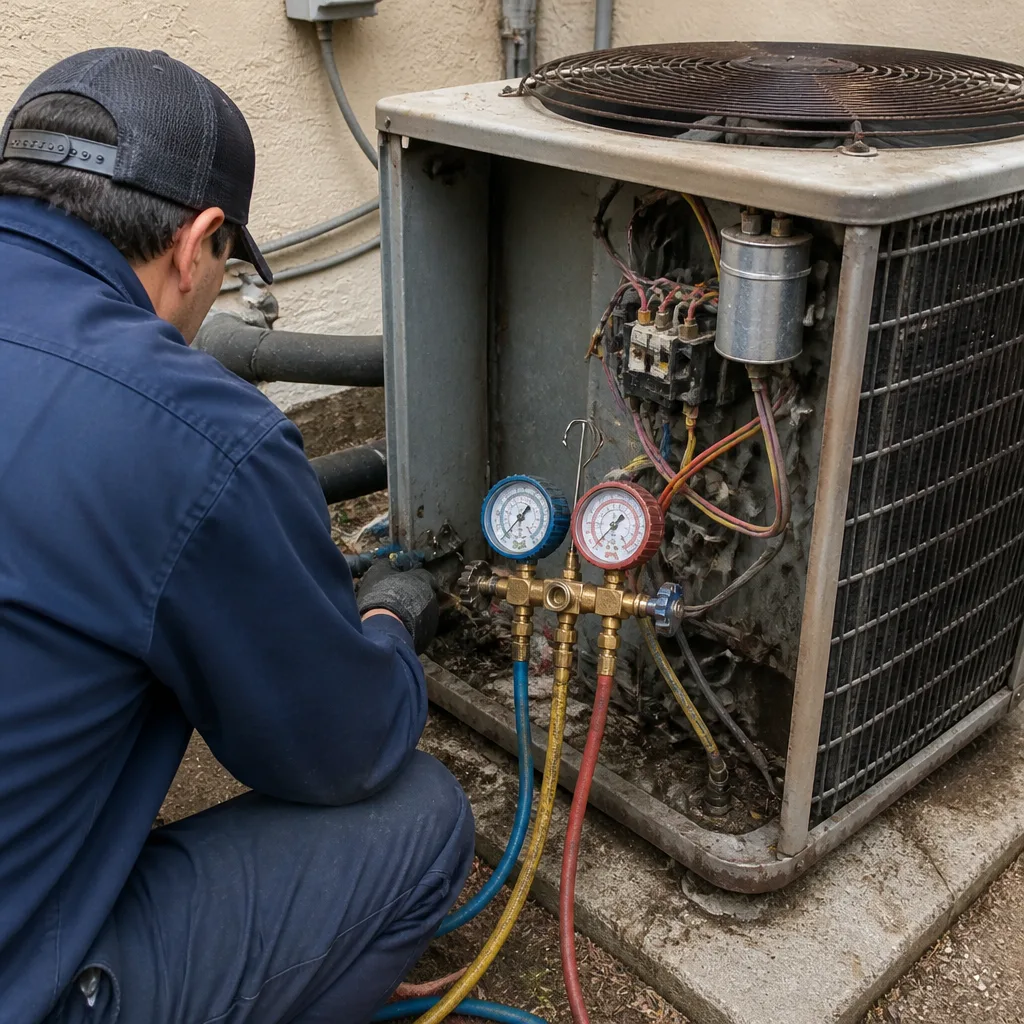
Every one of these visits should end with readings written down: pressures, amp draws, temperatures, filter condition. If those aren’t documented, you don’t have maintenance – you have a bill.
The Post-Monsoon Rooftop Inspection Nobody Includes
Late summer storms in Sunrise Manor are short and violent. They dump debris on rooftops, push water into electrical panels, and drive grit into every opening on a package unit. A September inspection that most standard contracts don’t include catches the damage while it’s cheap. In our experience, the units that fail in October are almost always the ones nobody looked at after the August storms.
The post-monsoon check should cover:
- Electrical panels and disconnects: look for water intrusion and corrosion. This is a real safety issue – water in a disconnect can arc. Don’t open a wet panel yourself; call a trained professional.
- Condenser and evaporator coils: clear the storm debris and re-clean after the summer’s dirt load.
- Cabinet and gaskets: reseal anything the wind opened. Loose panels let in the next round of dust.
- Condensate drains: verify flow. A blocked drain backs up into the building, not out of it.
- Roof flashing and curbs: any water path the storm found will find it again next year.
If September is already gone and nobody’s been up there, October isn’t too late. The point is that somebody qualified should put eyes on the roof after the storms, and it should be on the schedule, not left to chance.
Restaurant and Food Service Coil Cleaning Frequency
Here’s what health codes imply but rarely spell out for a business owner: a commercial kitchen throws grease, moisture, and heat into the airstream every service, and that stuff coats condenser and evaporator coils. Once a coil carries a grease film, it stops shedding heat the way it should, and the whole system labors. A quarterly cleaning for typical offices doesn’t cut it in food service. In Sunrise Manor restaurants, we recommend condenser and evaporator coil cleaning every 30 to 45 days, filter changes weekly to biweekly, and a degreasing coil wash on the preventive schedule – not as an emergency repair.
Why this matters for your bottom line:
- A grease-fouled coil raises energy use and shortens compressor life.
- Kitchen exhaust and makeup air drive pressure balances; poor maintenance shows up as a hot dining room on a Friday night.
- Health inspectors notice dirty equipment, and documented cleaning is proof you maintained it.
- A failed system during dinner service can shut down a night’s revenue in hours.
For food service, catch it on the calendar instead of the service ticket. That’s the whole difference between a preventive contract and a repair bill.
Building a Maintenance Log That Protects You
When equipment fails under warranty or an insurance claim questions the cause, the first thing anyone asks for is your maintenance record. A single line that says “serviced” tells them nothing. A proper log protects you. Document these items on every visit, and store them where you can retrieve them fast.
- Date and technician: who was there and when. For warranty disputes, this establishes the timeline.
- Readings: refrigerant pressures, amp draws, superheat or subcooling, temperatures. Numbers prove the system was actually tested, not just signed off.
- Filter and coil condition: note when they were changed or cleaned, and what condition they were in.
- Parts replaced: model and serial numbers on any capacitor, contactor, or blower motor swapped.
- Photographs: a photo of a clean coil and a documented reading after cleaning is worth more than a signature.
- Work order and invoice: keep both. A written record of what was found and what was done is your evidence.
Store the log in one place – a binder at the front office and a scanned copy in the cloud. If you sell the building or hand it to a new facilities manager, that log travels with it. And if you ever get a written estimate you’re unsure about, our Free Second Opinion on any written estimate is a standing offer around Sunrise Manor; you don’t have to accept the first number.
Quarterly Contract vs. Box-Check Visit
Not every quarterly contract actually maintains the system. Some just send someone to glance at a filter, sign a form, and bill you. The difference is measurable. A real preventive contract cleans and tests on a schedule calibrated to your building, documents the readings, and flags problems before they strand you. A box-check contract makes you feel covered while the coil keeps loading and the capacitor keeps aging.
Ask these questions before you sign or renew:
- What’s actually cleaned? Coils, drains, and blower wheels need real attention, not a wipe of the panel.
- Are readings documented and shared? You should see pressures and amp draws, not just a work order.
- Does the schedule account for our climate? If the contract doesn’t mention a September rooftop visit or cottonwood season, it wasn’t built for Sunrise Manor.
- What happens after a failure? A real contract includes a path to a live person when something goes down at 2 a.m.
We’ve seen accounts where the “maintenance” consisted of a filter and an invoice for years, and the equipment failed exactly when they needed it most. When we take over a building, our approach is the same one we use on houses: readings first, numbers second. Here’s the Heating & Furnace in Sunrise Manor side of that work when it’s the heat running hard in January.
Emergency Readiness Before the Heat Hits
An emergency is not the time to discover your contractor’s number routes to voicemail. Before summer, confirm two things: that your emergency contacts are current and that someone actually answers. Most of the commercial accounts we work with want a live person on the line when a rooftop unit quits in a heat wave, not a ticket queue. That’s why calls to Ray’s Heating & Air are answered by a live person around the clock, including Ray himself. It’s a small thing until it’s 2 a.m. and your dining room is 96°F.
Set a pre-season checklist on the calendar:
- Post your contractor’s number where staff can find it, and confirm the after-hours path.
- Know which unit serves which zone, so a failure call starts with the right breaker.
- Keep spare filters on hand for the cottonwood weeks so a swap doesn’t wait for a service visit.
- Schedule the pre-summer tune-up by April, not after the first failure.
Every heating and cooling job we do carries the 90-Day Done Right Promise in writing – if it’s not done right, one call brings Ray back. That’s the standard a commercial account should expect, and it’s why we publish Ray’s name and license number. We service all major brands, including Lennox, Goodman, and Rheem equipment you’ll find on rooftops around here.
Common Mistakes to Avoid
- Buying a national template contract. A schedule written for a milder climate skips cottonwood season and post-monsoon inspections. It looks like maintenance and functions like an annual invoice.
- Treating restaurant coils like office coils. Grease loads a coil far faster than dust, and a quarterly cleaning that isn’t a real degreasing wash leaves a film behind that keeps the compressor running hot.
- Skipping the September rooftop visit. Storm debris and water intrusion on the electrical side are the leading cause of cold-weather failures we see after a wet summer in Sunrise Manor.
- No readings, no proof. If the work order doesn’t show pressures and amp draws, you have nothing to protect you in a warranty dispute.
- Waiting for failure to schedule the pre-summer tune-up. The first 100°F week is the worst time to discover the equipment wasn’t tested under load.
- Not knowing who answers the phone. A voicemail maze in July is the same as no emergency service at all.
- Ignoring the capacitor because nobody asked. A simple part test before anyone says the word compressor saves a lot of money.
See the difference
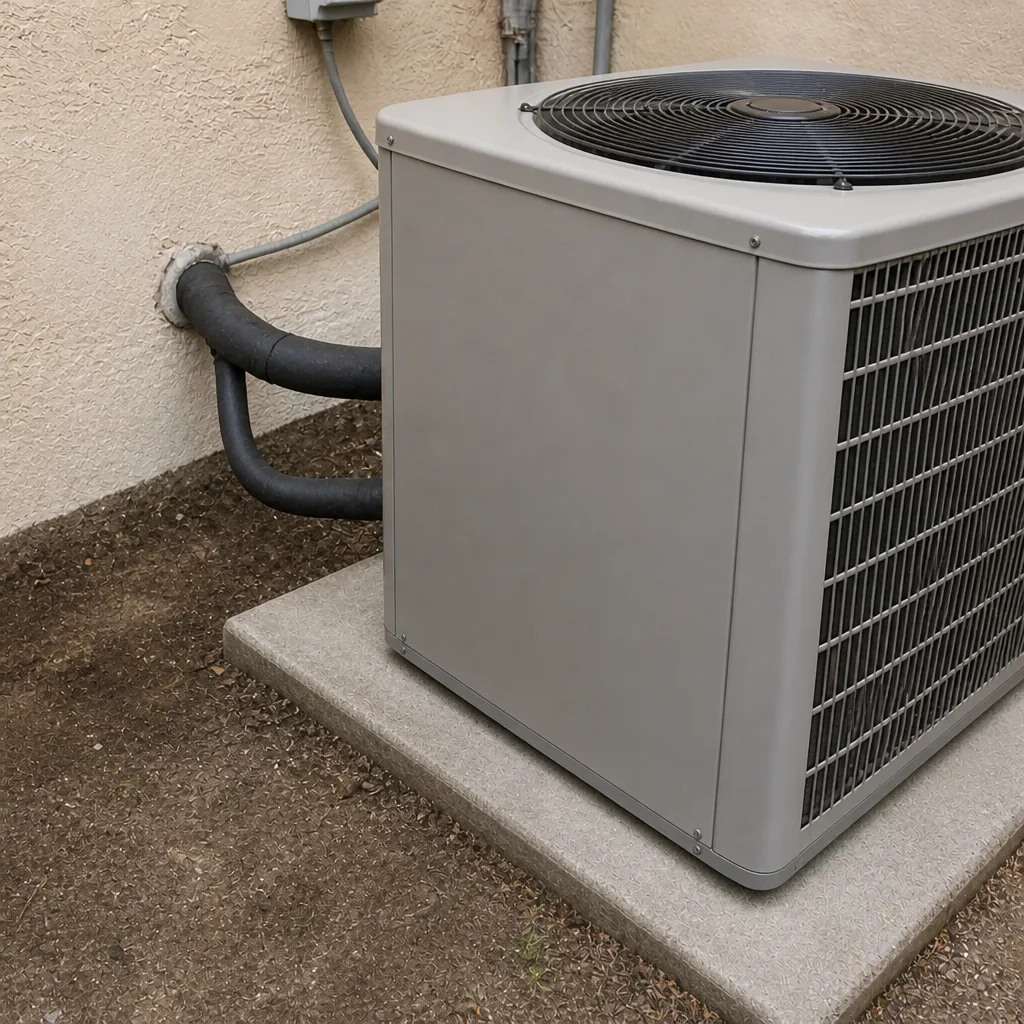
 Before
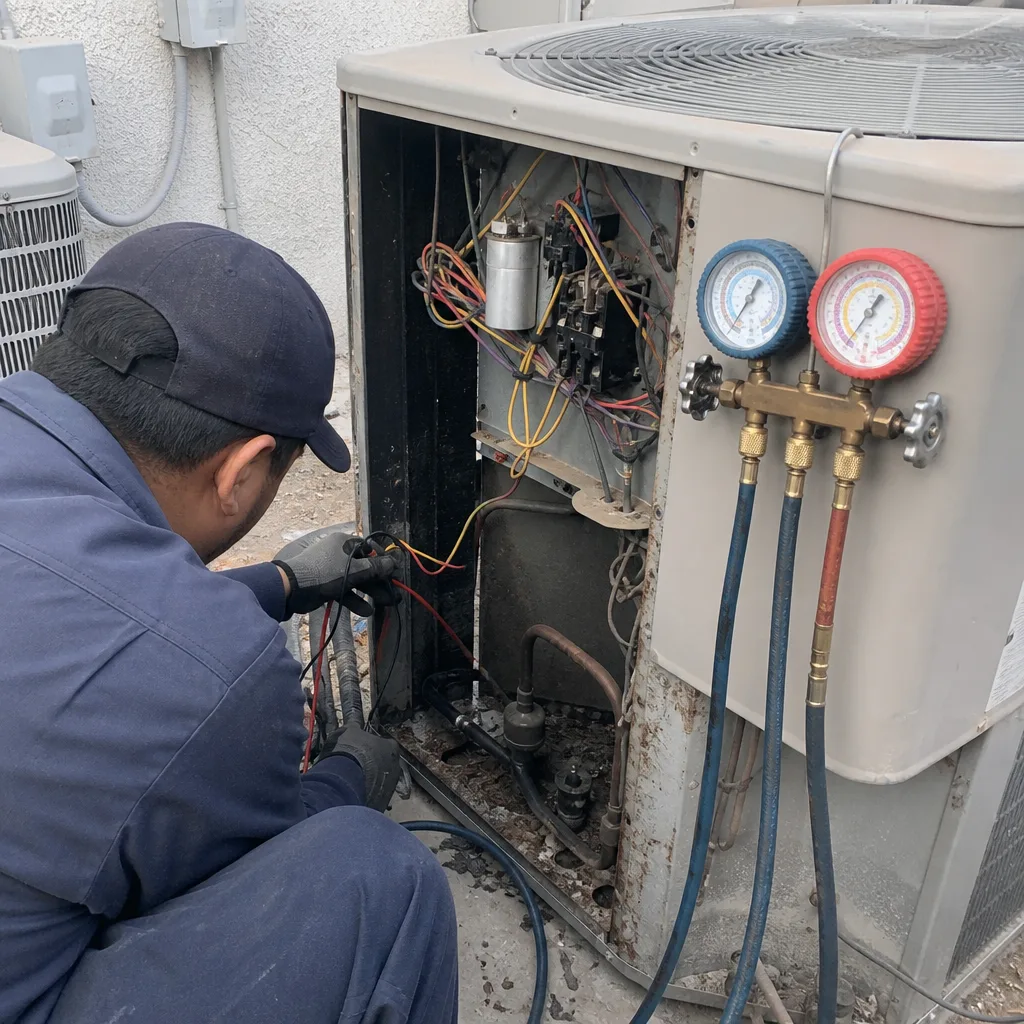
 After
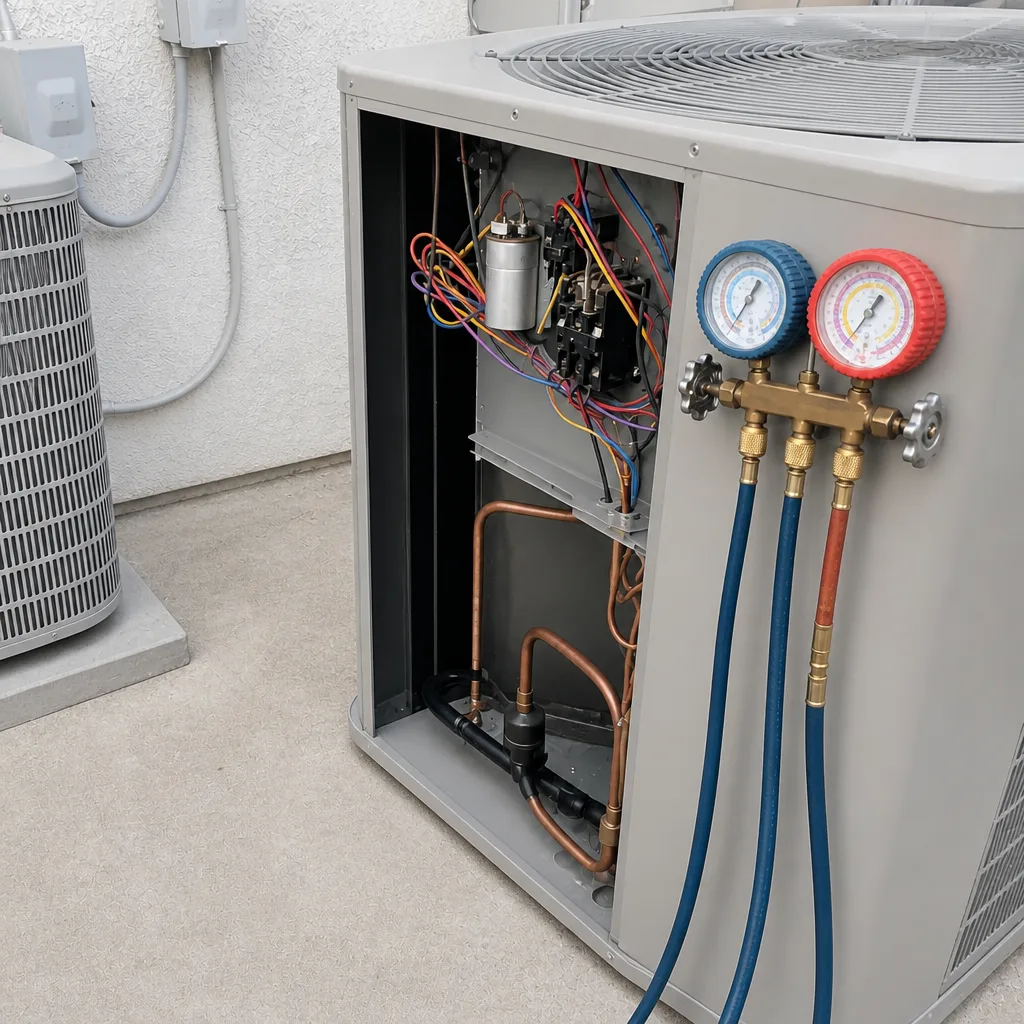
 Before
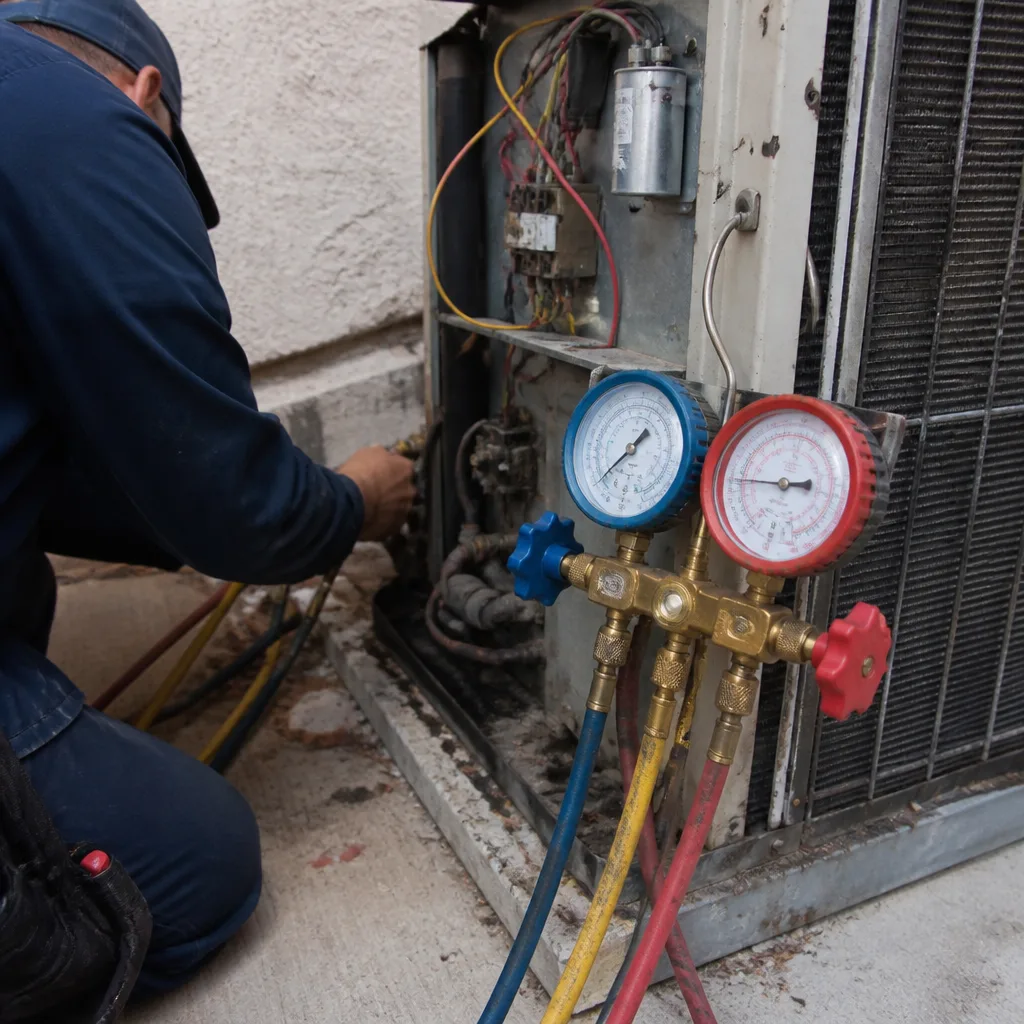
 After
 Before
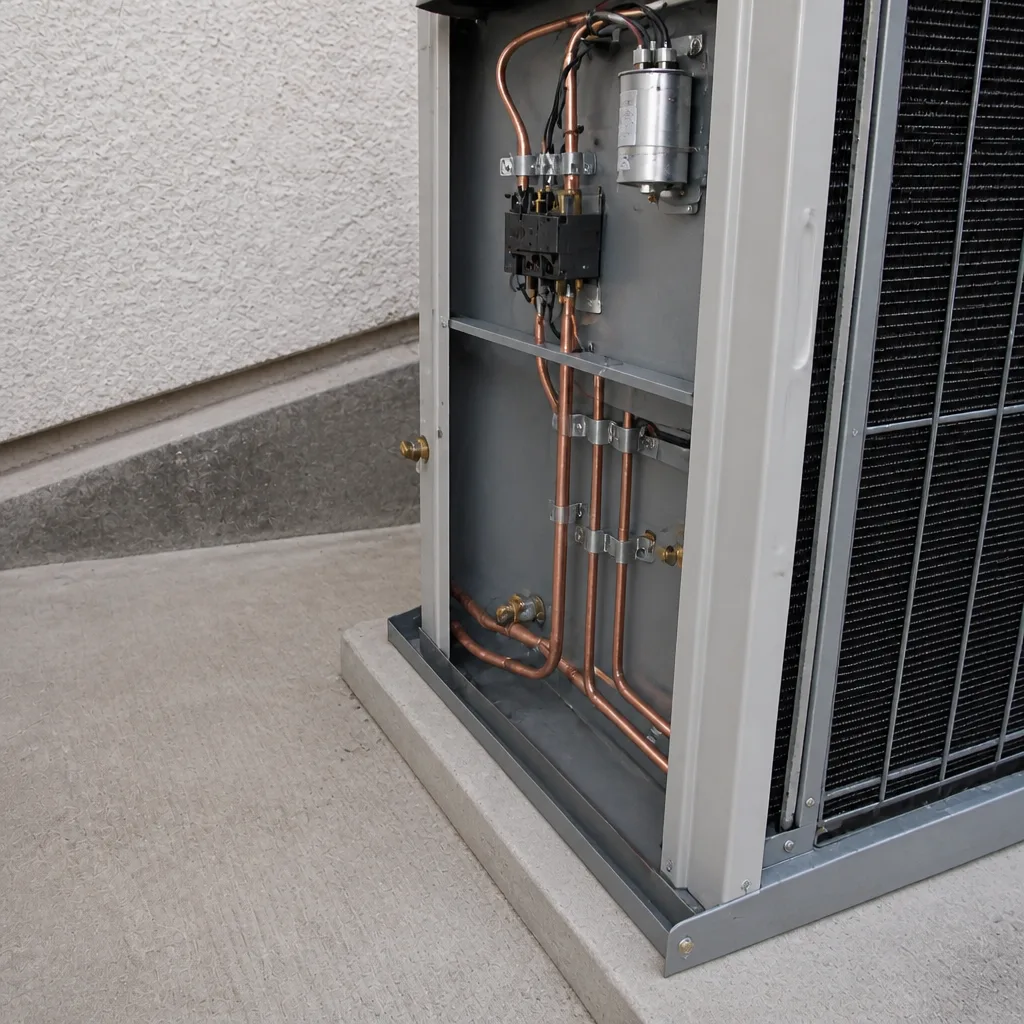 After
When to Call a Professional
Some things you can handle yourself – swapping a filter, noting a weird noise, and writing down when it started. Call a professional when the problem involves refrigerant, electrical panels, gas lines, or anything on the roof you’d need a ladder and a harness to reach. Those are genuine safety matters. Water in an electrical disconnect can arc, and lower refrigerant charge can mask a failing compressor. Don’t talk yourself into a DIY fix on those. Call when a unit trips a breaker repeatedly, when a coil won’t clean back to bare metal, when you smell something burning near a disconnect, or when you have no clear idea when the equipment was last actually tested under load. Ray’s Heating & Air Sunrise Manor offers free estimates in Sunrise Manor – call (877) 311-5951. No trip charge inside the county, and if you’re on a heat pump or mini-split, our Heat Pump & Mini Split in Sunrise Manor page covers the special quirks those systems have.
Frequently Asked Questions
Every quarter at minimum for typical commercial buildings, with monthly filter checks and coil cleanings every 30 to 45 days for restaurants. Sunrise Manor’s heat, dust, and grease exhaust load equipment faster than a milder climate, so the standard once-a-year template doesn’t hold here. A March pre-summer tune-up and a September post-monsoon inspection are both on our calendar.
Yes, and most contracts don’t include one. Late-summer storms in Sunrise Manor drive debris into rooftop units and water into electrical components, and the resulting failures show up weeks later. A September inspection catches the damage before it strands you in a cold snap or a surprise heat wave.
Every 30 to 45 days, including a degreasing coil wash. Kitchen exhaust coats coils with grease that plain water won’t remove, and that film raises energy use and shortens compressor life. Treat the cleaning as part of the preventive schedule, not a reaction to a hot dining room on a Friday night.
Dates, technician names, readings like pressures and amp draws, filter and coil condition, part model and serial numbers, and photos of the work. Store a binder copy and a scanned copy, and keep both current. When a warranty or insurance question comes up, those records answer it. Call (877) 311-5951 if you want to see what a documented visit looks like.
It’s worth it only if the contract actually cleans and tests, documents readings, and covers the right months for this climate. A box-check contract that glances at a filter and bills you isn’t maintenance. Ask what gets cleaned, whether readings are shared, and whether the schedule includes cottonwood season and a post-monsoon rooftop visit. Call (877) 311-5951 for a straight answer and a free estimate.
Yes. Calls are answered by a live person around the clock, including Ray himself, so you’re not routed to a queue at 2 a.m. We handle emergency and commercial HVAC service across Sunrise Manor and the surrounding areas. Call (877) 311-5951 for a free estimate or to schedule a preventive visit.
The Bottom Line
The maintenance schedule your building needs isn’t the one on the manufacturer’s website. In Sunrise Manor, that means monthly filters, quarterly coil cleaning that’s real cleaning, monthly coil service for restaurants, and a post-monsoon rooftop inspection in September that most contracts skip. It means documenting readings so a warranty or insurance question never catches you empty-handed. And it means knowing who answers the phone when a unit quits in July. Get the calendar right and you stop chasing emergencies. To get out of the repair cycle, a preventive plan and a name you can verify go a long way. Call Ray’s Heating & Air Sunrise Manor at (877) 311-5951 for a free estimate – we’ll put the readings in front of you and let the equipment tell us what it needs. The 90-Day Done Right Promise is in writing on every job, and Ray publishes his name and license number. It’s how we handle commercial and emergency HVAC around Sunrise Manor, and it’s why the person at your door is someone you’ll see again at the hardware store. See our Ray’s Heating & Air Sunrise Manor home page for the full picture.
Written by the team at Ray’s Heating & Air Sunrise Manor.