
Last updated November 18, 2026
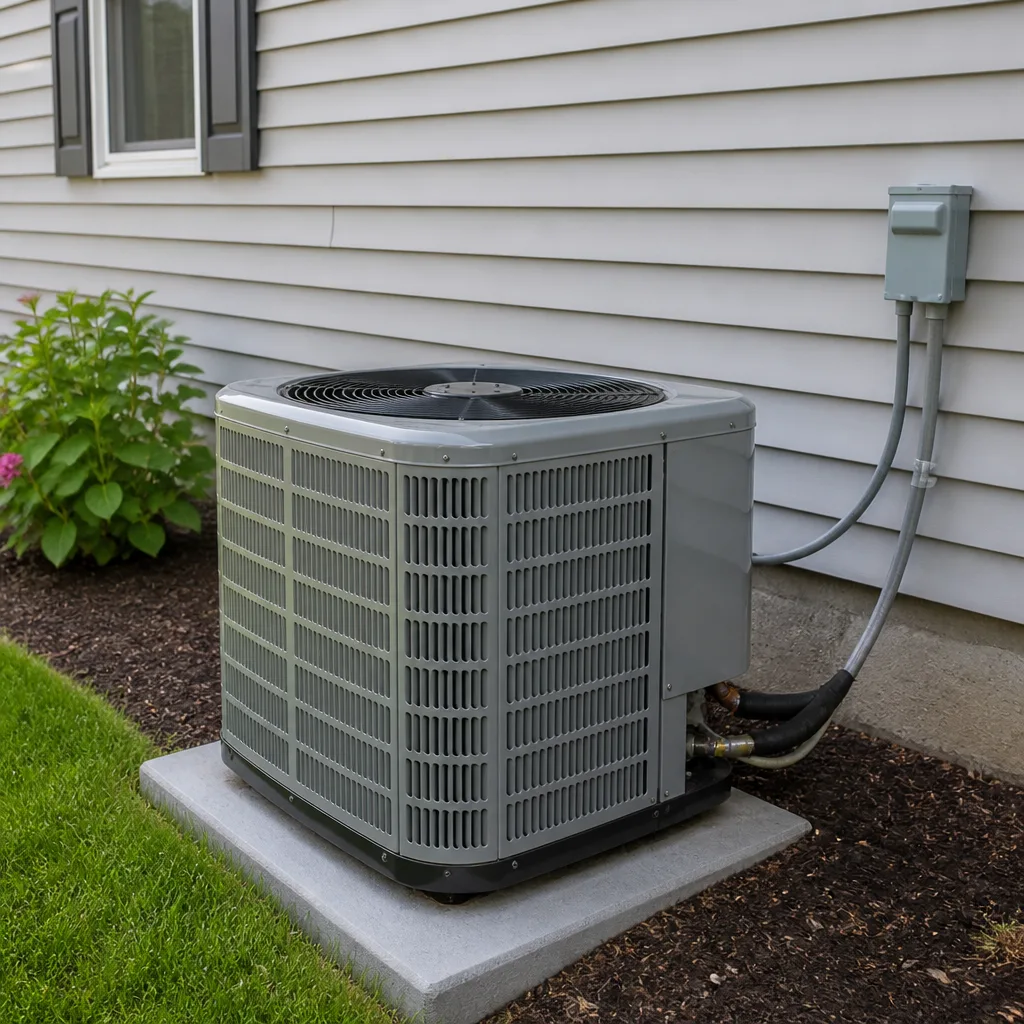 AC repair
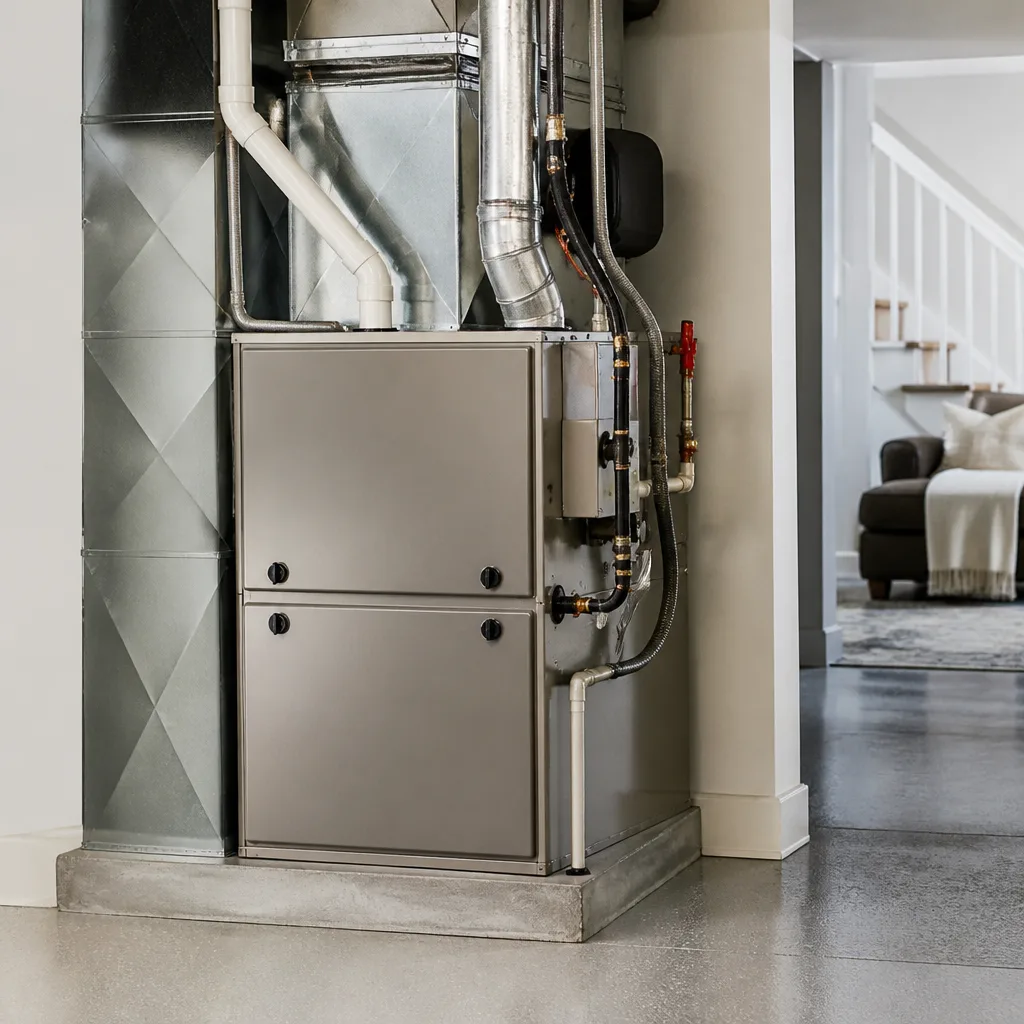 Furnace & heating
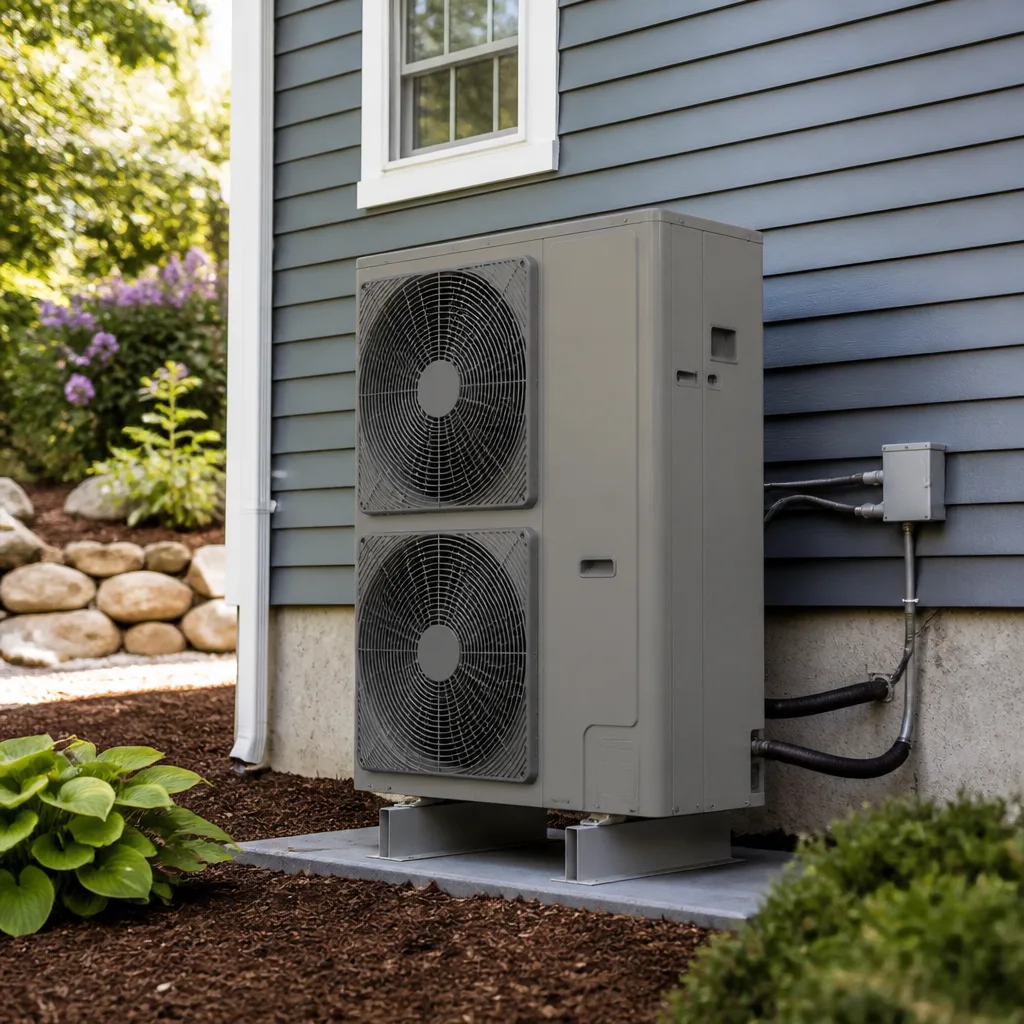 Heat pumps
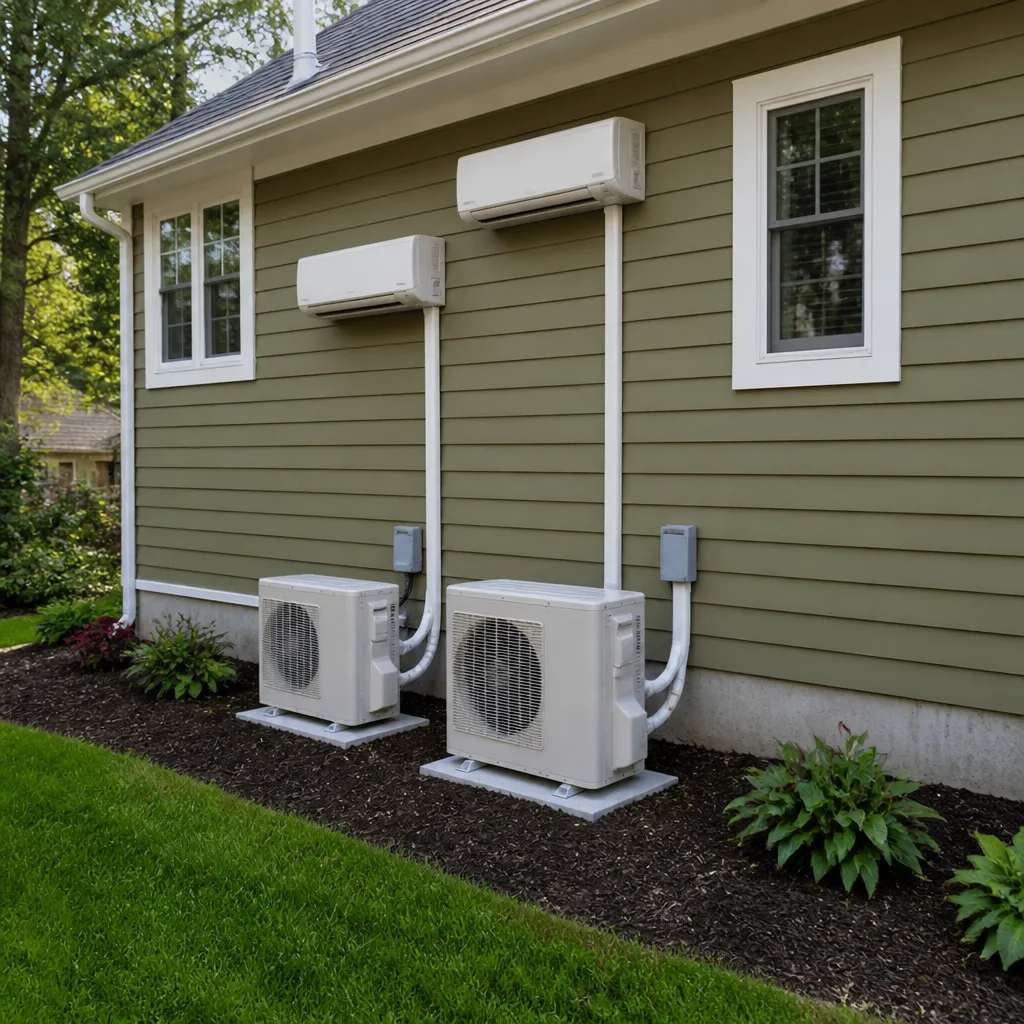 Ductless mini splits
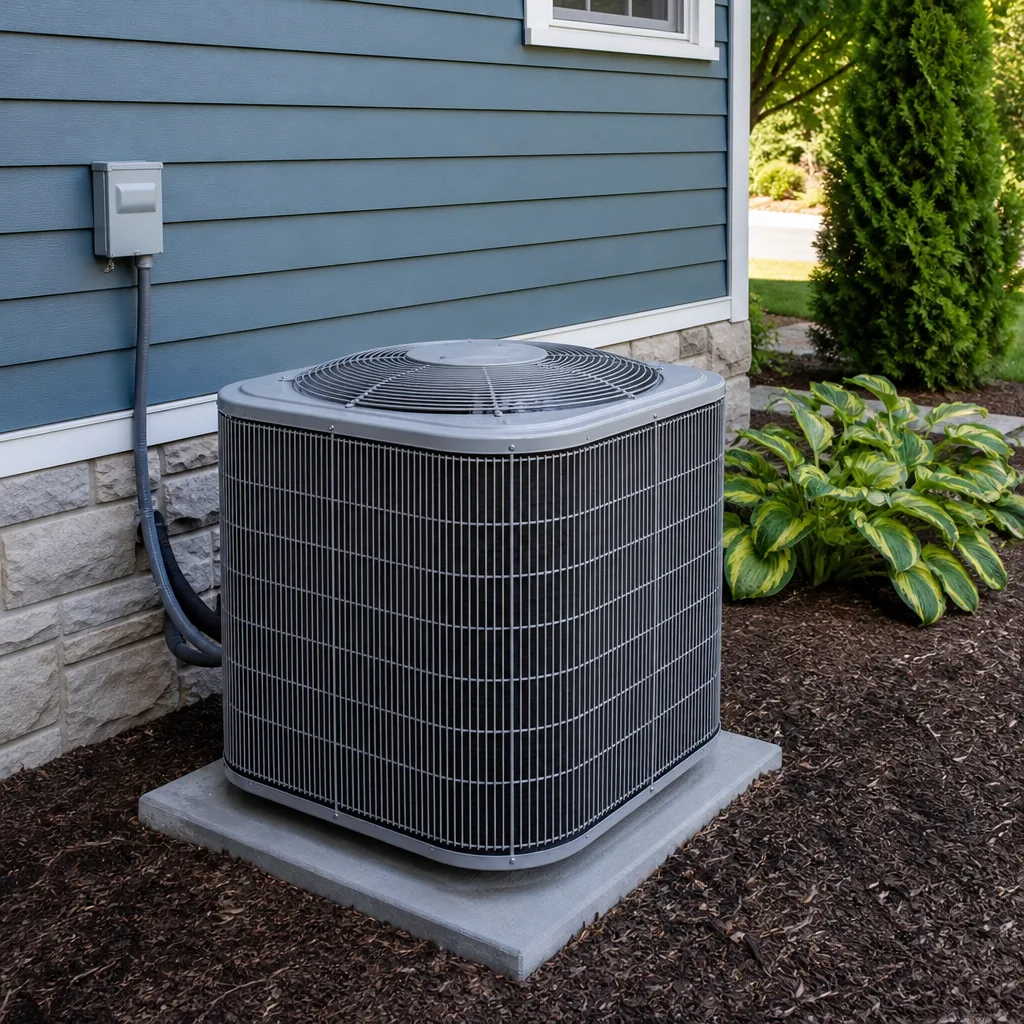 Carrier
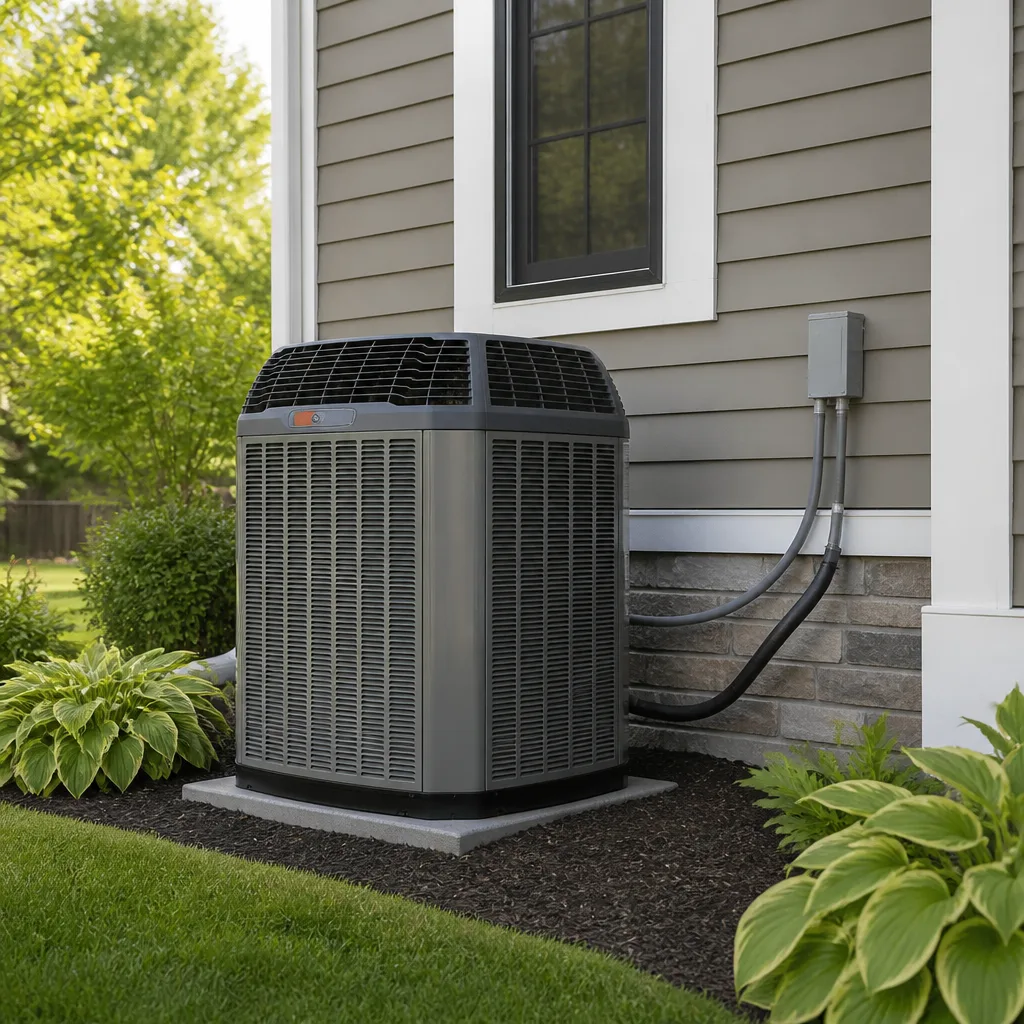 Trane
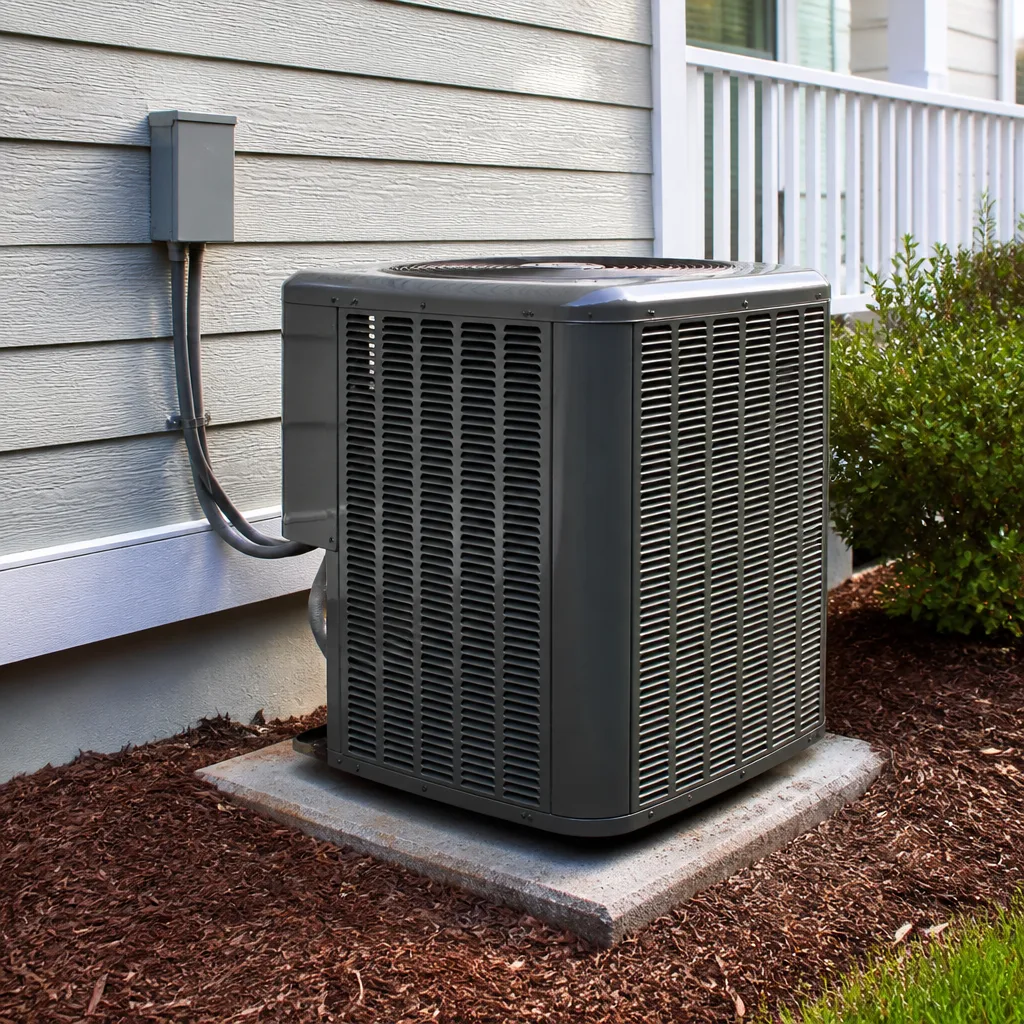 Goodman
Seasonal tune-up and full diagnostic on your Carrier, Trane, or Goodman system - readings shown to you before any repair is proposed
Diagnosis first, numbers second - you approve the repair price before a single part goes in.
Get your free estimateThe Complete Guide to HVAC in Sunrise Manor
Most of the homes on these streets went up between 1960 and 1985. That single fact explains more HVAC headaches in Sunrise Manor than any brand name or thermostat setting ever will. The ductwork under those houses was sized for equipment that hasn’t been built in decades, and when a modern unit gets bolted onto forty-year-old return air, it spends its whole life working harder than it should. You pay for that mismatch every month, whether you notice it or not. This guide walks through what actually happens to heating and cooling in Sunrise Manor – the caliche under the crawl spaces, the grid crunch in July, the equipment data plates nobody reads – and how to make a smart repair-or-replace call.
Quick Answer
HVAC in Sunrise Manor fails faster than most people expect because of three local forces: heavy dust and caliche grit, a housing stock built for older equipment, and brutal peak-load summers that stress the NV Energy grid right when you need cooling most. The right approach is a real system assessment – duct sizing, return air, static pressure, and equipment age – before anyone quotes a replacement. That assessment is what separates a five-year fix from a system that limps along for two.
Styles & brands we work with
- AC repair
- Furnace & heating
- Heat pumps
- Ductless mini splits
- Carrier
- Trane
- Goodman
Table of Contents
- Why Sunrise Manor’s Housing Stock Creates Duct Problems
- Caliche, Crawl Spaces, and Equipment Longevity
- Peak Grid Months and the Worst Time for Your AC to Fail
- What a Real System Assessment Covers in Sunrise Manor
- How to Read Your Equipment’s Data Plate
- Repair or Replace? A Practical Decision Guide
- Maintenance That Actually Matters Here
- Common Mistakes to Avoid
Why Sunrise Manor’s Housing Stock Creates Duct Problems
Homes built between 1960 and 1985 were designed around equipment with a different airflow profile than what you buy today. The typical tract house in Sunrise Manor has a single, undersized return-air path – often a single 14-inch or 16-inch grille in a hallway ceiling – feeding an air handler that modern high-efficiency equipment expects to pull from a much larger opening. When that mismatch exists, static pressure climbs, the blower works against itself, and you get the classic symptoms: rooms that never quite cool, a system that runs constantly in August, and a compressor that dies early.
What we’ve seen on these streets over the years is consistent. A house in the older core near Nellis Boulevard with original ductwork will often show static pressure readings 40% to 70% above what the new equipment’s spec calls for. That number alone tells you more than any brand comparison. Replace the condenser without addressing the return air and duct sizing, and you’ve paid for equipment that will never deliver its rated efficiency.
Three things to check in an older Sunrise Manor home:
- Return air size relative to the air handler’s rated CFM (cubic feet per minute of airflow)
- Duct material – many of these homes have original flex duct now collapsed or kinked under the attic insulation
- Whether the duct runs were modified piecemeal over the decades, which creates pressure imbalances room to room
If you’re repairing an existing system and want to know what a proper AC repair looks like in this housing stock, the AC repair and installation work we handle in Sunrise Manor walks through it. Duct issues don’t fix themselves, and no thermostat setting papers over a return that’s half the size it should be.
Caliche, Crawl Spaces, and Equipment Longevity
Sunrise Manor sits on caliche – that hard, cemented calcium carbonate layer that turns a shovel into a crowbar and makes slab work expensive. But the real story for HVAC equipment is what happens in the crawl spaces and under the slabs of the older homes here. Caliche holds moisture differently than regular soil. It drains poorly and can wick groundwater toward foundations and crawl-space walls long after the surface looks bone dry.
What that means for your equipment: a heat pump or air handler sitting on a crawl-space pad exposed to that slow moisture sees corrosion on coils, rusted cabinet screws, and condensate lines that clog with mineral grit faster than in newer subdivisions on engineered fill. We’ve pulled air handlers out of Sunrise Manor crawl spaces with coil fins that looked twenty years older than the same equipment installed a few miles west on slab-on-grade.
The practical checklist for a crawl-space system here:
- Inspect the condensate drain and pan twice a year. Caliche grit clogs traps quickly.
- Check for standing moisture or efflorescence on the crawl-space walls after monsoon season.
- Confirm the equipment pad is elevated and the cabinet isn’t sitting in contact with damp soil.
- Look at coil fins for white or green corrosion, not just dust.
None of this is on a generic maintenance checklist from a national brand. It’s what happens on these specific lots with this specific soil.
Peak Grid Months and the Worst Time for Your AC to Fail
The NV Energy grid reaches its stressed peak in July and August, with the first real crunch usually hitting in late June when temperatures push past 110°F day after day. That’s also the exact window when a marginal capacitor, a borderline contactor, or a system running against high static pressure tends to give out. The equipment fails on the hottest day because that’s the day it’s working hardest.
The service reality in Sunrise Manor: when the grid hits peak load and outdoor temps stay over 105°F, wait times for emergency service across the valley stretch to days, not hours. That’s the pattern. And it’s the reason we tell customers to get eyes on their system in April or May, not July.
A few points on grid stress and your system:
- Brownouts and voltage sags during peak load stress compressors. A hard-start kit and a voltage check are cheap insurance.
- A capacitor tested in May costs a fraction of an emergency compressor replacement in August.
- If your system is over ten years old and hasn’t been looked at since last summer, get it looked at now – not when it’s 115°F outside.
Ray’s Heating & Air answers the phone 24/7 – including at 2 a.m. during peak-season failures – but the smarter play is not needing that call. Our heating and furnace work in Sunrise Manor runs the same preseason logic in the fall, before the first cold snap catches a tired ignitor or a cracked heat exchanger.
What a Real System Assessment Covers in Sunrise Manor
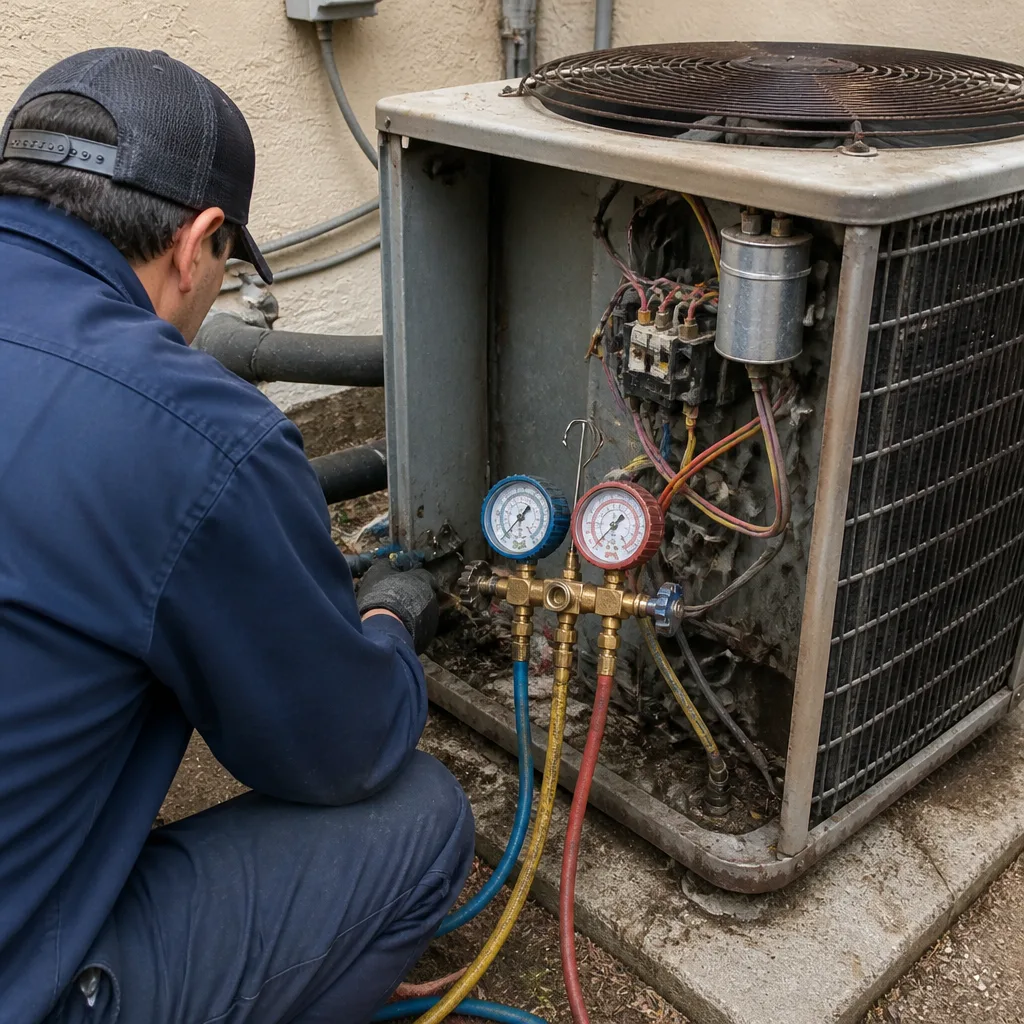
A real assessment is not a clipboard walkthrough that ends with a replacement quote. It’s a set of readings that tell you what the system is actually doing. If a company can’t show you numbers, you’re not getting a diagnosis – you’re getting an estimate.
Here’s what a proper assessment on a Sunrise Manor home should cover:
- Static pressure readings on the supply and return side – this is the single most overlooked number in residential HVAC.
- Temperature split across the evaporator coil, to confirm the system is actually removing heat rather than just running.
- Return-air sizing measured against the air handler’s rated CFM.
- Duct inspection, especially in attic runs that may be collapsed, disconnected, or sitting on the insulation.
- Capacitor and contactor testing – tested, not assumed. We test the capacitor before anyone says the word compressor.
- Refrigerant charge verification with the actual superheat or subcooling numbers, not a guess.
- Data plate review to establish the equipment’s age and rated capacity, which determines whether the existing equipment is even the right size for the house.
That’s the assessment. Every number is written down and explained before any work begins. Readings first, numbers second.
How to Read Your Equipment’s Data Plate
The data plate on the outdoor condenser or the indoor air handler tells you when the equipment was built and what it was rated to do. Most homeowners never look at it. It’s the single fastest way to know if you’re two years or ten years from a replacement decision.
Here’s how to find and read it:
- Turn off power to the unit at the breaker before you open anything.
- The data plate is usually on the cabinet’s outside panel of the outdoor unit, or inside the access panel of an air handler.
- Look for the serial number. The first four digits are typically the manufacture week and year in carrier-style formats; other brands vary, so write the whole string down.
- Find the rated tonnage – usually encoded in the model number (look for a “24,” “30,” “36,” “48,” or “60” which maps to 2 to 5 tons).
- Note the refrigerant type – R-22 equipment is older and uses a refrigerant that’s no longer produced.
If your data plate shows R-22 refrigerant, that’s a meaningful signal. R-22 equipment is old enough that a major repair is usually the wrong money. If it’s an R-410A system from the last fifteen years, in Sunrise Manor’s climate, you’re typically looking at a repair-vs-replace decision driven by compressor health and how the equipment matches the duct system – not by age alone.
Repair or Replace? A Practical Decision Guide
The rule of thumb you hear – “if the repair costs more than half the replacement, replace” – is a starting point, not an answer. In Sunrise Manor, the duct system changes the math. If the existing ducts and return air are undersized, replacing the equipment without bringing the ductwork up to spec means you’ve paid for capacity the house will never see.
Work through these questions in order:
- Is the equipment over twelve years old and on R-22? Lean replace.
- Is the compressor itself bad, or is it the capacitor or contactor? A failed capacitor is a repair. A failed compressor on old equipment is usually a replacement decision.
- Do the ducts and return support new equipment? If not, budget for the duct work with the replacement, or plan the replacement around it.
- Is the existing equipment even correctly sized? A two-ton system on a house that needed three tons has been stressed since day one.
For heat pump decisions, the heat pump and mini split work we do in Sunrise Manor runs the same logic with an added wrinkle: heat pump sizing in this climate has to account for the cooling peak more than the heating peak. Oversizing a heat pump to cover a cold snap usually produces a system that short-cycles through August.
Maintenance That Actually Matters Here
The list below is what actually extends equipment life in Sunrise Manor’s climate. Filter changes at the manufacturer interval are the baseline. Everything else is what prevents the failures we see on these streets.
- Filter replacement every 30 days during summer. Dust load in this part of the valley is heavy, and a clogged filter drives static pressure up fast.
- Coil cleaning annually. Caliche dust packs into the outdoor coil and cuts capacity.
- Condensate drain and pan flush, especially in crawl-space installs where mineral grit clogs traps.
- Capacitor and contactor testing each spring. These parts fail on the hottest day because that’s when they work hardest.
- Duct inspection in the attic to catch collapsed or disconnected runs after monsoon season.
- A preseason reading of the temperature split to catch coil issues before they become a July emergency.
If you want a straight answer on what your specific system needs, the Ray’s Heating & Air Sunrise Manor home page is a good starting point for what we cover, or just read the system first when we arrive. Numbers get explained before work begins.
Common Mistakes to Avoid
- Letting a phone quote become the price at the door. Ask for the diagnostic readings in writing before anyone touches the system. A phone number is a guess; a static-pressure reading is a fact.
- Replacing the condenser without addressing return air. On an older Sunrise Manor home, this is the most expensive mistake we see. The equipment is fine; the return is half the size it should be.
- Assuming the dust is just dust. Caliche grit clogs coils and condensate traps faster here than in newer Vegas subdivisions. Twice-yearly filter changes and an annual coil cleaning are not overkill.
- Calling on the hottest day of the year. By the time the grid hits peak load in late July, wait times across the valley are days, not hours. Get eyes on the system in April or May.
- Skipping the data plate. If your equipment is R-22 and fifteen years plus, no capacitor replacement is going to fix the underlying problem.
- Buying an oversized system to “make sure it’s cool enough.” Oversizing short-cycles the compressor and leaves humidity high. Sizing follows a load calculation, not a guess.
- Trusting a maintenance plan that never shows you a reading. A tune-up without a written report of what was tested and what was found is a filter change with a bill attached.
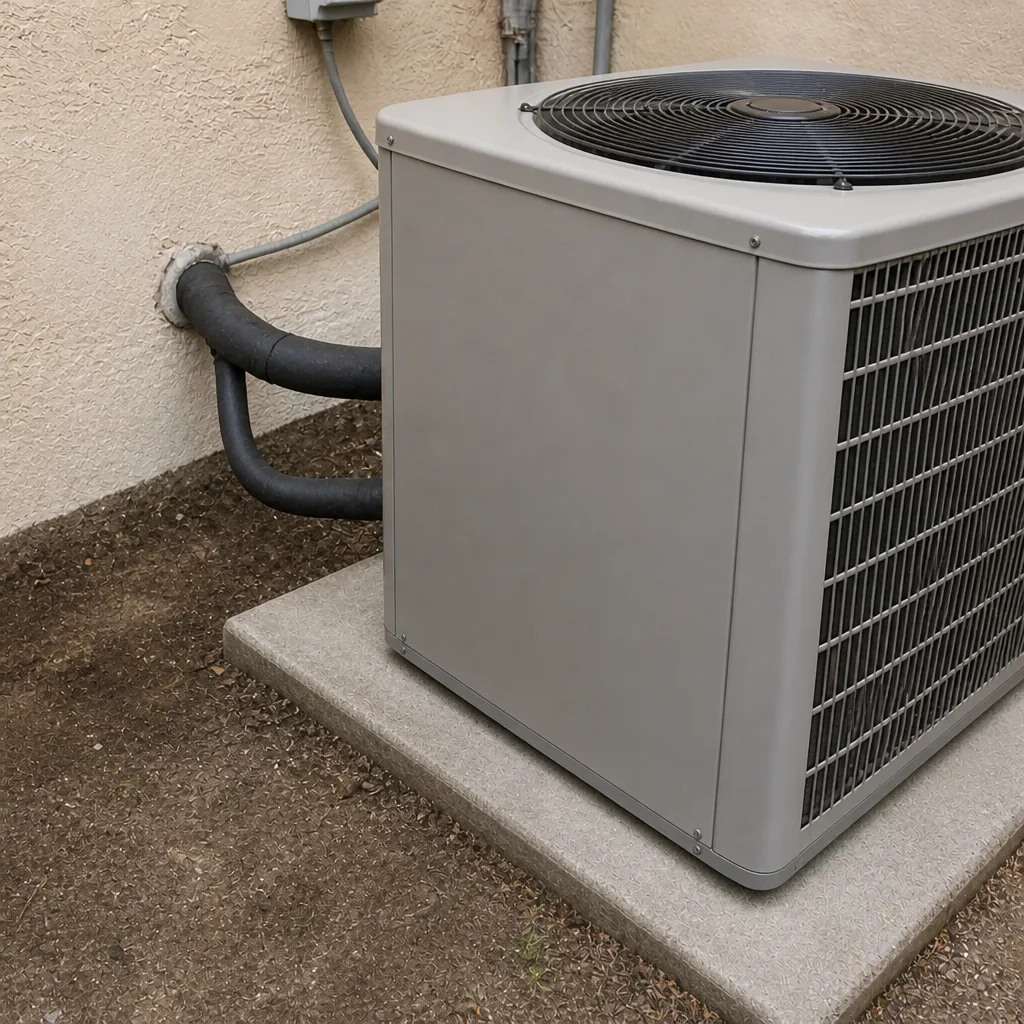
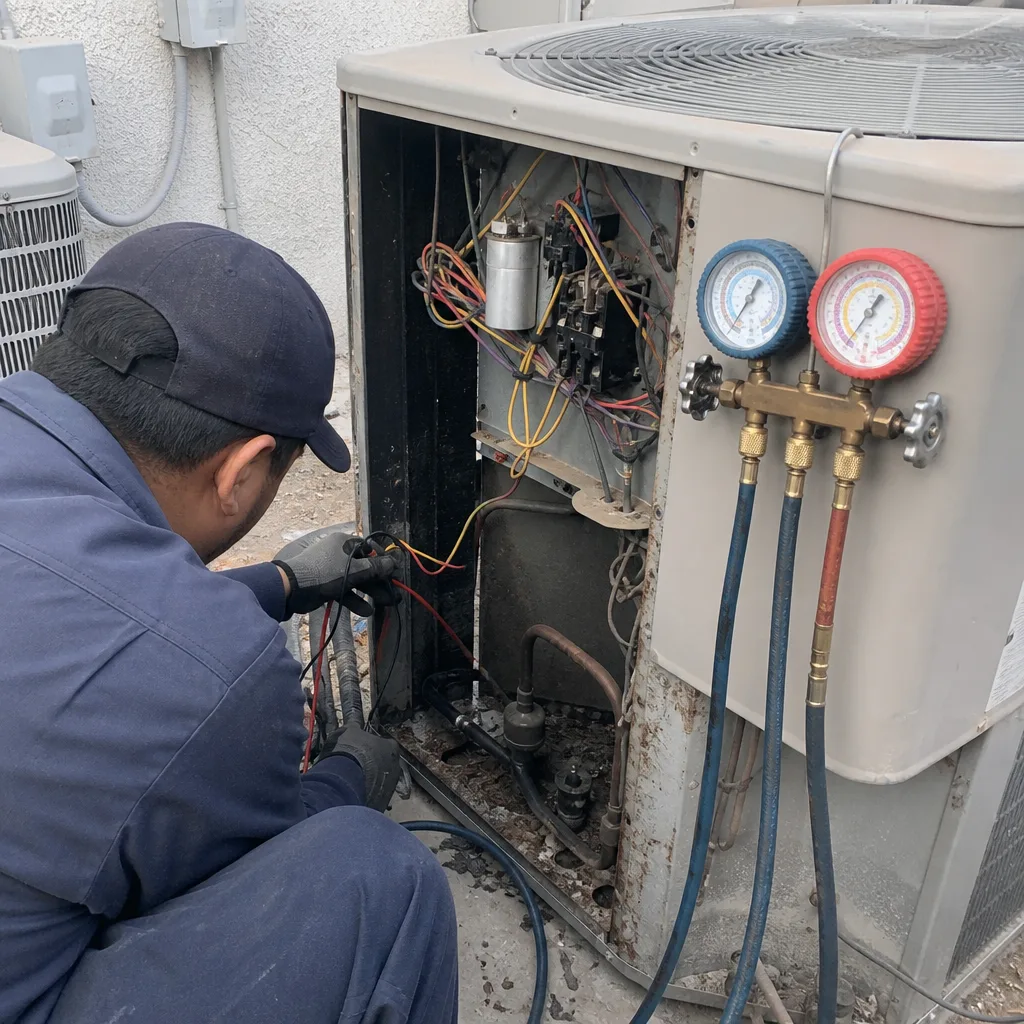
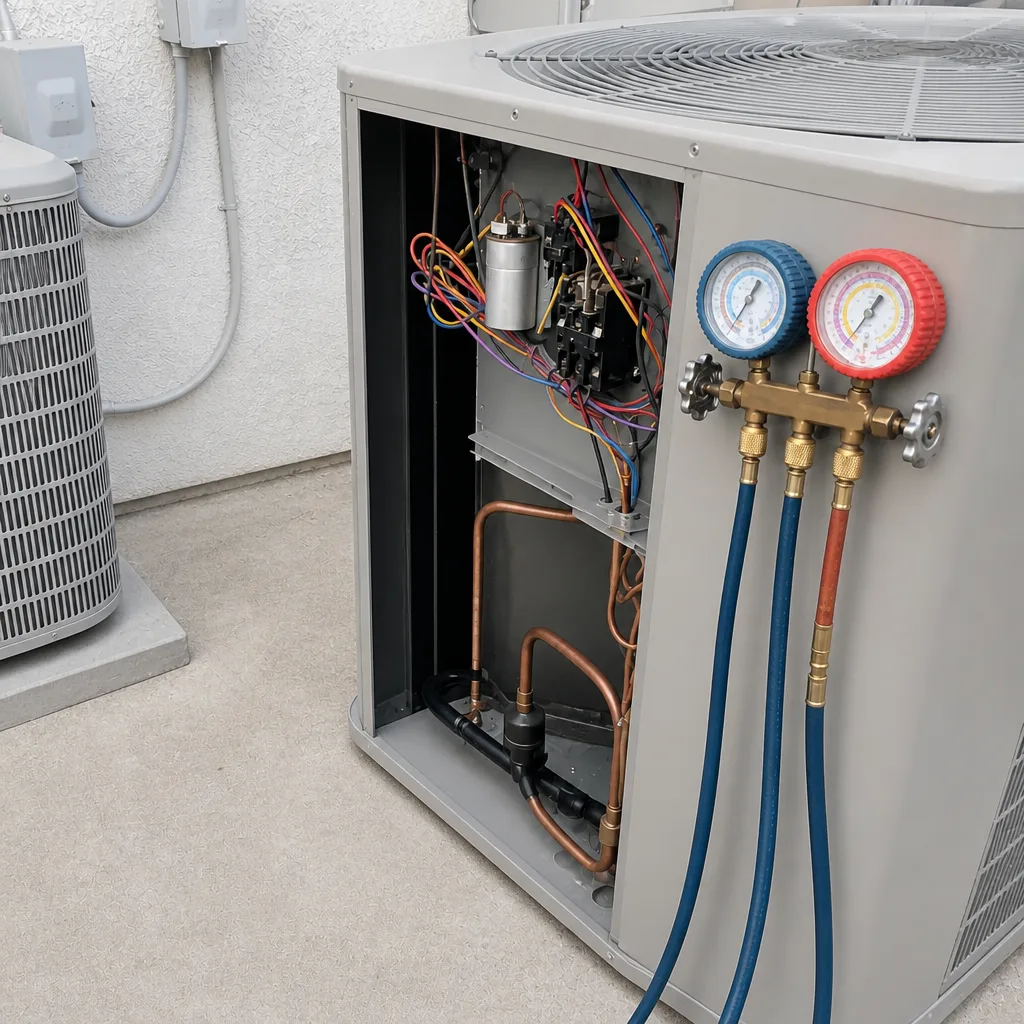
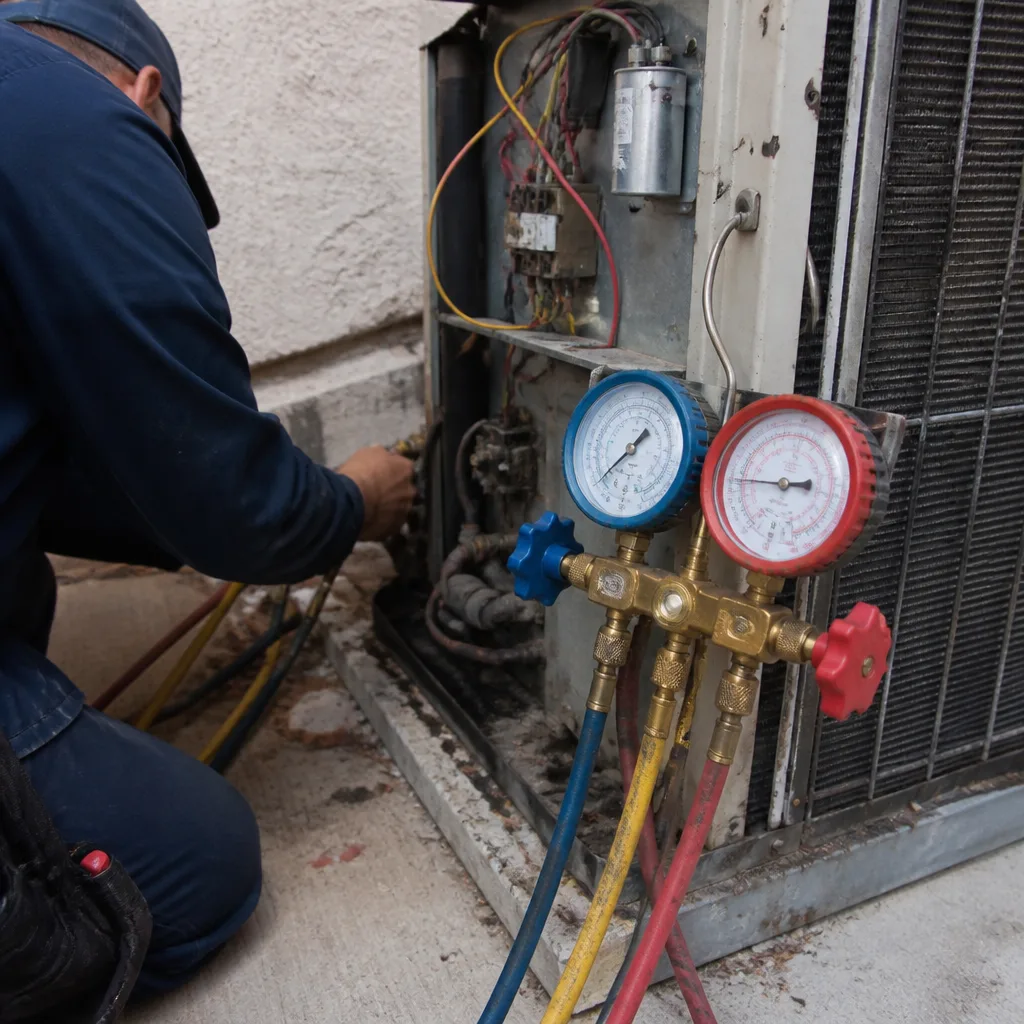
See the difference
 Before
 After
 Before
 After
 Before
 After
When to Call a Professional
Some problems are genuinely do-it-yourself: a filter change, a thermostat battery, a visual check of the outdoor coil for debris. Everything else on a modern system involves refrigerant, high-voltage components, or gas, and none of those are a homeowner job. Call a professional if you see ice on the refrigerant lines, hear the compressor short-cycling, smell gas near a furnace, get a burning smell from the air handler, notice a temperature split that’s dropped below 15°F, or have a system over twelve years old that hasn’t been inspected in the last year. Ray’s Heating & Air Sunrise Manor offers free estimates in Sunrise Manor – call (877) 311-5951. If the problem is a heat pump or a duct sizing question on an older home, the heat pump and mini split work in Sunrise Manor is where the detail lives.
Frequently Asked Questions
Most reputable local companies charge for the diagnostic visit, and then apply or credit that fee if you move forward with repair or replacement work. Expect the assessment itself to cover static pressure, temperature split, return-air sizing, capacitor and contactor testing, and a data plate review. Call (877) 311-5951 for an exact quote – estimates are free.
Because that’s when the NV Energy grid hits peak load and outdoor temperatures stay above 105°F for weeks. Marginal components – capacitors, contactors, a system running against high static pressure – fail under the worst load. The equipment doesn’t break because July is special; it breaks because July is when it works hardest. Get eyes on the system in spring and you avoid the worst of it.
Age of the housing stock and soil. Homes built between 1960 and 1985 in Sunrise Manor were designed for equipment and airflow profiles that modern systems don’t match, so return-air sizing and duct condition are usually the biggest issues. Caliche soil and crawl-space installs also mean condensate and coil corrosion behave differently than on slab-on-grade homes in newer subdivisions.
If the system is R-22, over twelve years old, and the compressor is bad, replace. If it’s a capacitor or contactor on a system under ten years old, repair. The middle cases hinge on duct condition and whether the existing equipment is even correctly sized – which is why the assessment matters more than the age alone. Call (877) 311-5951 and we’ll walk through the numbers with you.
Read the data plate on the outdoor condenser or air handler. The serial number encodes the manufacture week and year, and the model number usually encodes capacity. Note the refrigerant type too – R-22 means older equipment. If you can’t find the plate, that’s a good reason to have someone look at it in person.
Both. Heating and cooling work together on a heat pump, and a furnace shares the same air handler and duct system. A heating and furnace call in Sunrise Manor is usually solved by the same technician who handles the cooling side, with the same 90-Day Done Right Promise on the work.
The Bottom Line
Sunrise Manor is not Las Vegas proper, and the HVAC advice that works in Summerlin can quietly cost you money out here. The housing stock is older, the ducts were sized for equipment that no longer exists, the caliche soil and crawl spaces age equipment differently, and the worst grid stress of the year hits right when your AC is most likely to fail. The fix is not complicated: get a real assessment with actual readings, read your data plate, decide repair or replace based on duct condition and equipment health rather than age alone, and don’t wait until the hottest week of July to call. Every heating and cooling job we do carries the 90-Day Done Right Promise in writing – if it’s not done right, we make it right. Call (877) 311-5951 for a free estimate on any heating or cooling work in Sunrise Manor.
Written by the team at Ray’s Heating & Air Sunrise Manor.