
Last updated November 18, 2026
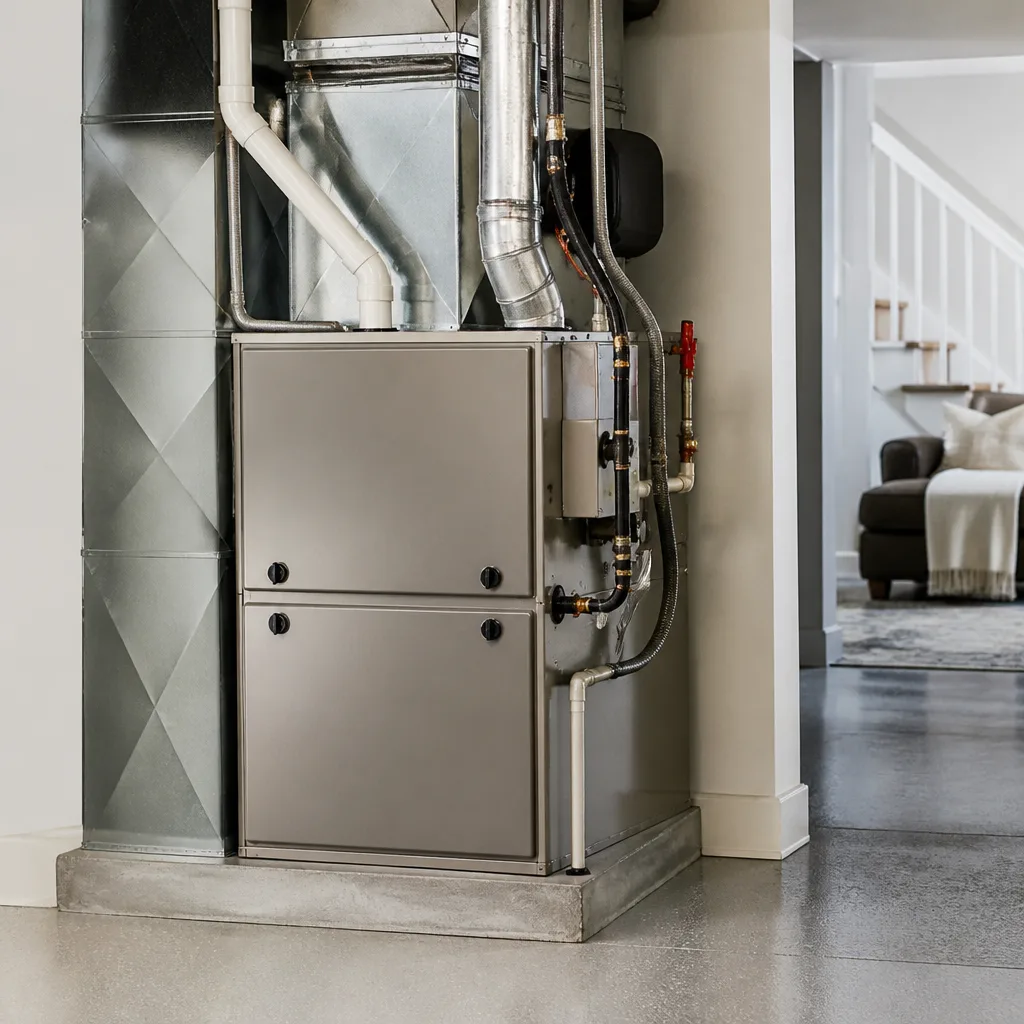 Furnace & heating
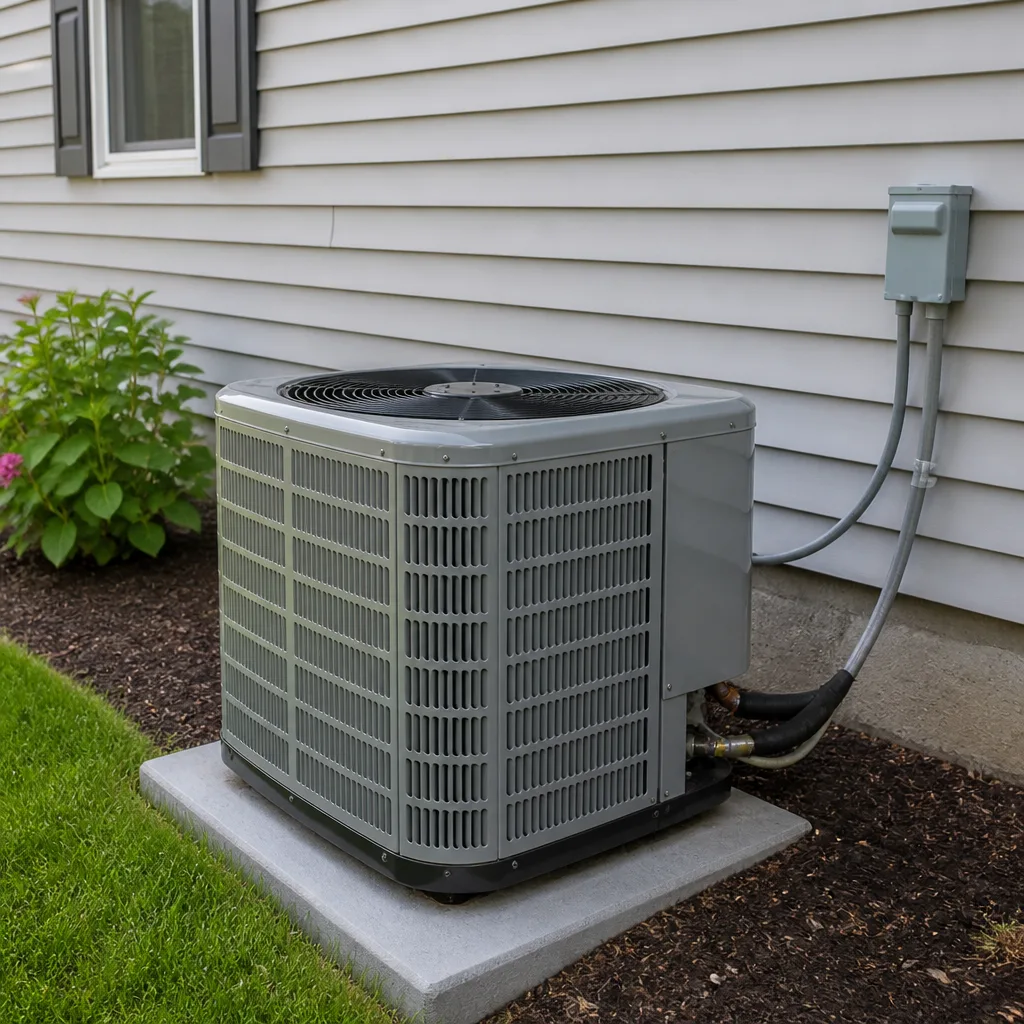 AC repair
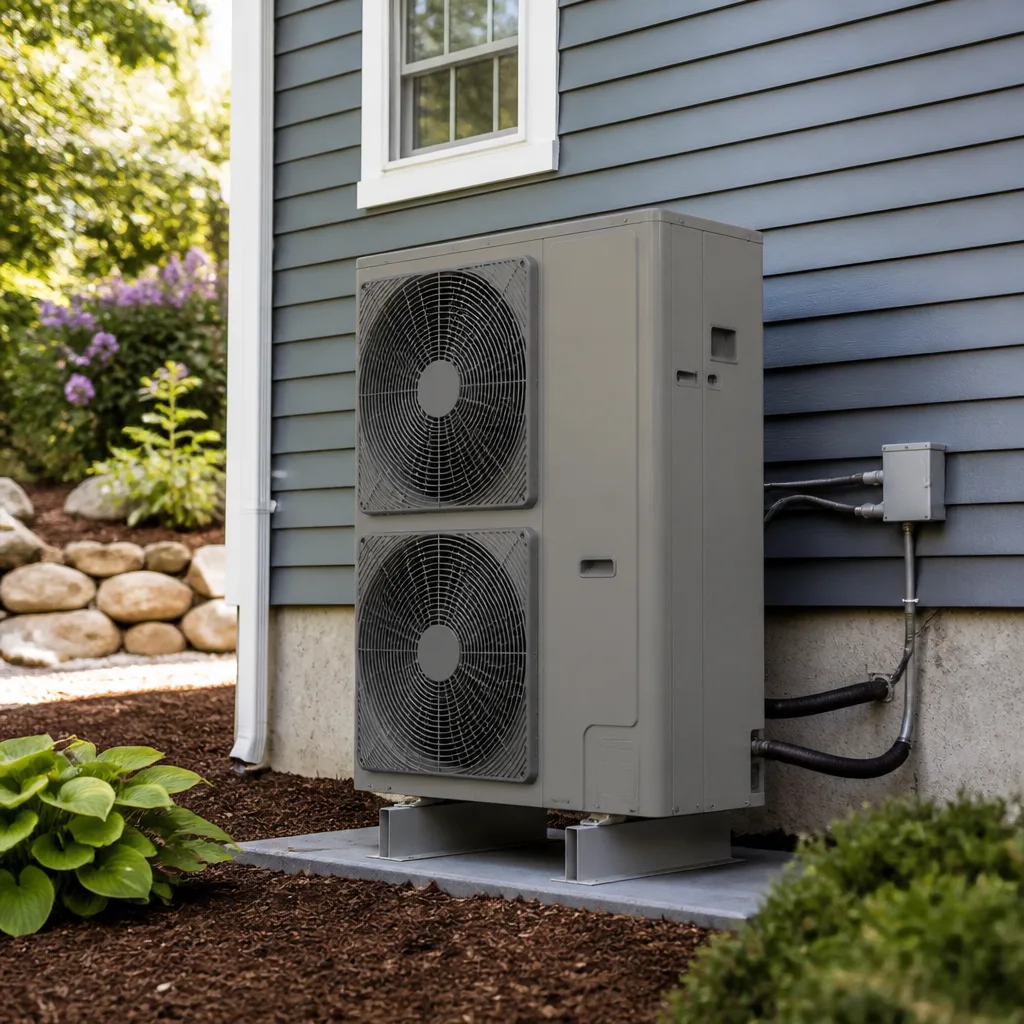 Heat pumps
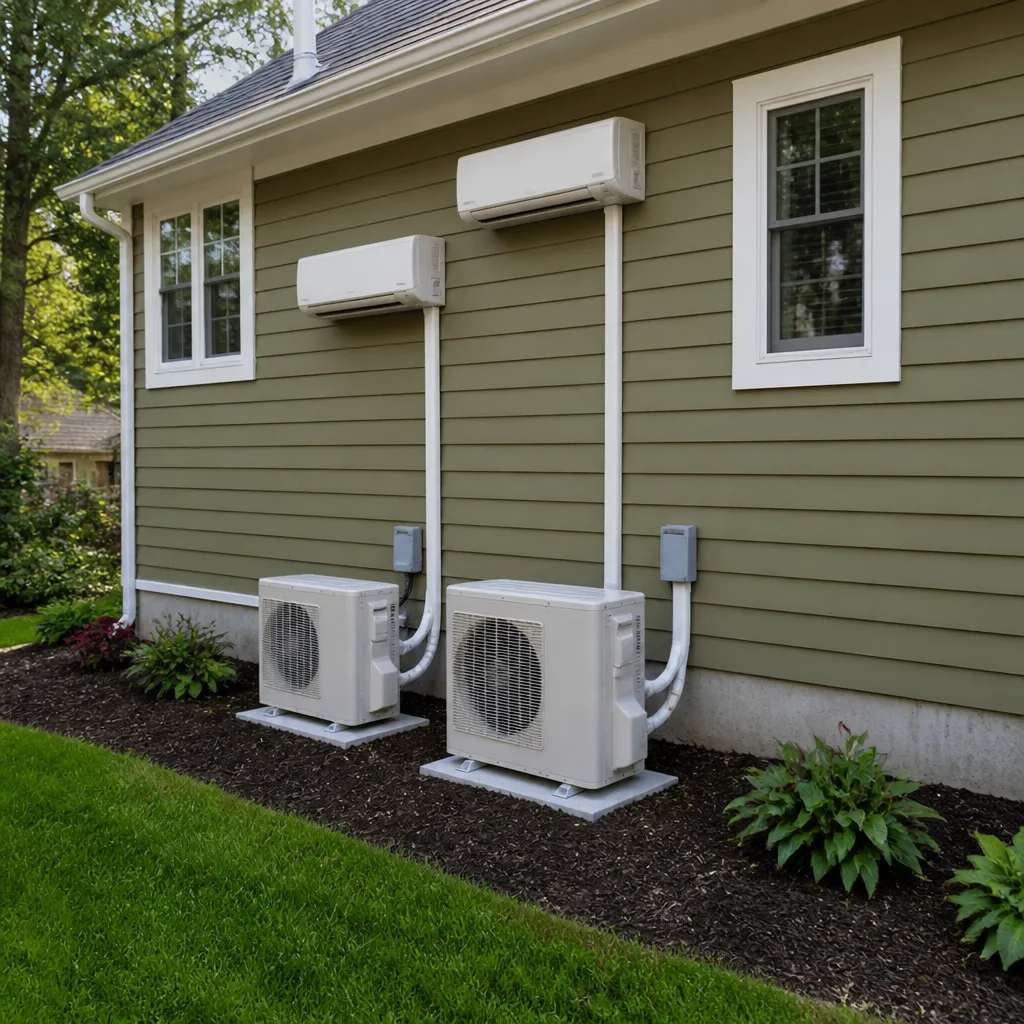 Ductless mini splits
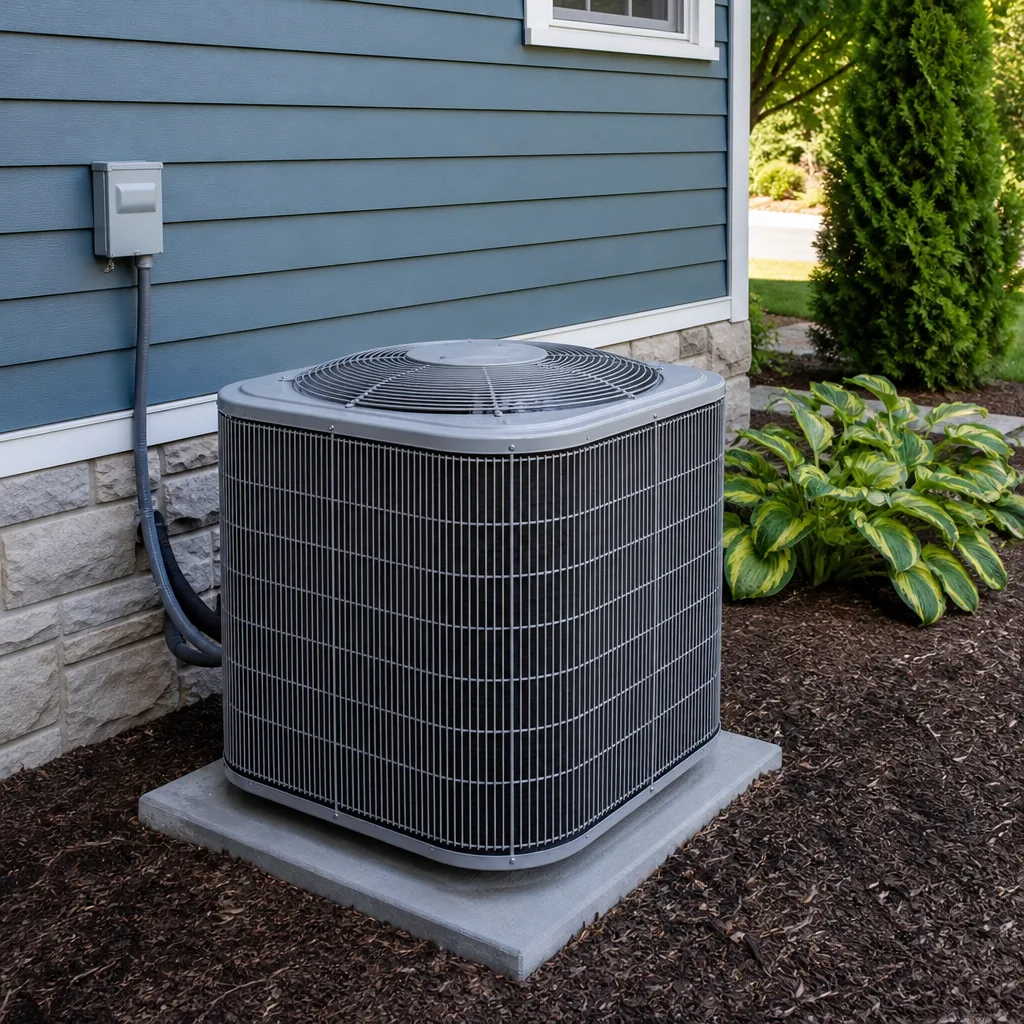 Carrier
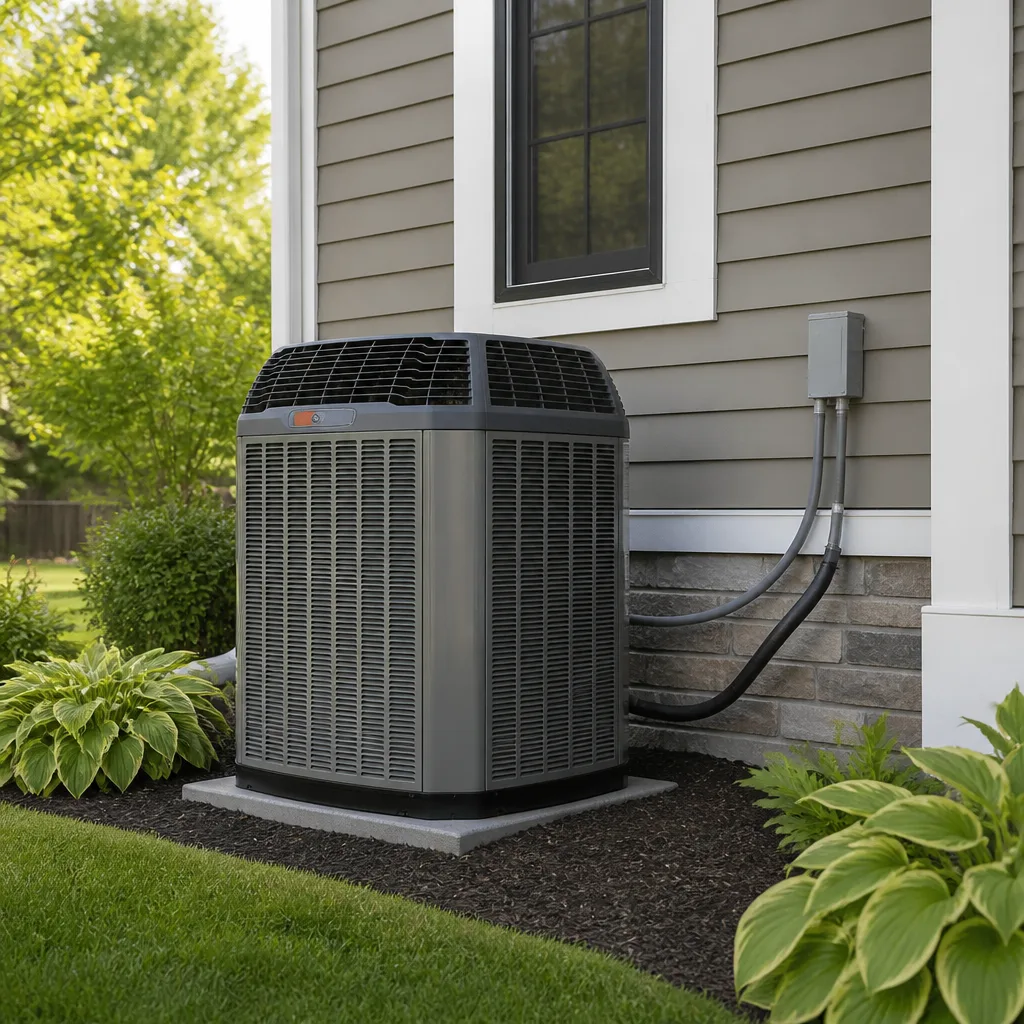 Trane
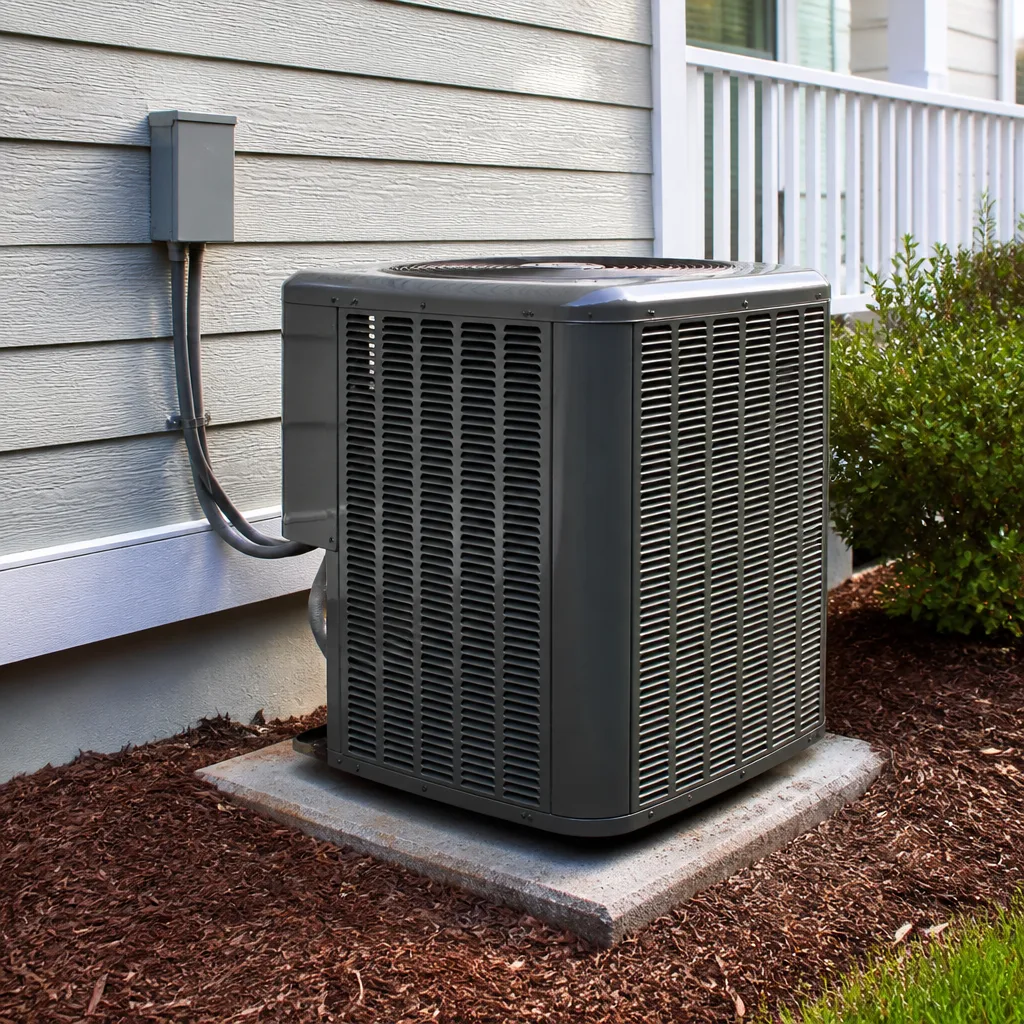 Goodman
Seasonal tune-up and full diagnostic on your Carrier, Trane, or Goodman system - readings shown to you before any repair is proposed
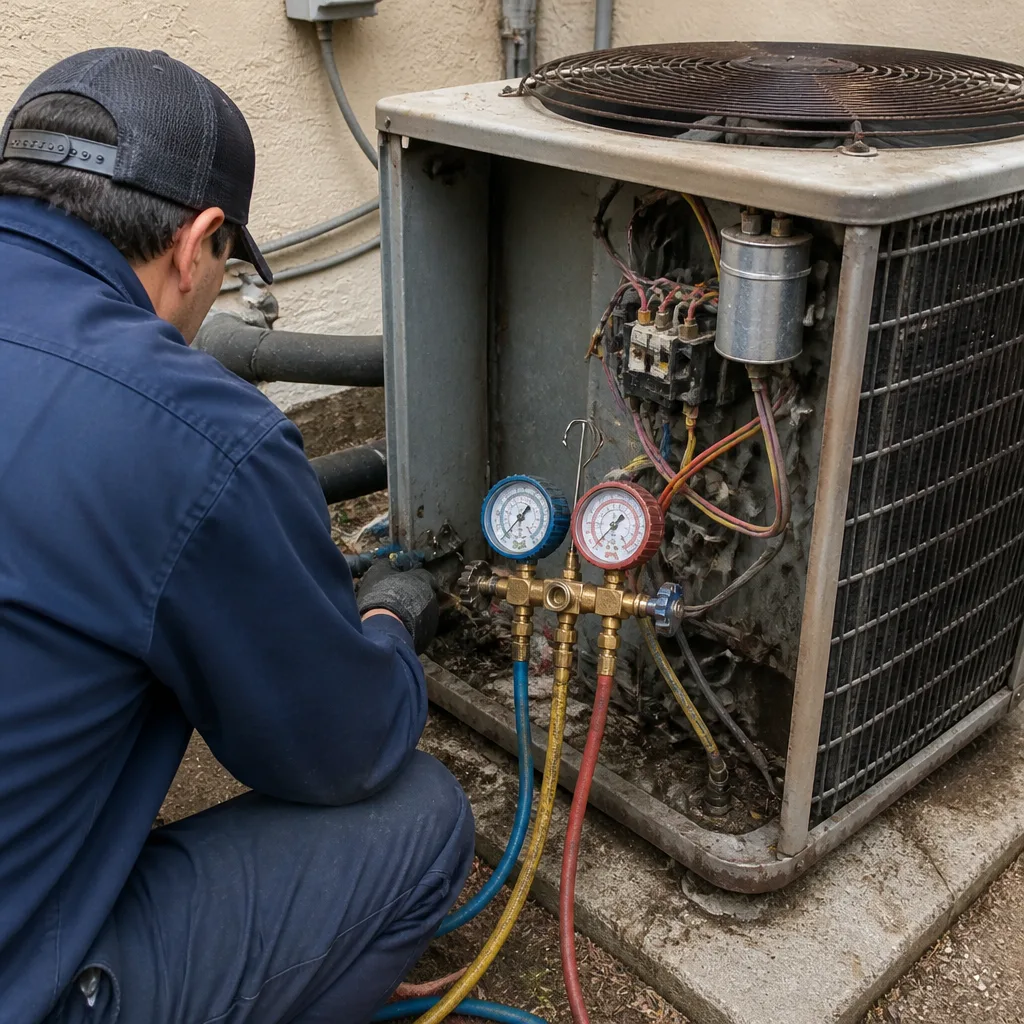
Diagnosis first, numbers second - you approve the repair price before a single part goes in.
Get your free estimateHeating & Furnace Warning Signs Every Homeowner Should Know
If your furnace is short-cycling – turning on, running for two minutes, shutting off, and doing it again – most homeowners assume it’s just doing its thing. It’s not. That pattern is the furnace telling you something is wrong, and ignoring it for one more season is how a $200 repair becomes a $1,400 heat exchanger job. The warning signs that cost people the most money are rarely the dramatic ones. They’re the quiet ones: a bill that creeps up, a flame that’s the wrong color, a smell you’ve talked yourself into believing is normal. This guide walks through the signs that hide, with specifics for the older housing stock and desert cold snaps we deal with in Sunrise Manor.
Quick Answer
The warning signs every homeowner should watch for are short-cycling, rising gas bills without a cold snap to explain them, yellow or flickering pilot flames, metallic or acrid smells, unusual rumbling or banging at startup, and any carbon monoxide alarm activation – which is an immediate call-the-fire-department situation, not a maintenance item. Dusty smells at the start of the season are normal. Almost everything else is your furnace asking for help before it fails on the coldest night of the year.
Styles & brands we work with
- AC repair
- Furnace & heating
- Heat pumps
- Ductless mini splits
- Carrier
- Trane
- Goodman
Table of Contents
- Short-Cycling: The Sign Everybody Misreads
- Which Smells Are Normal and Which Are Not
- Rising Gas Bills as a Diagnostic Tool
- Yellow or Flickering Pilot Flames in Older Sunrise Manor Homes
- Carbon Monoxide: The Honest Conversation
- Noises That Mean Stop and Call
- When Age Itself Is the Warning Sign
- Common Mistakes to Avoid
Short-Cycling: The Sign Everybody Misreads
Short-cycling is a furnace that lights, runs for two to five minutes, shuts off, and repeats. A healthy furnace runs in longer cycles – typically 10 to 15 minutes – then rests. When those cycles collapse, the system is failing to move heat where it needs to go, and it’s shutting down as a protective measure. Left alone, the wear compounds fast: igniters, blower motors, and heat exchangers all take a beating.
There are three causes we see most often, and they’re worth sorting in order because the fix scales dramatically:
- A clogged air filter. Restricted airflow makes the furnace overheat and trip its high-limit switch. This is the cheapest fix on the list and the most common. Change the filter before anything else.
- A failing flame sensor or thermostat. The sensor tells the furnace the burner lit. When it’s coated or worn, it reads false and shuts the gas valve. Same story with a thermostat that’s sending the wrong cycle signals.
- An oversized or failing blower or high-limit switch. If the first two check out clean and the system still short-cycles, the furnace is likely overheating for a real reason, and the readings will tell the story.
In Sunrise Manor, we regularly see spring short-cycling tied to filter neglect through the windy months. Dust moves here, and a filter that would last three months in a wetter climate is loaded up in six weeks. We’ve also seen short-cycling blamed on the thermostat when the actual problem was a flame sensor that needed a wipe-down and a test. Readings first, numbers second – a technician should show you both before naming a part.
If your furnace is on the older side, this is also the moment to weigh repair against replacement. Our Heating & Furnace in Sunrise Manor page covers how we think through that call.
Which Smells Are Normal and Which Are Not
The smell category trips up more homeowners than any other warning sign, because the line between harmless and dangerous is a thin one. Here’s the honest breakdown:
- Dusty smell at first startup of the season. Normal. Dust settles on the heat exchanger over the summer, and the first heating cycle burns it off. It should fade within 20 to 30 minutes and not return until next fall.
- A smell that returns every time the furnace comes on. Not normal. Something is burning off each cycle, and it needs to be looked at.
- Metallic or hot-metal smell. Often an overheating component or a cracked heat exchanger. Stop using the system and call.
- Acrid or electrical smell. Wiring, a motor, or a control board overheating. Turn the system off at the thermostat and call – this is a fire risk, not a maintenance item.
- Rotten-egg smell (gas odor). Leave the house and call the gas utility from outside. Do not flip switches, do not run a fan, do not re-enter until cleared.
The pattern to hold onto: a smell that appears once and disappears is usually fine. A smell that repeats is asking you a question. Answer it with a call, not with a filter change and hope. In Sunrise Manor, where many homes are on natural gas and the cold snaps spike usage quickly, the first-run dust smell can smell stronger than homeowners expect. If it doesn’t fade, that’s the signal.
Rising Gas Bills as a Diagnostic Tool
We tell people to look at their gas bill like a diagnostic reading, not just a complaint. Furnaces get less efficient as heat exchangers and burners degrade, and that shows up on the bill before it shows up as a breakdown. The number to watch for is a 15 to 20 percent jump in monthly usage without a matching cold snap to explain it.
If January was mild and your bill went up 18 percent anyway, the furnace is running longer to do the same work. That could be:
- A blower motor losing speed, so it moves less air and the furnace cycles longer to hit the setpoint.
- A burner that’s partially clogged, burning less cleanly and producing less heat per unit of gas.
- A house that’s leaking warm air through drafts around windows and doors, which shows up in winter but isn’t a furnace problem at all.
The diagnostic move is to rule it out or rule it in. Compare the same month across two years if you can, and look at the degree-days reported for those months (the utility often lists them, or you can find them). If the weather was similar and the bill wasn’t, the furnace deserves a look. In Sunrise Manor, the answer isn’t always the furnace – older homes here often have leaky envelopes – but you can’t find out without readings.
If the bill points to a failing system, replacement is sometimes cheaper than patching. Our Heat Pump & Mini Split in Sunrise Manor page covers heat pumps as an alternative worth weighing.
Yellow or Flickering Pilot Flames in Older Sunrise Manor Homes
A healthy pilot flame is blue with a steady cone. A yellow or flickering one is burning incompletely, and that’s a sign of a dirty burner, a misadjusted air mixture, or – the one to take seriously – a combustion problem that could be leaking carbon monoxide. Sunrise Manor has a good share of older homes that still run standing-pilot systems, so this shows up more here than in newer construction.
What to do about it:
- If the flame is yellow or orange at the pilot or the burners, note it and stop running the system. It’s cheap to look at and dangerous to ignore.
- Do not attempt to clean or adjust the pilot yourself. Gas connections and burner adjustments are a trained-tech job, and a fumble here is a serious risk.
- If your home has a standing pilot, this is also the moment to verify your carbon monoxide detectors are working and placed correctly (next section).
- Call for a combustion check. The technician should read flame color, draft, and CO levels before touching anything.
We carry York and Bryant parts for a reason – the older systems in Sunrise Manor often run these, and we’d rather test the actual burner than guess. The safest thing you can do when you see a yellow flame is call and describe it: “yellow flame, standing pilot, older system.” That’s enough for a trained tech to know what to bring.
Carbon Monoxide: The Honest Conversation
Most CO messaging is either vague or terrifying, and neither helps. Here’s what actually matters: carbon monoxide is colorless and odorless, and it kills people each year because they didn’t have a working detector or had it in the wrong place.
Placement rules that actually work:
- One detector on every level of the home, and one near the sleeping area.
- Not on the ceiling – CO disperses with warm air but is roughly neutral-to-slightly-lighter than air, and mid-wall placement at knee-to-chest height catches it reliably.
- At least 15 feet from any gas furnace, water heater, or cooking appliance to prevent false alarms from normal operation.
- Test the battery function monthly; replace the unit every 5 to 7 years depending on the model.
What symptoms look like: headache, dizziness, nausea, confusion, and shortness of breath that seem to worsen indoors and improve when you go outside. Pets and children are affected first. If a detector goes off, get everyone including pets outside and call the fire department from outside – do not try to find the leak yourself.
If you have any concern about CO in your home, call us and we’ll run a combustion safety check. Our AC Repair & Installation in Sunrise Manor page covers the sister side of the system, but combustion safety is the same house.
Noises That Mean Stop and Call
Furnaces make some noise normally: a soft hum from the blower, a click at ignition, a low whoosh when the burner lights. What’s not normal:
- Banging or booming at startup. Ignition is delayed and the gas is igniting inside the chamber all at once. Stop using the system.
- Screeching or squealing. A bearing in the blower motor is failing. Running it grinds the part into the motor shaft and turns a motor fix into a whole assembly job.
- Rattling that gets worse. Loose panels are the cheap cause; a failing inducer motor is the expensive one.
- Rumbling that shakes the floor. Often a blower wheel out of balance or a failing motor mount.
The calls we hate are the ones that come after two or three weeks of a noise. The bearing that could have been a $200 fix has turned into a motor assembly. If it’s loud enough to make you nervous, it’s loud enough to call.
When Age Itself Is the Warning Sign
Furnaces typically last 15 to 20 years, and the last five are the most expensive years. If your system is over 15 and you’re facing a $600 repair, the math rarely favors the repair. Add up the age, the repair cost, and the efficiency loss (older systems run 65 to 80 percent efficiency, versus 90-plus for a modern high-efficiency model), and the replacement often pays back within a few winters.
We install Rheem, Daikin, and Bryant furnaces regularly in Sunrise Manor, and the conversation we have with homeowners is the same every time: get a written fixed price before anything is ordered, get the install date in writing, and make sure the rebate and financing paperwork is handled – not handed to you to figure out. That work isn’t same-day, and we say so. Load calculations take time and equipment takes delivery time. The right answer is a fixed price and a scheduled date, not a race.
If you’re weighing a switch to a heat pump, our Ray’s Heating & Air Sunrise Manor home page gives the wider picture of how we work.
Common Mistakes to Avoid
- Treating short-cycling as normal. It isn’t. Two seasons of short-cycling is how you find out what a heat exchanger costs, and the diagnosis is usually something small if you catch it early.
- Ignoring a gas bill jump because the winter “felt cold.” Check the degree-days. If the weather was similar and the bill wasn’t, the furnace is telling you something.
- Replacing the filter every three months like clockwork. In Sunrise Manor, dust loads filters faster. Check it monthly through windy season and replace when it’s visibly loaded, not when the calendar says to.
- Blaming the thermostat for short-cycling before the filter. Filter first, readings second, parts third. Reversing that order is how homeowners pay for a thermostat they didn’t need.
- Putting the CO detector on the ceiling next to the furnace. Wrong place – false alarms, misses the real risk. Mid-wall, 15 feet away, one on every level.
- Patching an 18-year-old furnace with a $600 repair. Age plus repair cost plus lost efficiency almost always points to replacement. Ask for both numbers in writing.
- Letting a yellow pilot flame ride. It’s the cheapest-to-fix warning sign on this list and the one most likely to matter most. Call it in.
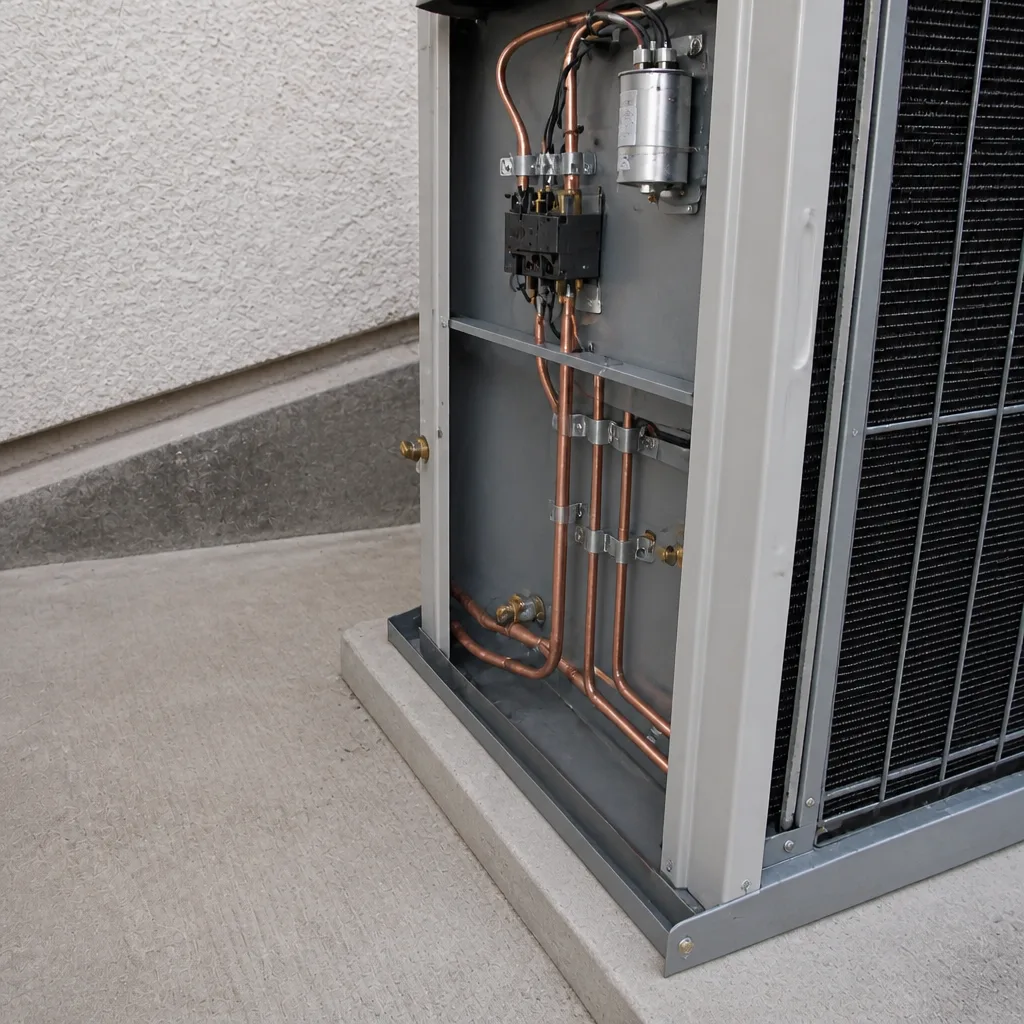
See the difference
 Before
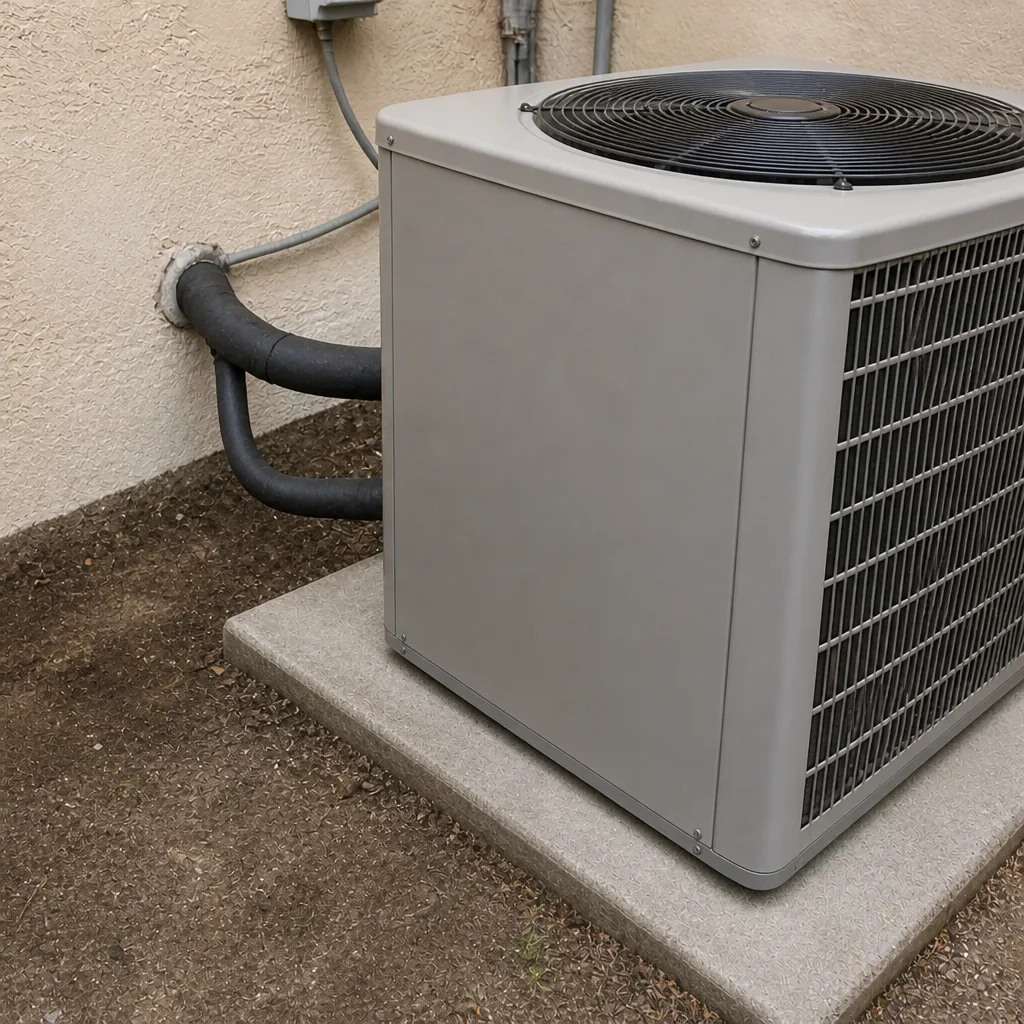 After
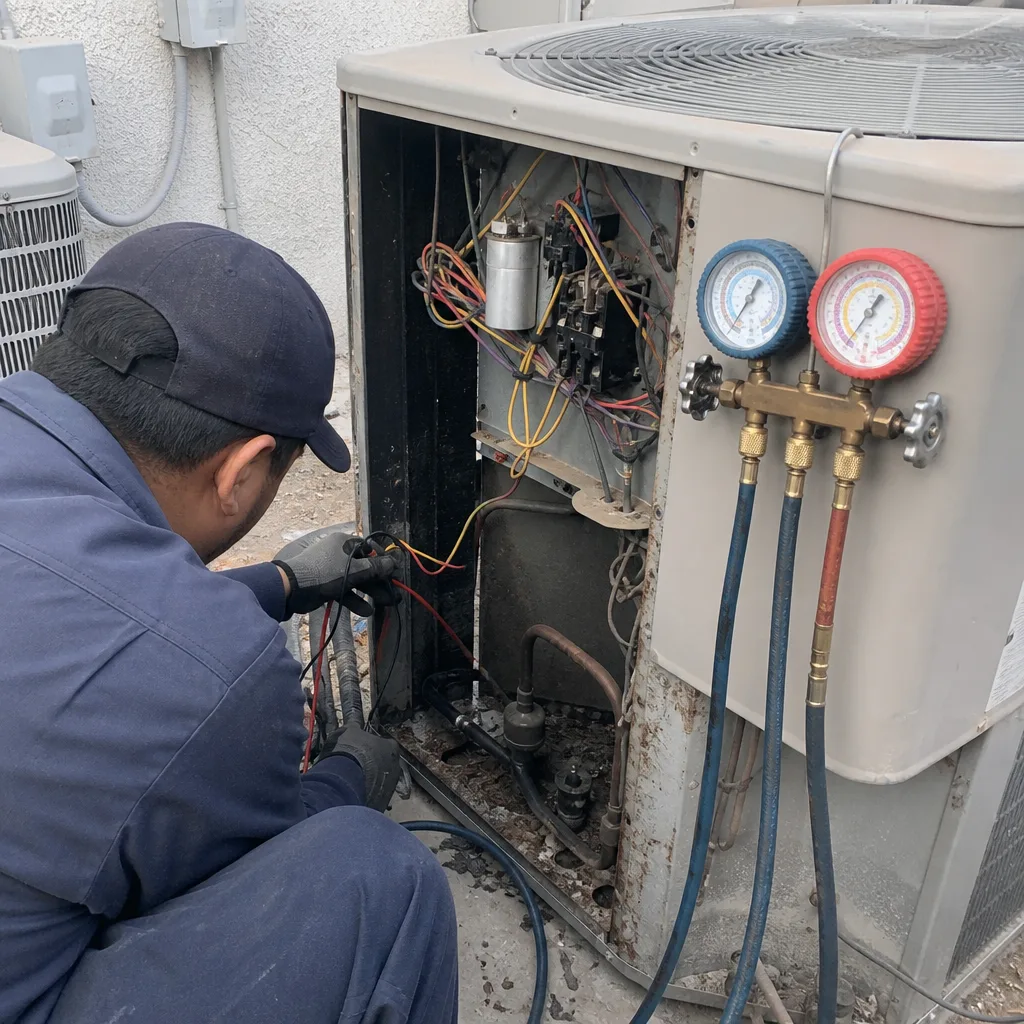 Before
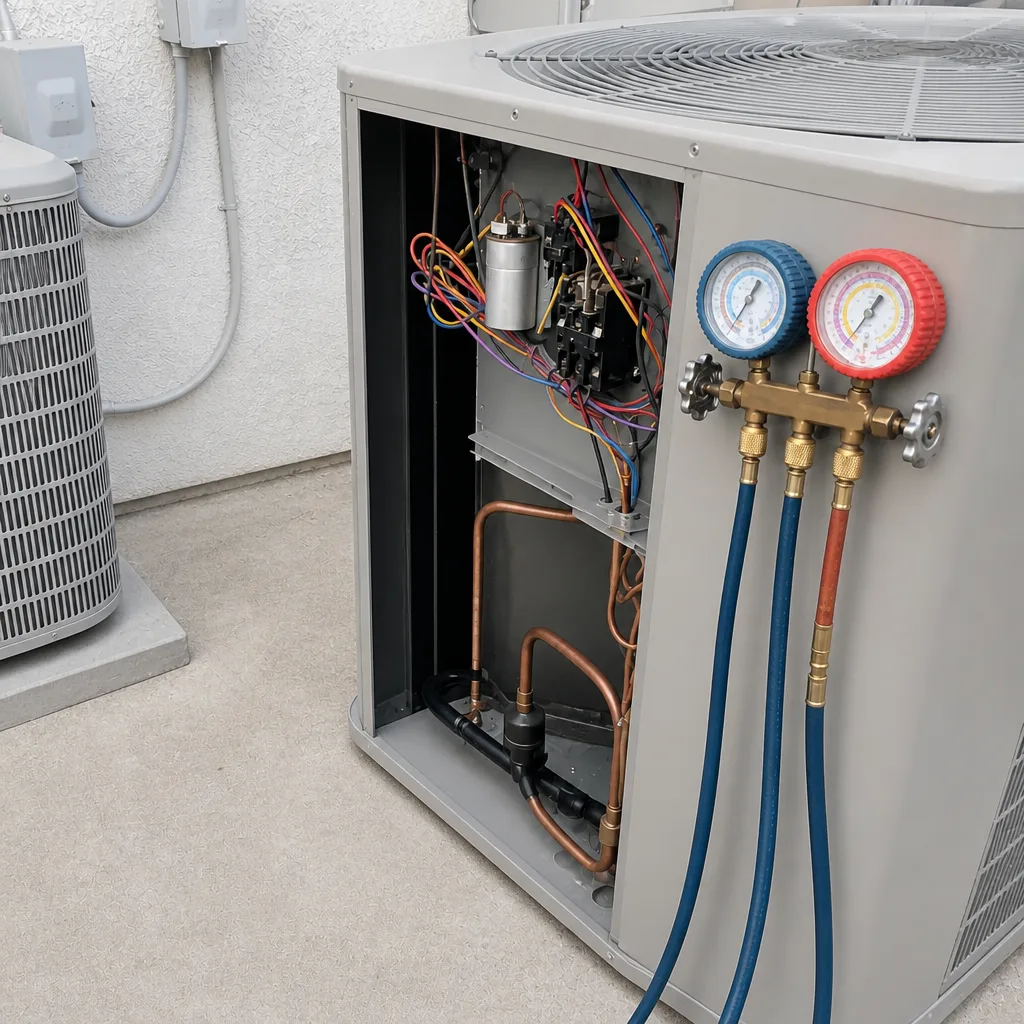 After
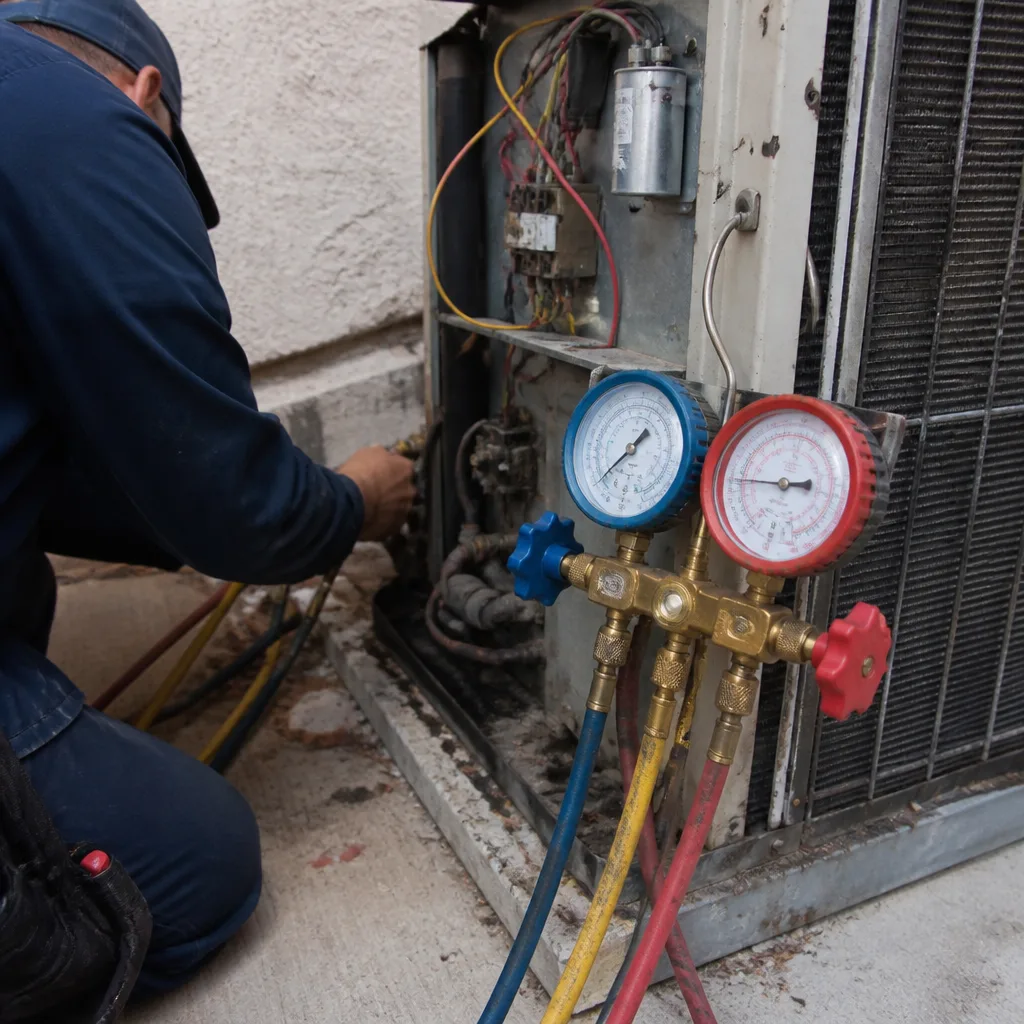 Before
 After
When to Call a Professional
Call for any of the following, without waiting for the next cold snap: a repeating smell, a yellow or flickering flame, a banging at startup, a CO detector activation, short-cycling that doesn’t clear after a filter change, or a gas bill up 15 percent with no cold snap to explain it. Also call if the system is over 15 years old and you’re deciding between repair and replacement – that’s a decision worth getting a written second opinion on before you commit.
Ray’s Heating & Air Sunrise Manor offers free estimates in Sunrise Manor – call (877) 311-5951. A live person answers every call, 24/7, including Ray himself at two in the morning. We charge no trip fee inside the county, and any written estimate comes with a free second opinion standing – no pressure, no strings.
Frequently Asked Questions
No – it’s often a clogged filter or a flame sensor, both of which are inexpensive fixes. But “often cheap” is not “ignore it.” Short-cycling that goes unaddressed for a season or two is how a small part failure becomes a heat exchanger job. Change the filter first, then call if the pattern continues. Call (877) 311-5951 for a diagnosis – estimates are free.
Usually not. A dusty smell at the first startup of the season is dust burning off the heat exchanger and should fade within 20 to 30 minutes. If the smell returns every time the furnace comes on, or if it’s metallic or acrid instead of dusty, that’s the signal to stop using the system and call.
A healthy flame is blue with a steady cone. Yellow, orange, or flickering is not normal and points to a combustion problem that needs a trained look. Do not adjust it yourself. Call and describe it – “yellow flame, standing pilot, older system” – and we’ll bring what’s needed. Call (877) 311-5951.
It means the furnace is likely running longer to do the same work, or your home is leaking warm air. Check the degree-days for the month – if it was a similar winter and the bill wasn’t, the furnace deserves a look. Call (877) 311-5951 and we’ll diagnose before recommending anything.
Repair makes sense if the system is under 15 years old and the repair is under $500. Replacement usually wins if the system is over 15, the repair is over $600, or the system has had repeated repairs in the last three years. Ask for both numbers in writing and a free second opinion on any estimate – we’ll give you that with no pressure.
Get everyone, including pets, outside and call the fire department from outside – do not re-enter. Do not try to find the leak yourself. Once they clear the house, call (877) 311-5951 for a combustion safety check before you turn the heat back on.
The Bottom Line
The furnace signs that cost the most are the quiet ones: short-cycling you’ve written off as normal, a bill that crept up without weather to explain it, a yellow flame you’ve been meaning to look at. The loud ones – banging, acrid smells, CO alarms – usually get attention because they’re impossible to ignore. The quiet ones need a nudge from you.
Change the filter. Check the flame color. Look at the bill. And if anything on this list feels familiar, call us. We’ll show you the readings before we name a part, and we’ll give you a straight answer on repair or replace. Ray’s Heating & Air Sunrise Manor is locally owned and owner-operated, we publish our name and address, and every job carries the 90-Day Done Right Promise in writing. Call (877) 311-5951 for a free estimate.
Written by the team at Ray’s Heating & Air Sunrise Manor.