
Last updated November 18, 2026
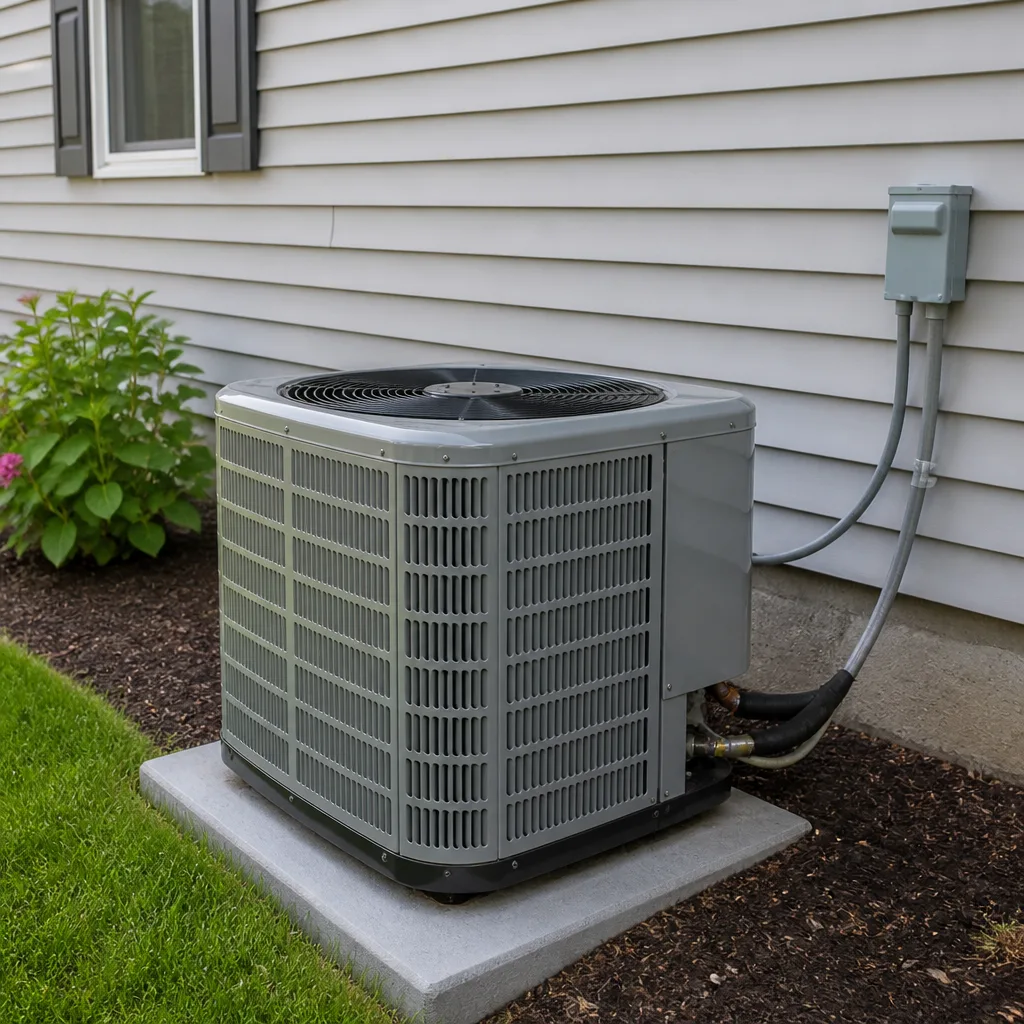 AC repair
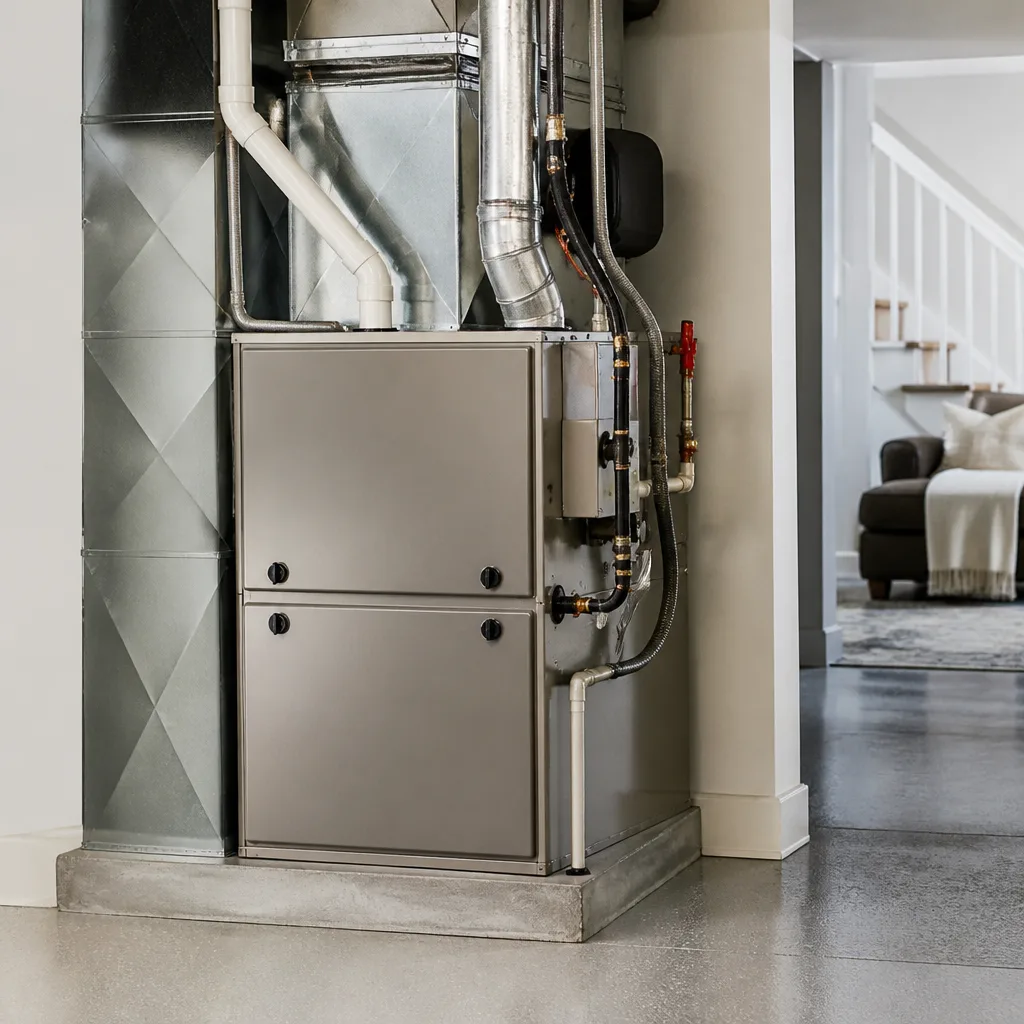 Furnace & heating
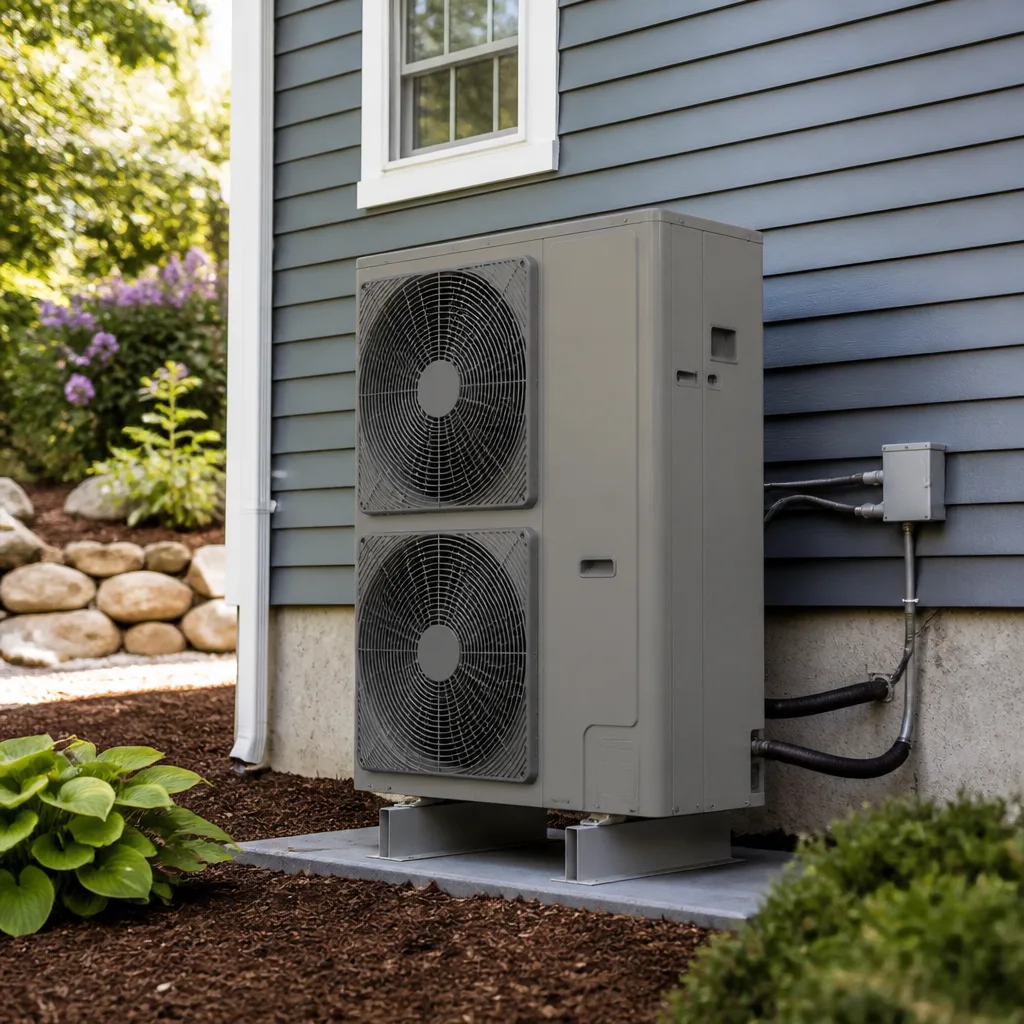 Heat pumps
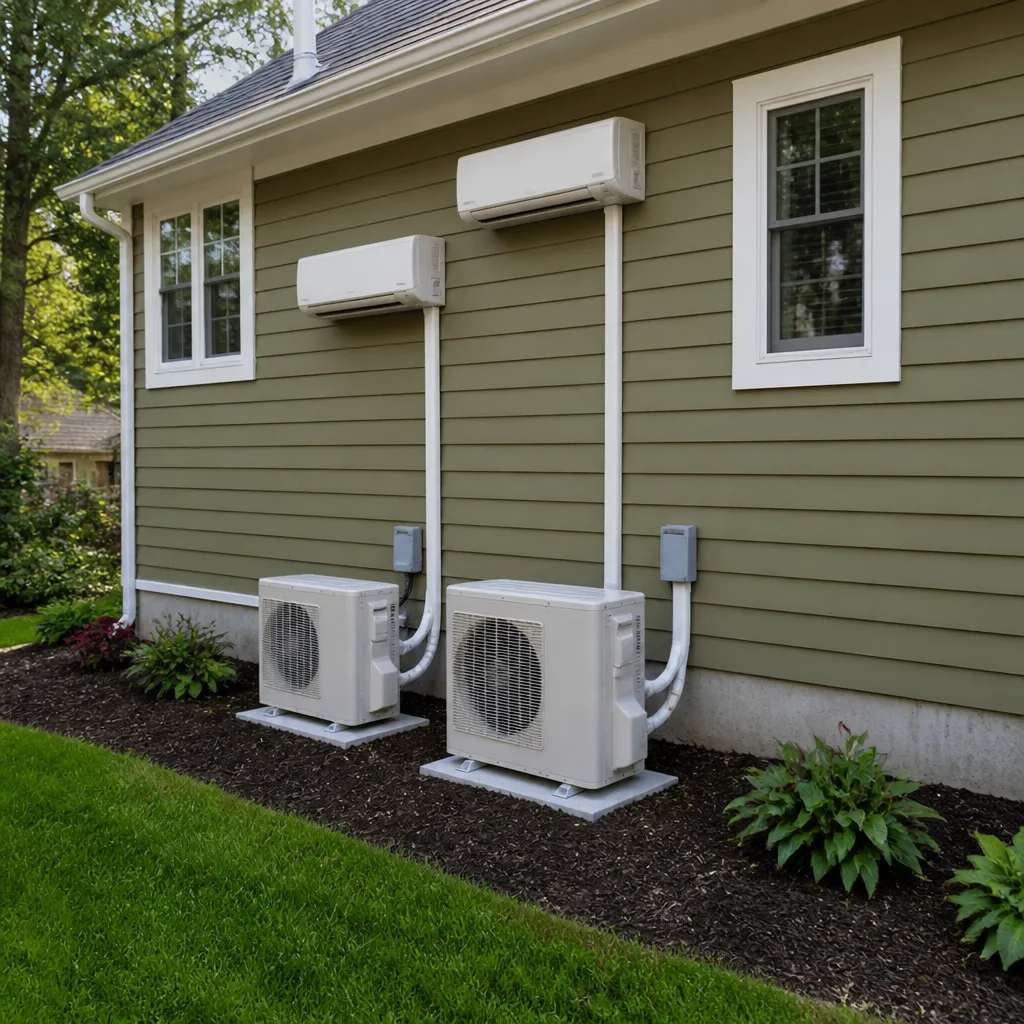 Ductless mini splits
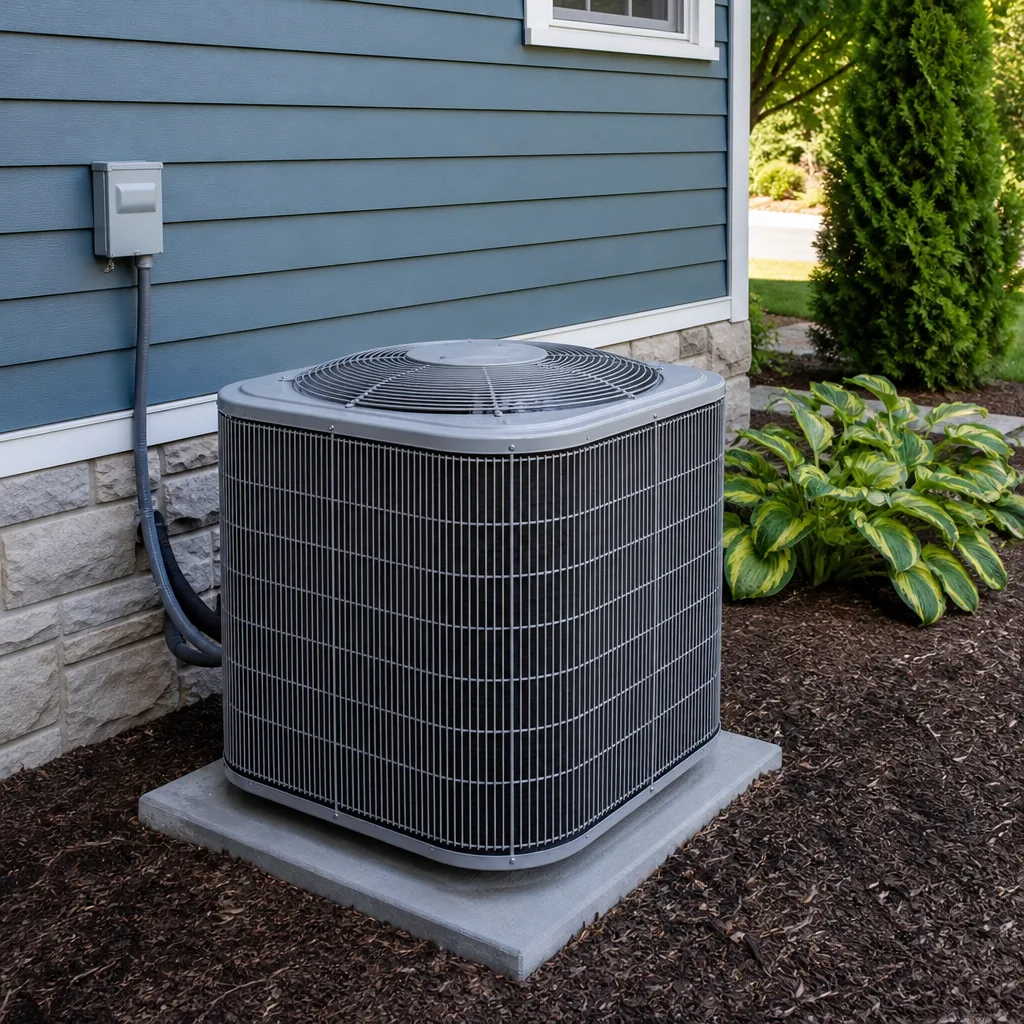 Carrier
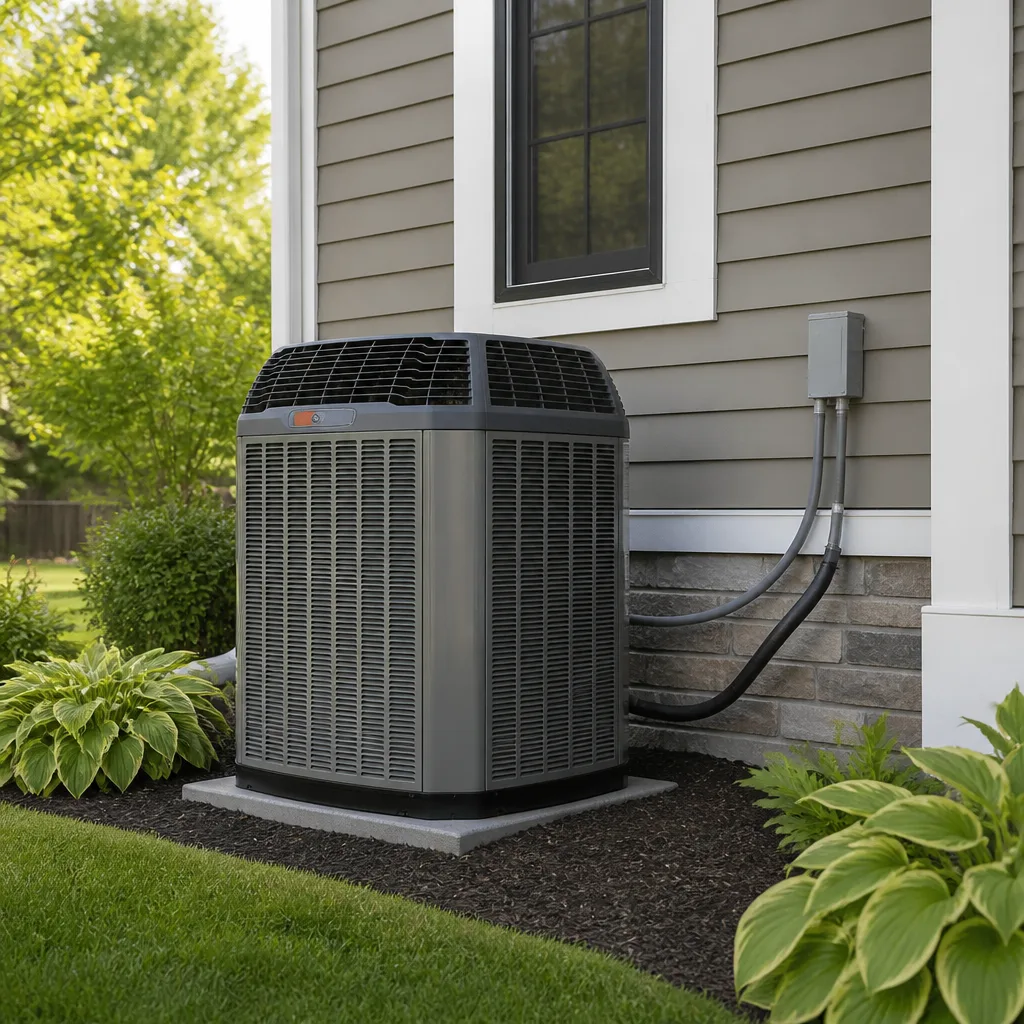 Trane
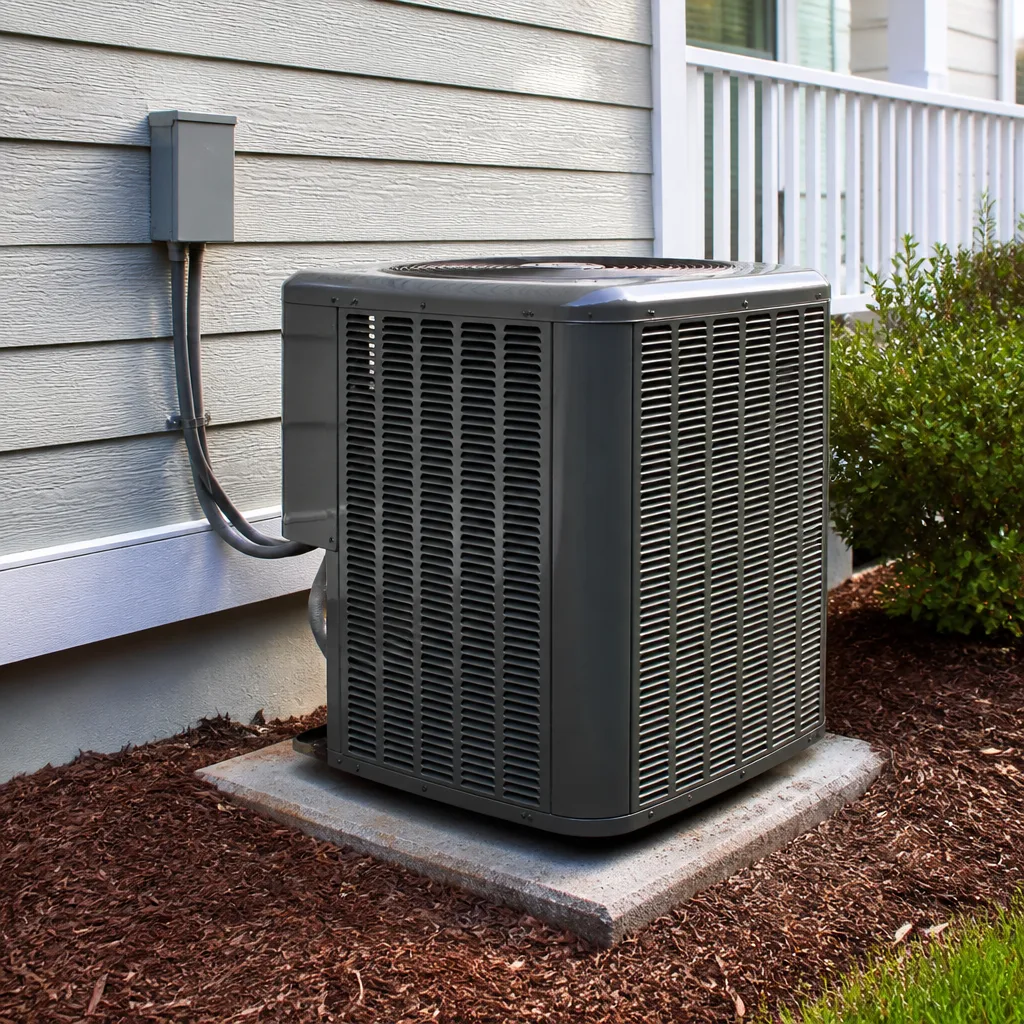 Goodman
Seasonal tune-up and full diagnostic on your Carrier, Trane, or Goodman system - readings shown to you before any repair is proposed
Diagnosis first, numbers second - you approve the repair price before a single part goes in.
Get your free estimateAir Quality & Ventilation Troubleshooting: Common Problems and How to Fix Them
Every summer we get a call from somebody in Sunrise Manor who has already bought two air purifiers and a plug-in deodorizer, and the house still smells like a wet basement. In most of those houses the problem isn’t the air at all. It’s a drain pan sitting with an inch of algae water under the air handler up in the attic, and no purifier ever built is going to fix that. Bad air is almost always a symptom, not the disease. This guide walks you through the same order of elimination we use on service calls: how to read what your house is telling you, which symptoms point to the HVAC system, which ones mean you’re looking at the building itself, and what you can genuinely check yourself before anybody needs to bill you.
Quick Answer
Fix the source before you buy anything for the air. Start with the HVAC system, since it accounts for the large majority of indoor air complaints: check the filter, look for standing water and algae in the drain pan, examine the a-coil for fuzz, and check whether the system short-cycles. A musty smell, dusty surfaces, a dry throat, headaches, and window condensation each point to different culprits, so the symptom tells you where to look. If those checks come back clean, the problem has crossed into the building envelope – windows, attic hatch, crawl space – and no air purifier will solve it.
Styles & brands we work with
- AC repair
- Furnace & heating
- Heat pumps
- Ductless mini splits
- Carrier
- Trane
- Goodman
Table of Contents
- Start With the Symptom, Not the Product
- Musty Smell: The Drain Pan and the Attic
- Dusty Surfaces Within Days of Cleaning
- Dry Nose, Dry Throat, and Sunrise Manor’s Desert Air
- Headaches and the VOC Question in New Construction
- Condensation on Windows: A Desert Warning Sign
- Do a Basic Duct Leak Check Yourself
- When It Leaves HVAC Territory
Start With the Symptom, Not the Product
Here’s the mistake almost everybody makes: they notice the air is wrong, and the first move is to buy something. A purifier, a filter, a candle, a spritz for the vents. That’s backwards. Your house is telling you something specific through the symptom, and if you read it right, the symptom cuts your search area down in about two minutes.
Use this framework before you spend a dime:
- Musty or dirty-sock smell. Moisture. Look for standing water, algae, or a wet coil. The system itself is the first suspect.
- Surfaces turn dusty again within a few days of wiping. Dust is being introduced from somewhere – often the return path, a loose filter slot, or duct leakage near an attic space.
- Dry nose, scratchy throat, cracked lips overnight. Humidity is too low. In Sunrise Manor, this is usually the dessert working on a house that also has a drying-out HVAC system, not a hidden contaminant.
- Headaches that come on at home and clear when you leave. Something in the air or the environment, and the answer is testing, not guessing.
- Condensation on windows. The house has more moisture than it can move, which in a desert usually means the moisture is coming from inside the envelope – the pan, a slow leak, or a bath fan that vents into the attic instead of outside.
The point is order. You test the cheap and obvious things first, and each one you rule out narrows what’s left. That’s true whether you’re in a 1970s tract house off Lamb Boulevard or a newer build on the east side of Sunrise Manor.
Musty Smell: The Drain Pan and the Attic
Musty smell is the number one complaint we hear in Sunrise Manor, and nine times out of ten it traces back to moisture sitting where it shouldn’t. In a cooling system, condensate drips off the evaporator coil into a drain pan and flows out through a pan line. When that pan clogs, the water sits. Algae and biofilm grow. The blower then pulls air right across that mess and pushes it into every room in the house. Buy all the purifiers you want; you’re still the one supplying the stink to the whole house.
Where it hides:
- The attic air handler. Attic installs are common in Sunrise Manor’s older neighborhoods, and an attic in July is a heat box. A pan line that’s partially clogged develops algae fast up there.
- The coil itself. Dust plus condensation equals a wet, fuzzy blanket on the evaporator. That blanket smells organic whether or not the pan is flooded.
- A second-story closet or hallway return. The pan under a closet-mounted air handler gets forgotten because nobody goes in there.
What we do on a service call: shut the system off, get eyes on the pan and the coil, clear and flush the pan line, and check the pan for rust or cracks that will just flood again. Most of the time that one visit ends the smell. If the coil is coated past the point of a clean, the coil gets replaced, not the purifier. On your end, you can open what’s reachable, look for standing water, and if you find it, you’ve found your answer.
Dusty Surfaces Within Days of Cleaning
If you wipe down the coffee table and it’s dusty again by Thursday, you’re not a bad housekeeper. Dust is being introduced on purpose. The most common source is the return side of the system: a filter slot that doesn’t seat tight, a filter that’s the wrong size and leaves a gap around the edge, or a filter that hasn’t been changed in a year. That thin layer of dust in the filter slot gets pulled straight into the system and blown back into the rooms. Check the filter first, then check the slot it sits in.
The second source is duct leakage, and it’s the one most people miss. In Sunrise Manor, a lot of ducts run through the attic. The attic is separate from your house. Any leak in a return duct up there pulls attic air – insulation fibers, dust, whatever the desert blows in – into a system that’s supposed to be circulating filtered indoor air. That’s not a filter problem. That’s a duct problem, and a filter change won’t touch it.
Third is short-cycling. An oversized system that gets the temperature down in about four minutes and shuts off never runs long enough to pull a full house volume of air through the filter. Dust settles because there isn’t enough air movement to carry it to the filter at all. You’ll feel the house cool down fast and the unit kick on and off constantly. That’s a sizing or airflow issue, and yes, it’s an air quality issue.
Dry Nose, Dry Throat, and Sunrise Manor’s Desert Air
You live in the desert. Relative humidity here in the summer can sit in the single digits, and it’s hard to sleep like that. But when a homeowner tells us about a scratchy throat and a nosebleed every couple of weeks, we don’t just blame the climate. A cooling system dehumidifies as a side effect of cooling. In a hot, dry climate like Sunrise Manor’s, your system is cooling the house, but it’s also pulling whatever limited moisture there is out of the air as it runs. The result is a house even drier inside than outside.
What actually helps:
- Stop over-venting. Running a bath fan or kitchen fan for an hour after a shower or cooking is drying the space further. Run it 15 minutes, then shut it off.
- Check the system’s airflow setup. A system set too aggressive on airflow can over-cool the house quickly and pull more moisture than it needs to.
- Whole-house humidifier. For chronic dryness, this is the honest fix. It installs on the supply side and works with the furnace or air handler. It’s a genuine solution, not a covering-up.
One caution: in a house this dry, condensation on windows shouldn’t be happening at all. If you’re seeing it, skip ahead to the condensation section, because that’s a moisture problem on the other end, not a dryness problem.
Headaches and the VOC Question in New Construction
Persistent headaches are a different animal. The desert versions – dry air, dust – you’ll usually feel those in your nose and throat before your head. A headache that shows up at home and clears when you leave is a signal to test, not guess. Two things come up in Sunrise Manor’s newer development areas: the fresh construction smell, and VOCs (volatile organic compounds) off new cabinets, carpet, paint, and sealants. Those off-gas compounds are real and they do diminish over months, not days. Most of what people smell walking into a newly built house is that off-gassing, not a hidden HVAC defect.
Here’s the practical advice: an inexpensive VOC or formaldehyde test kit from a hardware store is a reasonable first step, and it tells you whether to escalate. If the reading is elevated, or if you have somebody in the house with real respiratory sensitivity, a professional air quality test with proper sampling is worth the money. What we’d caution against is the trap of buying a consumer air purifier to “clean” a house that’s still off-gassing a new furnace installation or fresh flooring. The source is the house, and you have to ventilate it out. That means running exhaust fans, opening windows when the outside air is decent, and giving it time.
If the HVAC is involved in a new build – and sometimes it is, particularly a return duct that pulls from an attic or an improperly sealed air handler closet – we test it and show you the readings. In our experience, a lot of “new construction smell” complaints turn into a duct sealing job once we put a blower door on the system and see the leakage. That’s the part a purifier will never fix, and it’s exactly the kind of thing we look for on a Ray’s Heating & Air Sunrise Manor home service call.
Condensation on Windows: A Desert Warning Sign
In a humid climate, window condensation is normal. In Sunrise Manor, it isn’t. If you have fog on the inside of your windows in the morning, your house has more moisture in it than it’s moving out – and that moisture is coming from somewhere specific.
The usual suspects, in order:
- Bath and kitchen fans venting to the wrong place. A fan that dumps its exhaust into the attic instead of through a roof or wall vent pumps warm, wet air into the structure every time you shower. That’s a building envelope problem hiding as a ventilation problem. Check where the exhaust actually ends.
- A slow plumbing leak. A drip under a sink or a line sweating behind a wall adds moisture slowly enough that nobody sees it until the windows fog.
- Crawl space. Even in this climate, a crawl space that holds moisture can push humidity up into the living space.
- The HVAC drain pan again. A pan overflowing for a week has put a lot of water into the air inside the envelope.
Don’t dismiss fogged windows as a minor annoyance. In a desert house, it’s one of the clearest signals you’ll get, and it’s worth acting on promptly because moisture is patient and wood rot is not.
Do a Basic Duct Leak Check Yourself
You can find a lot of the obvious duct leaks yourself with a stick of incense or a strip of tissue, and that’s worth doing before you call anybody. Save yourself the diagnostic on the easy stuff. Here’s the sequence:
- Turn the system on so the blower is running. With the fan moving air, duct leaks become pressure leaks, and pressure leaks are what you’re hunting.
- Run the incense or tissue along every joint, elbow, and boot you can reach. Pay closest attention to where a duct connects at the air handler and where it meets the register boot at the wall or floor. A flickering flame or a tissue getting pulled toward a seam means air is escaping there.
- Check the return side especially hard. Return leaks near the attic or an outside wall are the ones that pull in dusty, unconditioned air.
- Look for crushed or disconnected flex duct. Flexible ductwork runs through a lot of attics in Sunrise Manor, and flex gets crushed, kinked, or pulled completely off a boot. If you can see a duct lying disconnected in the attic, you’ve found it.
- Note what you find. Where the leaks are, whether they’re supply or return, and how bad the flame or tissue reaction is.
You are not going to find everything. The wall cavities and the inaccessible attic runs are out of reach, and the leaks that matter most are often the ones buried under insulation. That’s when a professional blower door test earns its keep. A blower door pressurizes the house and measures how much air escapes; a duct leakage test does the same to the duct system in isolation. Those numbers tell you whether the fix is sealing a few obvious spots or replacing a duct run. That’s a different tier of the job than a tissue check, and it’s the honest dividing line.
When It Leaves HVAC Territory
There’s a point where plumbing a complaint into the HVAC box stops making sense. Knowing where that line is saves people from paying for an HVAC diagnosis that was never going to find the cause.
The signs it’s the building, not the system:
- Condensation on the inside of a bedroom window with the system off. That’s a window seal failing or a humidity source in the wall, not an AC problem. A window replacement, not a coil cleaning.
- A musty smell concentrated in one room. A single smelly bedroom points at a window, a crawl space, or an attic access hatch in or near that room – something local, not whole-house.
- Smell that gets worse when it rains. Entirely possible in our monsoon season. Moisture is coming in from the envelope, not the system.
- The attic hatch isn’t insulated or sealed. An unsealed hatch lets superheated attic air pour into a closet or hallway all summer. That’s weatherization work.
- Rotted or water-stained wood at window sills. Building envelope. Call a contractor who does that work.
When we get one of these calls and the evidence points at the building, we’ll say so – it’s not our job, and you deserve to spend your money on the window that’s actually failing. If it turns out the system is also involved, that’s a conversation you can have with the same person who told you the truth the first time. For system-side work, our AC repair and installation in Sunrise Manor team handles the cooling and coil side, and heating and furnace in Sunrise Manor work covers the winter counterpart to all of this.
Common Mistakes to Avoid
- Buying a purifier before you’ve checked the pan. It’s the most common money-waster we see. A purifier running in a house with standing algae water is cleaning air that’s being re-contaminated every time the system runs.
- Changing the filter and calling it done. A filter change matters, but the slot it sits in matters just as much in these older Sunrise Manor homes. A wrong-size filter with a gap around the edge is barely filtering anything.
- Masking musty smell with spray or candles. This buys you a week. It doesn’t stop the algae, and by the time the smell wins again, the water’s been sitting longer.
- Assuming dry air is “just the desert.” It usually is partly, but a system set up aggressively on airflow makes it worse, and a whole-house humidifier is a real fix. Don’t just buy a little bedroom humidifier and call it handled.
- Running the bath fan for an hour. In a house this dry, that’s putting a hole in the wall and sucking your humidity out. Fifteen minutes after a shower, then shut it off.
- Ignoring fogged windows. We’ve seen people treat this as normal for years. It’s the clearest desert signal something’s adding moisture, and it never fixes itself.
- Writing off aggressive short-cycling as “just how it is.” An oversized system that blasts cool and shuts off fast isn’t doing you a favor. It’s the reason the dust settles and the house never quite feels right. That’s a sizing issue worth having diagnosed.
See the difference
 Before
 After
 Before
 After
 Before
 After
When to Call a Professional
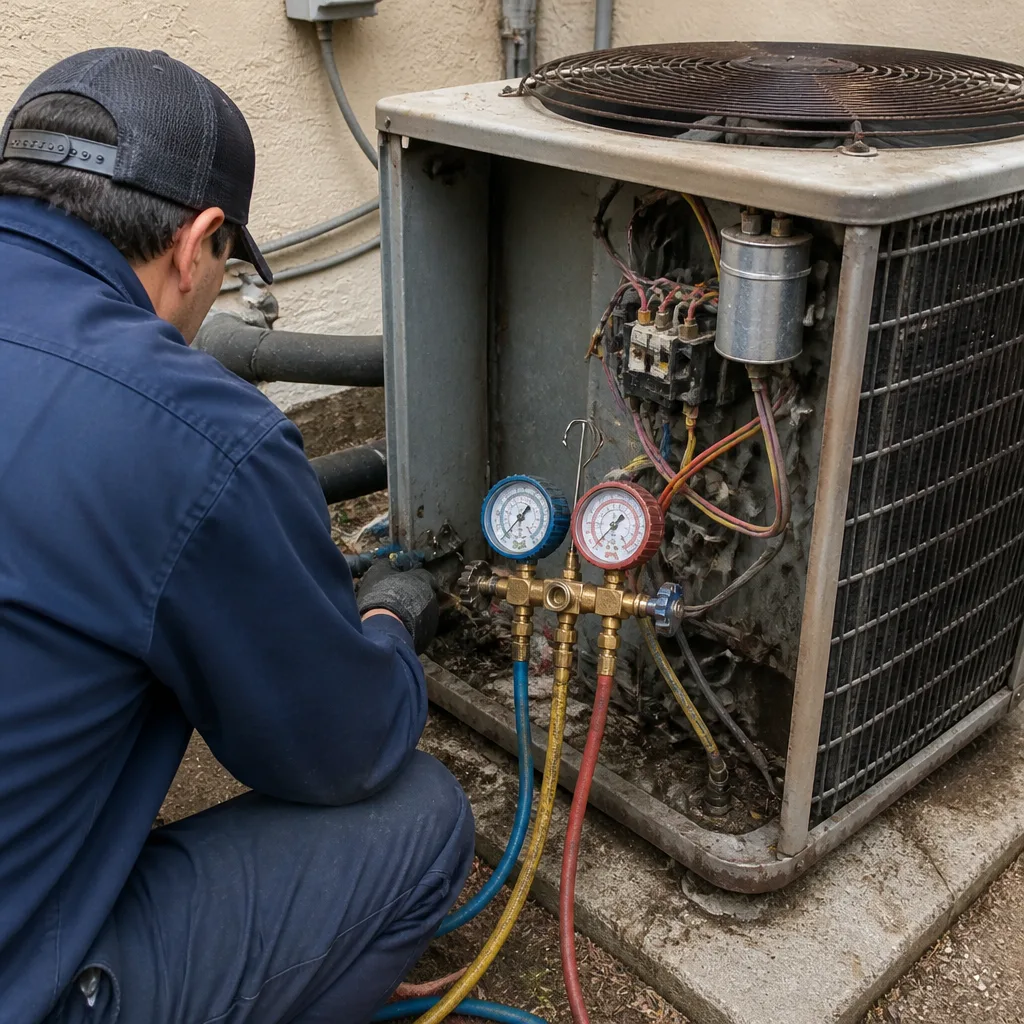
Call us when the smell comes back within days of a filter change, when there’s standing water you can’t reach or can’t trace, when the system short-cycles constantly, when you’ve found duct leaks you can’t seal yourself, or when an air quality test kit comes back elevated. Also call when there’s any question of what you’re looking at, because a hands-on look through the access panels and a set of actual readings beats guessing every time. We test the capacitor before anyone says the word compressor, we show you the readings and the numbers before any work begins, and the person who answers the phone is a live person at any hour. Ray’s Heating & Air Sunrise Manor offers free estimates in Sunrise Manor – call (877) 311-5951. Our technicians have up to 24 years of experience, and the same person who sees your system today is the one who comes back if it isn’t right.
Frequently Asked Questions
Yes, and it’s the most common cause we find. Condensation collecting in the drain pan, plus a dusty evaporator coil, grows organic material that the blower then pushes through every room. Cleaning the pan and coil usually ends the smell, and no purifier or plug-in deodorizer gets you there. Call (877) 311-5951 for an exact quote – estimates are free.
Run a stick of incense or a tissue strip along the accessible joints, elbows, register boots, and the connection at the air handler while the blower is running. A flickering flame or a tissue pulled toward a seam means a leak. You’ll find the obvious ones yourself; a blower door test finds the rest.
Yes, mostly because the system runs longer and an attic air handler sits in triple-digit heat all day. Sunrise Manor’s summers make the pan-and-coil problem worse than a cooler climate would. That’s exactly why we treat it as a source problem, not an air-cleaner problem.
No, but they’re the wrong first move. A good filter can help with fine dust and pollen, but it’s treating the symptom. If the source is standing water, leaking ducts, or a short-cycling system, the purifier is running after the fact and never gets ahead of it. Find the source first, then decide whether you need one.
Fix what the test points to. If the musty smell concentrates in one room, or the windows fog even with the system off, you’re likely looking at a window seal, an unsealed attic hatch, or a venting issue, and that’s the building envelope. If it’s whole-house and strongest when the system runs, start with the HVAC. A single professional visit can usually tell you which one, and we’ll say so plainly if it isn’t ours to fix.
In most cases, yes. Phones are answered by a live person around the clock, and we also handle heat pump and mini split work in Sunrise Manor when that equipment is the source of the airflow question. Call (877) 311-5951 for an exact quote – estimates are free.
The Bottom Line
Bad air in a Sunrise Manor house is a clue, not a verdict. Read the symptom first – musty means moisture, dusty means the return path or a short-cycling system, dry means airflow setup and humidity, headaches mean testing, fogged windows mean a moisture source. Check the cheap things yourself, in that order, before you spend money on anything that goes on a table or plugs into a wall. If you find standing water, a crushed duct, or a system that never runs long enough to do its job, get a trained look at it before it gets expensive. Ray’s Heating & Air Sunrise Manor offers free estimates in Sunrise Manor – call (877) 311-5951. We service all major brands, including Goodman, Rheem, York, and Daikin, and every heating and cooling job carries our 90-Day Done Right Promise in writing. Readings first, numbers second – you’ll see both.
Written by the team at Ray’s Heating & Air Sunrise Manor.